Wednesday, October 1, 2003

Render the Account

Render the Account
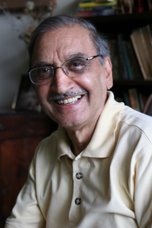
By Narendra Luther


Tom Paine, the English revolutionary and thinker of the 18th century says in his celebrated book Rights of Man, that Government is the badge of man’s lost innocence. It is a necessary evil for civilized existence.

But safeguards have to be provided against the arbitrary exercise of power by government to maintain civilized existence.

No taxation without representation is an old axiom of democracy. That is to ensure that no unjust or unnecessary tax is imposed on the citizens. That is half the job. The other half is to ensure that the money collected from the citizens is spent properly for the purpose for which it is raised. In other words, the propriety of expenditure also needs to be ensured.

Citizen and the Government

To scrutinizes the utilization of public funds by the Government, our Constitution has created the office of the Comptroller and Auditor General. His findings are placed before the Public Accounts Committee. All instances of irregularities and improprieties and recommendations thereon by the Committee are placed before the legislature for appropriate remedial and punitive action against the delinquent authorities. While this is good, these reports are in the nature of a post-mortem and are useful largely for the future.

Secondly, given the party system of government, the elected representatives may overlook the infractions of the administration depending upon their party affiliations. Also, in the plethora of technicalities, the average citizen cannot grasp what is happening. Many people have therefore argued that we should supplement the present system of accountability of administration to elected representatives with direct and ongoing scrutiny by the people. That would ensure that mischief is nipped in the bud.

Information is Power

For such a scrutiny, relevant data and information are necessary. It has been said aptly that information is power. That power lies with the bureaucracy and it is loath to share it with others. As the French semiologist, Jean Baudrillard says in his book, Cool Memories, ‘Information can tell us everything. It has all the answers. But they are answers to questions we have not asked’.

For any scheme of empowering people, therefore, access to information is the first crucial step. It will discourage arbitrary action on the part of the bureaucracy and protect the citizens’ basic right to due process and equal protection of the law. It will also reduce corruption within government institutions and enhance integrity amongst public functionaries.

The question of enacting legislation to provide access to information has assumed importance come up in the last decade or so. According to Privacy International, 51 countries had such comprehensive Freedom of Information laws in place in April 2003. In India, similar legislation has been passed in some states to enable citizens to access information from government officials.

Information provides the transparency necessary for ensuring accountability. UNDP defines accountability ‘as the requirement that officials answer to stakeholders on the disposal of their powers and duties, act on criticisms or requirements made of them and accept (some) responsibility for failure, incompetence or deceit.’

Citizen’s Charter

An offshoot of the right to information is the Citizen’s Charter. According to article 21(2) of the United Nations Declaration of Universal Human Rights, ‘Everyone has the right of equal access to public service in his country’. Citizen’s Charter enlightens the citizens about their rights and how they can secure them. In case public officials fail to provide specific public services, they have to pay prescribed penalties. In India, Andhra Pradesh was perhaps the first state to adopt the concept when it issued its ‘Vision 2020’ document in 1999. Following upon that, some departments and public utilities issued their own Citizen’s Charters. The latest to do so is the Police. However, penalties for failure to provide specific services by public servants have not been indicated in some of the charters.

Civil Society Initiatives
By himself, an average citizen lacks adequate knowledge and resources to take up individual and collective grievances with the government. That is more so due to illiteracy and poverty of a vast section of our populace. So, a number of social action groups have come up in different states to take up public issues. They have pioneered the concept of generating valid and potent information to contest and challenge discretionary abuses and to expose corruption. A good example of that is the work of an NGO – the Mazdoor Kisan Shakti Sangathan (MKSS). Through the medium of 'public hearings' to demand public accountability, the Sangathan has been quite successful in bringing about transparency of development expenditure; accountability of officials; redress of grievances; and legitimization of social or public audit. The Public Affairs Centre in Bangalore has organized public interaction with official of the Municipal Corporation on provisions in the budget and their utilization. In Andhra Pradesh, the Lok Satta has taken up a number of issues in this regard. Its latest initiative is to mobilize public opinion to confer empowerment on the local bodies provided in the 73rd and 74th amendments of the Constitution, which have not yet become a reality.
Consumer’s Rights
It is not only with regard to government that transparency and the right to information is important. Similar transparency is important in regard to other institutions and organizations which serve social needs. We are all consumers of products and services. We need to be assured of their quality. We need to be protected from unscrupulous trade practices of manufacturers and suppliers of goods and services. ‘Goods once sold will not be taken back’ is a motto encountered everywhere in our country. Such a stipulation does not exist anywhere in the western countries. There, consumer is really the king. The Consumer Protection Act was enacted by the Parliament in 1986 and amended in 1993. Under it, National and State Councils and District Forums have been established for the redress of the grievances of the consumers. The concept of accountability has thus been extended to private organizations in manufacture, trade and commerce also.
Rights of Investor
The third aspect of accountability is with regard to the world of shares. Every entrepreneur borrows from public financial institutions and the public direct through public issues. As user of public funds, he is accountable for their proper utilization. The need for accountability in that field has also been felt particularly after some scams rocked the market. The Securities and Exchange Board of India (SEBI) has taken a number of steps to promote sound corporate governance. However much remains to be done. The non-official directors do not get to know about much of the day-to day working of companies. Yet, under law they are responsible for all the acts of the company. The shareholders get only one opportunity in a year to ask questions and they are easily disposed of. A specific and clear delegation of authority from the board to the executive directors needs to be provided for.
Our freedom has many aspects. They all need to be secured in order to ensure continuance of our civilized existence. Therein lies the importance of multifaceted accountability.
***
Archived by www.mygoldencopy.com


Monday, September 1, 2003

Daughter of the soil

Daughter of the soil
By Narendra Luther

Help! I am in grave danger of soon becoming a stateless person. No, I am not kidding. With the Home Minister who is also the Deputy PM of India having been dubbed as a Pakistani, the former refugees from Pakistan like me can’t be far behind. While Advani, being an influential politician might be able to manage to stay on -- or if the worse comes to worst -- strike a deal with his former homeland, a common man like me has no such chances. After a long time, I managed to become qualified as a ‘Mulki’ in Hyderabad. If I lose that status, I shall become, in Homer’s phrase, a ‘lawless, homeless, hearthless one’ I shall have to appeal to the International Commission for Refugees. Where will they send me now that I am past the productive -- and sad to admit -- even the reproductive age!

This entire hullabaloo arose because with her election as President of the Congress Party, Sonia Gandhi, also became a potential Prime Minister of India. In fact, she is already the Leader of the Opposition in the Lok Sabha and thus a shadow Prime Minister. In our system of party politics which is a play of light and shade, at periodic intervals, the shadow becomes reality, and reality the shadow. To pre-empt that occurrence, voices have been raised about her being a foreigner.

The ‘Mulki Formula’

People in Andhra Pradesh are quite familiar with the working of the ‘Mulki’ doctrine of the former state of Hyderabad. Under that one had either to be born within the State or be a resident for 14 years to be a ‘Mulki’. Its rigour was further refined in the Six-Point Formula promulgated by the Government of India in 1960s. Under that, public servants can be transferred only within the three traditional regions of the State. For a student from the Andhra region of the State, it is easier to get admission to a university in any part of the world than in the Telangana region – and vice versa. It has only sharpened the demand for the separate state of Telangana.

It is an insidious form of the doctrine of ‘sons of the soil’, which has raised its ugly head lately in most of the States.

Domiciliary Qualification

As against that, in politics, there is no requirement of domicile. Any one can contest a seat for the Lok Sabha from anywhere in India. Thus, Sonia Gandhi and Sushma Swaraj, both residents of Delhi, contested from Karnataka in the last elections. Buta Singh, a Punjabi Sikh, contested from Rajasthan. The Rajya Sabha, which is supposed to provide representation to States has a requirement of domicile in the State from which a candidate can contest. That has been overcome by the ruse of renting a house in a city of the ‘safe’ State. Thus, R.K. Dhawan was able to become a member of the Rajya Sabha from A.P. by renting a house in Hyderabad.

Any citizen of India who is 25 years of age can contest for a seat in Parliament. Briefly, any Member of Parliament can become Prime Minister. The Congress Party has for their own reasons chosen Sonia Gandhi as their leader. In case the Party gets a majority of seats in the Lok Sabha, or can cobble a coalition claiming majority in the Lok Sabha, Sonia can lawfully become Prime Minister. It is that prospect that creates a panic amongst many aspirants to the Prime Ministry, and their followers. They argue that it is violative of our dignity as a nation to have a foreigner as Prime Minister. But she is now a citizen of India and it is pointless to rake up the past. In fact, she is already the leader of the Opposition with the rank of a cabinet minister.

Foreigners in India

In this context, it may be worth noting that in the past many foreigners have served India in various capacities with distinction. I am not referring to the paid officials of the East India Company or, later of the Crown. An Englishman, A.O. Hume, a member of ICS, denounced the revenue from the sale of liquor as ‘ wages of sin’. He wrote a letter to the Calcutta University graduates inviting 50 volunteers to join in a movement to promote the mental moral, social and political regeneration of India. This letter led to the formation of the Indian National Congress in 1885. He was Secretary or Joint Secretary of 19 out of the first 22 sessions of the Congress. In 1908, the Congress passed a resolution describing him as father of the Indian National Congress. Sir William Wedderburn, after his retirement, devoted himself to the promotion of the Congress. He was elected President of the Congress at its 4th session. Back in England, he became head of the India Party. Sir Henry Cotton retiring as Chief Commissioner returned to India and presided over the 1904 session of the Indian National Congress. Annie Besant, an English woman founded the Home Rule League to demand self rule for Indians. She was elected President of the Congress Party in 1917. C.F. Andrew was another Englishman who became a follower of Mahatma Gandhi and fought for the freedom of the country. The ‘Mother’ of the Pondicherry Ashram was French, but revered by Indians. After attaining independence in 1947, the first Governor General appointed by us was an Englishman. When an Albanian missionary, settled in India, was awarded the Nobel Prize in 1979, we celebrated her as an Indian. No one then raised the point of Mother Teresa’s foreign origin.

Indians Abroad

Look at the other side of the coin. Persons of Indian origin were elected members of the British House of Commons. Some sat in the House of Lords. Swaraj Paul is still there. Daleep Singh Saund became a senator n U.S. Some have been elected to the legislatures of States. Vaz was a junior minister in England until recently. Another is a minister in Canada. We cried foul when a duly elected Prime Minister of Indian origin was toppled in Fiji.

People’s Choice

The criterion is the judgment of the public as reflected in the popular vote. She has already crossed the first hurdle. The oldest and the largest political party in the country has chosen her as its leader. The voters have duly elected her as a member of Lok Sabha. If the people are against her, nothing prevents them from defeating her in elections. The objections raised against her as being a foreigner, have led to ludicrous counter-objections that Advani is a Pakistani, and Vajpayee is an Aryan. Today no country in the world can claim ethnic purity. In India, we rejoice in our pluralism. All the religions of the world co-exist in this ancient land just as all the climatic variations of the world are replicated here. We have laid down the rules of the game of power in the Constitution. Let us play the game according to them.

***

Archived by www.mygoldencopy.com

Friday, August 1, 2003

Your Time is Up

Your Time is Up
By Narendra Luther


Economists of the classical school, like J.B. Say and Marshall, listed three factors of production: Land, Labour and Capital. They did not seem to have recognized that these operate under the overarching constraint of another factor - Time. Modern management experts have underscored the crucial role of Time.

Time has two contradictory characteristics. By itself, it is unlimited. But for each one of us it is limited. All of us are busy trying to kill time, but in the end, time will kill us. Of the various resource that we employ in any productive activity, time is the only on which is inflexible. Land – traditionally considered ‘fixed’-- can be acquired. Not time. Banks pay and charge interest for time. Most of our replies to letters begin with the standard apology; I did not get time earlier. Actually, it was there all the time. You did not take care to take it. It takes only few minutes to reply to any letter.

An Inflexible Resource

For most jobs, we are given deadlines. Time-overruns carry a penalty because time gone is an opportunity lost. Teachers of modern business management emphasize the value of time. Time is important not only in business; it is equally important in our private life.

Another advice dinned into our ears is to prioritize. That is necessary again because as the poet said, ‘art is long and time is short’, implying the necessity of prioritization.’ First things first’ formula is important because later things run the risk of being left out—for want of time.

Recently I read an interesting and instructive story. A man made an offer to give $86,400 to a person. There was only one condition. He must spend it within 24 hours. Now the man had numerous ideas about the things he wanted to acquire. But he was not ready to splurge the amount in such a short time. He thought of what he needed most. So, this constraint of time forced him to prepare a list of his priorities.

This happens to all of us all the time – everyday. There are 86,400 seconds in a day of 24 hours. We have to decide what to do with them. If we cannot make up our mind, that gift is lost forever. If one were to think of it, one would be surprised at the amount of loss we have suffered already.

So, planning our time is a very important. All our other achievement are dependent on that. Nothing can be done unless we allocate time to it. The goals of life are to be set considering that we have limited time. Napoleon observed in his Maxims that ‘ there is one kind of robber whom the law does not strike at, and who steals what is most precious to men: time’.

Your Own Time

First decision is how much time you are willing to allocate to your work. The general division is eight hours each for work, eating, and sleep respectively. Depending upon your age, health, and goals, you will have to modify the allocation. Napoleon said that man needed five hours, woman six, and child seven for sleep. Only fools needed more than that. But he was an exception who could sleep on horseback. We are lucky. We have the luxury of cars and it is far more comfortable to sleep in them provided you are not driving. Once an allocation has been made, the problem of managing that time will crop up. Most of us leave our time management at the mercy of others. A friend drops in without appointment and sheer good manners will force you to let him steal your time. It is assumed that if you are at home you are free. A friend of mine asked another mutual friend if he was at home in the evening. Yes, he replied. ‘Then I will drop in at six’, said our friend. ‘No’ he replied, ‘I have an appointment at that time’.
’Appointment with whom?’ asked the other friend.

‘With myself’, he said calmly.

He was the only Indian I have met who had the courage to say that. After all an appointment with oneself is mores important than with anybody else. But we assume that if you are alone you are doing nothing -- and are available!

Modern Techniques

In a rough sort of way, most of us do some time-management. A cooking range provides four burners. That is because a housewife cooks some dishes simultaneously, or according to the time taken by them, in a certain sequence. If there were only one burner, she would be forced to cook the dishes consecutively and waste a lot of her time. A coking range enables her to do her own intuitive analysis, work out sequencing, and cut down the cooking time. When you have to do a number of things, you try to take them up in such a way that you save time by bundling them as far as possible. Management experts have formalized them into what they call Programme Evaluation and Review Techniques (PERT) and prepare a Critical Path Method (CPM). These methods are employed in major jobs like erection of a steel plant, which entails a multitude of activities. They help managers to sequence activities so as to optimize the use of resources. It helps them to decide whether steel should be ordered before cement has arrived and so on. On a micro level, these techniques can be consciously applied to our daily routine. In the ladder of evolution, external discipline precedes self-discipline. Many persons are excellent managers when it comes to official work. That is because they are required to observe rules laid down by others, at the risk of losing their job. The same efficient managers are often sloppy in their private affairs because of the absence of external discipline. Superior beings internalize discipline and learn to be answerable to themselves.

Two things arise from the above. We have to optimize the utilization of time. For that we have to learn not to place it at the mercy of others.

External Discipline

Here again ‘external’ aids help. If you sit down in your study at a fixed time regularly, after some time you will be automatically led to that room at the appointed time. Also, it helps to have different places for different types of activities. The dining room is not conducive to serious work. Nor is bedroom. Properly maintained, it should induce sleep, not activity.

Life can thus become orderly and its pattern conducive to optimum results. However, I must warn against the danger of a martinet existence. Too much regimentation is the enemy of creativity. My last word therefore would be that having ordered your life, introduce an element of occasional disorderliness to sample what is going on elsewhere. I believe that railway accidents happen sometime because the engine jumps off the fixed rails out of sheer boredom of routine. Avoid boredom – to yourself and others.

***

Archived by www.mygoldencopy.com

Tuesday, July 1, 2003

Liquid Famine

Liquid Famine
By Narendra Luther

This is the year of water. So, let us look at water before it flows into history.

Water is life. Rivers and water bodies are sources of sustenance for fauna flora and humans. That is why most of the cities of the world were established on the banks of rivers. Great civilizations developed and flourished on the banks of rivers like the Tigris, the Nile, the Euphrates, and the Sind. With the change in the course of rivers, or their drying up, cities are known to have vanished.

Basic facts about water

A few basic facts about water: First, from the day the planet earth came into being till today, the amount of total water availability has not varied.

Second, we have been tempering with the traditional systems of reservoirs of water, both natural and man-made. Constructions like factories, buildings, and other obstructions have been allowed to come up in the catchments. This has resulted in blocking of natural flows of water.

Third, the water supply systems have been increasingly centralized. In place of dispersed storages created by nature or local communities, official reservoirs have been created and distribution from them has been placed under centralized bureaucracies.

Fourth, desilting of water bodies and channels has not been attended to routinely, thus reducing their storage, and carrying capacity respectively.

Last, in new colonies and the laying of roads and lanes, natural drainage has not been respected and no proper substitute plans have been provided. That has resulted in water logging in various areas even after a brief shower.

The looming scarcity

In addition, global warming has adversely affected weathers and seasons. Rains have become erratic. They don’t conform to seasons. That has affected the system of water supply, which is predicated on seasons. Indian agriculture has traditionally been called a ‘gamble in monsoons’. Now the magnitude of the gamble has been enhanced by the uncertain opening time of the ‘casino’.

We therefore face a situation of water famine unheard of before. Cassandras have predicted acute shortage of water even by 2020’s and a permanent scarcity by 2050. Rural Jills have to trudge up to ten kilometers to fetch a pail of water. It is quite conceivable that the wars of the future would be for water more than for oil. In India, we already find ‘civil wars’ between the riparian states like Karnataka and Tamil Nadu, and Karnataka and AP for sharing of waters from common river sources.

The Garland Canal Project

A paradox in our water situation is that when some areas are suffering from drought, others have deluges. In order to develop a balance, the late Dr K.L. Rao, an eminent engineer who became the minister for irrigation of India, conceived the ‘garland project’ four decades ago. Considered too ambitious and costly, it was not pursued. Now, the present government has revived it and has set up a Task Force to work out the details of the project which is estimated to cost Rs. 5,60,000 crores. I cannot comment upon the practicality of the project at this stage except that it seems too ambitious and given the vicissitudes in our political set up, may not be pursued to its conclusion. Also, it may be bogged down by the sorts of conflicts between states which we are witnessing even today. The situation is grim and is becoming worse every year. Mr. Sompal, member of the Planning Commission in charge of Water Resources has caustically observed that ‘the river linking will not happen in our lifetime’.

In early June 2003, the Hyderabad Urban Development Authority organized an International Workshop on Lakes in Hyderabad. It was part of the expression of its concern about the lack of maintenance of water bodies which is a contributing factor in our water problem. A strange phenomenon is at work in India and other developing counties. The routine maintenance of public assets and works is generally neglected. At the same time, new investments are being made in creating new assets. Because of this policy, the initial capacity and efficiency of the existing utilities goes on diminishing progressively. In the case of Electricity Boards, for example, loss in transmission and frequent breakdowns is attributed by technical people to inattention to maintenance and upgradation of the existing ‘plant’. Similar neglect is in evidence in the case of water sources. We allow this neglect till a crisis develops. Then it is tackled on an emergency basis. That is because the creation of new assets makes news while their maintenance of the existing assets goes unnoticed. So, both from the pint of view of drama and votes, attention is paid to new projects and not to routine maintenance of old ones. A manager of a public utility becomes a hero when he tackles a crisis though it might have been created by his own negligence.

Story of Lakes

A good example is provided by the Workshop on lakes referred to above. Encroachments on lakebeds, their pollution by the free flow of sewerage into them and diversion of water from them has been allowed unchecked. In Hyderabad, the Vengala Rao Park in Banjara Hills was recently inaugurated with great fanfare. No one mentioned that it was laid on the dead body of a lake which was systematically killed by encroachers and land grabbers. Earlier, similar development had happened in the case of Mansab Tank. As the very name suggests, it was a lake. Today there is a habitation – and a park there.

Lopsided priorities

At the Workshop referred to above, Mr. Sompal, Member of the Planning Commission expressed his concern at the lack of adequate concern for the development of water resources. He said that while Rs. 98,900 crores were allocated to the telecommunication sector in the 10th Plan, only 3,300 crores was provided for water resources. In the 9th Plan the allocation was Rs. 92,600 crores for the telecom sector and Rs. 1955 crores for water resources. We are trying to provide better communication for people whose very existence is at stake!

It was also announced at the Hyderabad Workshop on Lakes that it is proposed to privatize these water bodies. That would be only legalizing the existing situation. Already water bodies are treated by people as private property. Witness the encroachments, constructions, landfills and diversion of water that is taking place in lakes. What is required is more effective public control over them and not offering them to private parties.

Earlier people have died of food famines. The Nobel Laureate, Amartya Sen has observed that famines take place in dictatorships, not in democracies. He was referring to food famines. His logic is that the public awareness of the developing situation and the clamour raised about them will prevent their occurrence. Well, the new famine of water is developing under democratic regimes in India. Indians will not die of starvation henceforth; they will die of thirst. The only relieving feature of such a death is that it is quicker.
***
Archived by www.mygoldencopy.com

Sunday, June 1, 2003

Whose Century?

Whose Century?
By Narendra Luther

In my article on the Anglo- American attack on Iraq in the April issue (A Fable for our Times), I said that its outcome was predictable. Despite the hype created by the two governments and the western media about the enormity of the weapons of mass destruction that Iraq was alleged to be possessing, it was a walkover for the ‘coalition forces’. More than a month after the conquest of Iraq, the victors have not been able to substantiate their charges of the existence of the Weapons of Mass Destruction (WMD) with Iraq. This has led to the cynical remark that the initials WMD stood for ‘weapons of mass deception’ and they were in the possession of the coalition forces. Also, if they are now discovered in Iraq, they will be suspected to have been planted, which the Police resort to in many cases. Art Buchwald, the American satirist-columnist has observed that instead of spending 75 billion dollars on eliminating Saddam, the U.S. administration could have got it done in one billion dollars through one of the Italian mafias in the U.S!

Body blow to UN

The basic motive of the Americans in attacking Iraq was always suspect. If it was to remove a tyrannical dictator, there were others far more deserving of that treatment than Saddam. The Americans are actively supporting many of them as indeed they did Saddam earlier when it suited them. The reception, which the coalition forces expected to be accorded in the vanquished country, was not enthusiastic enough to justify their vaunted claims that they were liberating the people from a despot’s tyranny.

The US approach to the Iraq question could be faulted on many counts. The Americans tried to take the UN with them in their campaign. When three permanent members of the Security Council refused to go along with them, the US decided to go it alone nevertheless. Both the US and the UK took the self-righteous stand that they were satisfied with the evidence they had about the delinquencies of the dictatorial regime in Iraq. That evidence was not shared with the lesser members of UN. The UN charter prohibits interferes in the internal affairs of any sovereign country. Thus, the very approach of the US and the UK dealt a body blow to the UN. For more than a decade, sanctions had been imposed on Iraq for possession of WMD’s. Now without having discovered them, or admitting that they were not there, the Americans want the sanctions lifted. Important members of the UN are against such an arbitrary approach. In my article referred to above, I had likened the America behaviour to that of the village tyrant. If the village panchayat did not go along with him, it was removed. The US bypassed the world panchayat (UN), and having got used to it, it shall do so again.

While in many Islamic countries, there was open expression of anger at the attack on Iraq; in other countries, there was a sense of moral outrage at the action. Again, as in the case of the village landlord, some countries thought it expedient to keep quiet, or just to mumble unhappiness, but the resentment against the action was universal.

Motive for Attack

The feeling that the motive for the attack was oil more than any thing else is strengthened by the fact that while priceless heritage in the Iraqi museum was allowed to be plundered and destroyed, adequate action was taken to safeguard the oil wells. That is why now the question being asked all around is: which country next? Syria has already been sufficiently chastened verbally by the victors of Iraq.

The American are not able to overcome the shock of 9/11 and the fall of the twin towers. The myth of its almight and invulnerability was shattered by that incident. An invisible band of terrorists, which cocked a snook at its fortress security, sent the nation into an unprecedented flurry. To eliminate the possibility of such a recurrence, it has vowed to root out terrorism wherever it exists. It is a laudable objective but here too consistency is lacking in its policy. It does not exhibit a uniform concern at the terrorist activity in places like Kashmir. Such an approach does not inspire faith; it generates cynicism.

With the demise of the Soviet Union, the bi-polar world of the last century is gone. Earlier, the Soviet Union could counter any move by the US, which threatened to upset the delicate balance of powering today’s uni-polar world where there is only one super- power. The non-aligned movement (NAM), which was born out of the bi-polar situation, has been rendered irrelevant. Earlier, non-alignment meant equidistance from the two poles. Now you are either with one power or you are against it. The very term ‘balance’ implies the existence of two units. In today’s situation, the balance can only mean the US (with its satellites) vs. the rest of the world. Who can be the spokesman of the rest of the world?

Morality in international conduct

While self –interest of nations determines international relations, there is a minimum sense of justice which must be perceived in the external policies and acts of nations. No nation can override the interests of other nations for all times. There is a feeling now that there is no one to counter any move by the US. She can get away with anything. There is a rudimentary sense of equity with which international policies and actions are judged. Today the American might is unchallenged. That however does not mean it can do whatever it likes anywhere. The bomb blast in Saudi Arabia on the eve of the visit of Collin Powell, and later at Casablanca show how many invisible forces are working against the US, and no body knows how and where they will hit.

The American historian, Barbara Tuchman, in her book ‘The March of Folly’ has shown how all wars from the Trojan to Vietnam were acts of folly. At that time they were waged, they were shown to be fully justified by those who initiated them. In retrospect, she shows them as unnecessary and avoidable. It reinforces the old saying attributed to Gustavus Adolphus of Sweden, and at least to six other statesmen: ‘See my son with how little wisdom the world is governed.’

Noting the emergence of the US as the unchallenged power, many pundits have declared that the 21st Century belongs to America. That is based on too narrow a reading of recent developments, and an insufficient appreciation of historical factors. Today in the global village, political hegemony has to be closely accountable to the Panchayat. As in our masala films, at the end of the day, the landlord–villain is humbled. Jack kills the giant and good sense comes to prevail. What is blinding us today might as well be the last flicker of the flame for the American lamp. The century will belong, not to the almighty America, but to the meek of the world.

***

Archived by www.mygoldencopy.com

Thursday, May 1, 2003

A Form of Wealth

A Form of Wealth
By Narendra Luther

It was once said, ‘ if wealth is lost, nothing is lost, if health is lost something is lost, if character is lost every thing is lost.’ Such a statement could have been made only by some one who was poor – and before electoral politics was introduced in India. Now the order has changed. We see every day that wealth is every thing and the loss of character does not mean anything. On the other hand, it only increases the chances of becoming wealthier. But health remains in the middle of either order. You can strut about without character, but you can’t move from your bed without good health. You can earn pots of money, but you can’t enjoy it without good health. You can only make doctors wealthy.

Health is so important that in every society an inquiry about it forms an integral part of the initial greeting. It is a curse of human estate that you have to do so much to maintain good health. Animals keep their health merely by living their life. They remain healthy unless some human being inflicts some injury on them. Veterinary hospitals have been opened by human beings for animals, largely to keep them in an unnatural state – and for their own amusement. However, not being one myself, I don’t know much about animals. I am quite surprised when some people make pronouncements about the likes and dislikes of animals, like: ‘ O! dogs love biscuits’. All I know is that they like to be left alone and that is one thing that we don’t do. We are essentially ringmasters in a circus. When we say we love animals, we mean those whom we keep under our control.

However, let us revert to the problem of maintaining good health in humans. There is an old saying that prevention is better than cure. Surely, it was not a physician who would have said that. Who would want his business ruined? I believe the reverse of it – cure is better than prevention. Prevention is a daily nuisance, a regime of constant denial, something that may finally turn out to be entirely unwarranted. On the other hand, a cure becomes necessary only occasionally and makes for a good departure from routine. I do not like the hard work involved in trying to maintain good health. One of them is taking some sort of exercise every day – like walking. Now, walking to no purpose is a complete waste of time and energy. I walk when I have to reach somewhere, for some work and not just to return tired after half an hour or so.

To know the importance of good health, it is necessary to fall ill sometime. A healthy person does not know what it means to be healthy -- or sick. A sick person knows both and so is better informed. I am not advocating the cause of ill health. I am not an agent of the medical profession. I am talking of small harmless illnesses like a bad cold, a minor hurt, and a small fever. A sort of situation, which is not life – threatening, and is generally described as ‘indisposition’ in the medical bulletin of VIP’s. It provides you with much- needed break from routine, and a short absence from your social circle. It enhances your social importance. People enquire why you were absent from a particular function. It generates sympathy for you. It provides you an opportunity to know who cares for you and how much. It is an index of your importance. It distinguishes friends from foes. Friends want to know if your indisposition is something serious -- and are disappointed if it is not. On hearing about the sickness of a friend, the instinctive remark is, ‘ Nothing trivial, I hope’.

Callers ask you how you fell ill. Some people seize upon that opportunity to transform themselves into an Ancient Mariner. I have heard such sob stories many times. Sometime, the tape is replayed when another caller drops in while I am still there. Good manners prevent me from interrupting. That is a signal for me to leave. I do not get into narrating the Arabian Night when I fall ill. I try to dismiss it as ‘one of those things’. But some callers are not satisfied. Last time I got reports that they spread the canard that I was merely feigning sickness since I could not say how it all happened. So, credibility lies in conformity.

If you are not the social type, it provides an opportunity to be all by your self. Just loll about in your bed and listen to your favourite music, or read a book that was lying neglected on the shelf awaiting your attention. It also gives you an excuse not to do the daily shave or take he prescribed bath or even change your clothes. You can ask your favourite dishes to be prepared and, having savoured them, sleep as much as you like. During the period of your indisposition, you are the centre of the world for the family. The rest of the world becomes secondary. It also provides time for you to brood, to think about the worthwhile ness of your work and to think of doing something different, or the same thing differently. It is during such interludes of enforced idleness that most of the inventions of the world were made, and some careers changed. George Bernard Shaw put it in his own way when he said,’ I enjoy convalescence. It is that part which makes illness worthwhile’

Medical advice is never so freely available as when you are unwell. Callers will tell you how they got out of a similar ailment by taking a particular medicine. If you are on allopathic system, some one will advice you to go in for homeopathy. If you are already an addict of the sweet pill, your well wisher will exhort you to try Ayurveda. If you are a votary of this native system, some friend will ask you to come out of superstitions and orthodoxies if you want to live at all. Some persons start parallel streams of treatment hoping that their recovery will be expedited by the double or triple dose. Some diseases are infectious. Unfortunately, health is not. They should try to make health also infectious.

I am not a serious person by nature. I cannot therefore be an advocate of serious sickness. I am talking about minor ailments, which are part of a healthy life. If you are feeling low, neglected by the family and friends, taken for granted by colleagues, my advice is contract a minor illness -- and sees the difference. It is good for your morale.
***

Tuesday, April 1, 2003

A Fable for our Times

A Fable for our Times
By Narendra Luther

Once upon a time, there was a wolf. He felt thirsty and went to the nearby stream to drink water. There he saw at a distance a lamb also drinking water. Suddenly he felt hungry. But he wanted to appear to be reasonable because the local panchayat had promulgated a rule that no one would be killed without due process. So, he went up to the lamb and asked him why he was polluting the water. The lamb replied meekly that he could not be doing so because he was drinking down stream while the wolf was drinking up stream. The wolf then thought of another ruse. He asked him why he had abused him last year. The lamb again replied respectfully that it could not be so because he was not even born then. At this insolence the wolf said, ’Well, if it was not you, then it must have been your mother’. Saying that, he pounced upon the lamb and ate it up in no time.

The wolf then sought the blessings of the Panchayat for his taking the law into his own hands. Some senior members of the Panchayat said what the wolf had done and was doing was not right. The wolf said the members did not know that the world had changed and that it must now listen to the wolf because he knew what was best for the animals. However, when the wolf sensed the mood of the majority of the members, he said that the subject need not be discussed. After all discussion was all talk. And talk was less important than work.

Earlier there used to be a bear and generally, if the wolf exhibited some overbearing trait, the bear would object and warn to him to behave. Lately, however, the bear had become unwell and had begun to depend upon the wolf even for its sustenance. But this time, he sent a message from his bed that he did not like what the wolf had started doing. An old fox and a cheetah whom the wolf had once mauled badly also joined in the protest. They all felt that the old world in which the wolf and the bear had always opposed each other was good for the other animals. But there was no point in moping about it.

We have all read the old nursery rhyme:
‘Mary had a little lamb whose fleece was white as snow
And every where that Mary went the lamb was sire to go.’
Not only that. Whatever Mary asked, the lamb was sure to do. Once Mary decided to fight a burly fellow who had annoyed him. The lamb joined him readily.

The fable and the nursery rhyme have come alive today. It does not require much imagination to identify the wolf and across the Atlantic, our little Mary’s Lamb. I write this on Day 6 of the campaign of the wolf and Mary’s Lamb against the lamb. The result seems to be a foregone conclusion but the tragedy must unfold itself in slow motion.

In one fell blow, the US has virtually sidelined the UN. It has mocked at world opinion. It says that no country should amass weapon of mass destruction. But that dictum does not apply to it. What is the use of being a super power if you are below the law like any other weakling? The sole super cop of the world needs to have weapons to discipline the anti-social elements. In George Bush’s Animal Farm, as in George Orwell’s, ‘All animals are equal. But some are more equal than others’.

No, the US has not merely sidelined the UN. It has buried it, like the League of Nations was. The international ‘social contract’, which first found expression in the League, and was later refined in the UN, has been scrapped. It has taken us back to the ‘state of nature’ where might was right. That was the primordial law of the jungle. That is the only practical basis on which life can be lived under the new order. The US has also thrown out the America dream of liberty, equality and the pursuit of happiness. Earlier it was held to be universal. Now it is only for the Americans. So out goes the UN, which embodied all these values. Time has now come for another world body to emerge from the ashes of the UN -- if it dares.

America, which attaches such importance to public opinion, has decided to experiment how far it can go in flouting it on international scale. There are protests all over the world. But people obviously do not know what is good for them. Mom used to know. Now since she is no longer there, Uncle Sam will tell them what is good for them. A grand coalition has been formed with Mary, its lamb, some foxes, and mice. They will all get their share of the carcass when the hunt is complete. Well that is the promise for now. But when once the hunt is complete, the hunter may want to go ahead to new grounds. After all the world is full of quarries if the hunter has the will and the weapons to go on.

They say America wants oil. Yes, it does. Who does not? But America professes loftier objectives. It wants to rid the world of the terrorists and replace the axis of evil with the axis of virtue so that every one can then pursue the American dream all over the world without having to go to America. A truly noble objective. So much in the interest of all of us. Shouldn’t we be grateful?

***

Archived by www.mygoldencopy.com