Showing posts with label Dakhni. Show all posts

Tuesday, December 12, 2006

The Demise of Dakhni

The Demise of Dakhni
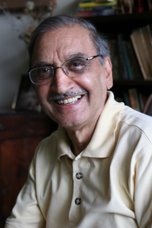
By Narendra Luther


With the fall of Golconda in 1687, the Dakhni suffered a collapse – almost a demise.

Incidentally, Golconda was the last of the southern sultanates to fall to the Mughals. The language which had ruled the roost till then now went under and was superceded by Urdu of the North. Hitherto the term ‘Urdu’ had not been used at all. Dakhni and also the language of daily use in the North were referred to as Hindi. The conquest of Golconda by the Mughals had an effect somewhat similar to that of the conquest of the South by Allauddin Khilji four centuries earlier. The language, which had been used in Delhi and around, came along with the new rulers and overpowered the native language. The word ‘Urdu’ means an ‘army camp’ in Turkish. Hence it was used for the language spoken by the soldiery and the man in the street. By definition, it could not have been very developed as a literary vehicle.

However, unlike individuals, languages don’t die all of a sudden. They linger on and it takes decades - even centuries - for them to be completely wiped out. Dakhni was reduced to the status of second-rate language, and then to that of a dialect.

Vali Dakhni (died 17070)

The most famous name during this twilight phase of Dakhni is that of Vali Dakhni. He was born in Gujarat, which at that time was considered a part of Deccan. His compositions of that period bear the same stamp as that of earlier Dakhni poets and writers. It is virtually Hindi and there are lots of words, similes, and metaphors drawn from the Hindu mythology Note the reference to the Hindu holy places like Kashi, Hardwar and the river Yamuna in one of his poems:

‘Koocha-e-yar ain Kasi hai, Jogi dil wahan ka basi hai,
Pi ke bairag ke udasi soon, dil pe mere sada usdasi hai
Ai sanam tuj jabeen upar yeh khal, Hindu-e- Hardwar basi hai
Zulf teri hai mauj Jamuna ki, Til-e- nazk uske joon sanasi hai


(My beloved’s street is Kashi, my heart is its resident
Separated from my beloved, I am always morose
The beauty-spot on your cheek, is a Hindu residing in Hardwar
Your tress is the wave of the Yamuna, the spot near it is the mendicant)


In one of his poems its amusing to know that while talking of ‘kufr’ (heathenism), he talks of Ram:


‘Kufr koon tor dil soon dil mein rakh kar neeyat khalis
Hua hai Ram bin hasrat soon ja Lachchman so Ram iska


There is an echo of Mohammed Quli in the following couplet:

‘Sajan ka baj alam mein dagar naeen,
Haman mein hai magar ham ko khabar naeen’.

(None else matters in the world except my love
He is within me, yet I am unaware of that)


He is believed to have died in the year of Aurangazeb’s death -- 1707. However, before that his compositions had reached Delhi and won acclaim. Later, he himself visited Delhi and was warmly received in the literary circles there. In Delhi, on the advice of the well known poet, saint and scholar, Shah Sa’adullah Gulshan, he started writing in Urdu with an overlay of Persian which was the vogue in Delhi.

There is a noticeable difference in his poetry after that. Note the following:

Us ko hasil kyonke ho jag mein faragh-e- zindagi
Gardash-e-aflak ho jis ko ayyagh-e- zindagi

(How can he ever find his peace of mind
The cup of whose life is forever revolving like sky?)

Vali is therefore an inhabitant of two worlds – Deccan, and Delhi. He is a poet both of the Dakhni, as well as of Urdu. He introduced the two languages to each other and built bridges between them. Then, he walked, as it were, over that bridge to what was to become Urdu. Garcon de Tassy, a Frenchman edited his anthology in French in 1823.

Behri (died 1718)

Qazi Mahamood Behri is another well-known name of the period. He is believed to have died in 1718. He wrote a long poem called ‘Man Lagan’. According to Dr. Moonis, Behri has probably used more Hindi words in his poems than any other poet:

Ai roop tera rati rati hai, Parbat parbat pati pati hai

(You reside in the smallest object, in every mountain, in every leaf)

He also wrote a eulogy of the new emperor, Aurangzeb.


Shah Turab


Shah Turab’s ‘Man Samjhavan’ (1758) can be considered to be the last composition in Dakhni. It is a fee translation of ‘Manache Shlok’ by the Maratha saint-poet Ramdas (1608-81). Part-religious, part- reformist, it preaches principles of good living.

The opening lines of his composition are:

Sifat kar awwal us ki jo Ram haiga, usi Ram se ham ko aram haiga
Sada Ram ke nam soon kam haiga, haman dhyan usi ka subho sham haiga

(Praise the one who is Rama, He gives us solace
Always concerned with him, forever absorbed in him)

Further, he establishes an identity between Krishna and Ali;

Kishen jis ko kehte Ali nam haiga, Ali nam lene soon aram haiga

(Krishna is the same as Ali, you get peace by taking Ali’s name)


The poet calls himself a ‘Hussaini Brahmin’. It is said that in Pushkar in Rajasthan there is even now a group of dervishes who called themselves ‘Hussaini Brahmins’. They make their living by begging in the name of Hussain. They have adopted Hindu customs and eat only with Syeds amongst Muslims.

The late Professor Naseeruddin Hashmi enumerates 22 poets in the post- Golconda era – including Vali and Behri.

By a strange twist, Dakhni, the older and senior language, having been fully assimilated into the ‘language of the market’, was given the honour of its ancestry by being designated ‘ancient Urdu’. It is interesting to speculate what would have happened if, instead of being conquered, the Deccan had conquered the North!

But then it is one of the ‘ifs’ of history – and of literature.


***

The charming lingo of Bhagnagar

The charming lingo of Bhagnagar
By Narendra Luther

When I first came to Hyderabad in 1959, I felt at once something strange and familiar in the language spoken here. Even the written language had terms, which I had not come across in standard Urdu texts before. It took me some time and a reading of the works of some medieval poets and writers before I exclaimed ‘Eureka’. What had a ring of déjà vu about it was the profusion of Punjabi words in it.

To understand the reason for that we have to go back into history.

Birth of Urdu

Mehmood Ghaznavi conquered Punjab in 1020 A.D. and made it a part of his empire. The conquering army spoke Persian, while the local population spoke Punjabi. This conquest also led to extensive and repeated waves of immigration into India from area where Persian was spoken. Mohammed Ghouri overthrew Ghaznavi in 1186. Seven years later, in 1193, one of his generals, Qutubuddin Aibak captured Delhi and became its Sultan. So, for 173 years while Punjab was under the occupation first of Ghaznavi and then of Ghouri, this interaction continued. The inevitable intercourse gave birth to a new language -- Urdu. It can be said to be an offspring of Persian and Punjabi and its motherland is Punjab

So the language which the first Sultan of Delhi brought to it was a mixture of Punjabi and Persian.

Influence of the South

A century later, in 1295, Allaudin Khilji conquered the South. The language, which he and his troops brought with them, was the language born in Punjab and developed in and around Delhi. In 1327 Muhammad Tughlaq shifted his capital from Delhi to Devagiri and named it Daulatabad. A number of people, including nobles and some 500 Sufi saints followed the royal train. They supplemented the language already brought by Khilji. In 1347 the local chieftains revolted against Muhammad Tughlaq and established the Bahmani Empire. As a policy the new rulers did not keep any connection with the North. From then on therefore the Urdu of the North and that of the south developed independently of each other. The southern branch of the language naturally absorbed the influences of the neighbouring languages like Marathi, Telugu, and Kannada. Expressions like ‘hau’, ‘nakko’ and ‘kaiko’ and many others come from Marathi. In Telugu, while parting, one doesn’t say: ‘I will go’. Instead he says: ‘I will come back.’ In Andhra, I had once waited on and on for my boss who had said good-by to me in these terms. My deputy told me that when he had said “I shall come back’, he meant that he was going. This Telugu idiom amongst others influenced the lingo of Hyderabad.

Dakhni as a dialect

That was the language used by the poets of the South, like Feroz Shah, Burhanuddin Janam and Quresh Bidri, and later Gawwasi, Vajahi and Mohammad Quli. It was in 1555 that for the first time the term ‘Deccani’ or ‘Dakhni’ (from ‘Dakshin’ meaning South) was used for that language in the anthology of Feroze Shah. That language is full of Punjabi words. I once analyzed the glossary of Deccani words given in the anthology of Mohammad Quli Qutb Shah edited by Prof. Mrs. Syeda Jaffar. Quli, incidentally, is the founder of Hyderabad and the first Urdu poet to have a published anthology to his credit. Out of 2466 words listed in the glossary, 1009 or 41% was of Punjabi origin. Out of those, 494 words or 49% are now obsolete in Urdu but still current in Punjabi.

In 1687 when Aurangazeb conquered Golkonda, the Urdu of the North came to overpower Dakhni, which by that time had become a fully developed language. The comparative absence of Arabic and Persian words and the predominance of purely Indian sentiments and imagery characterized it. For example, Quli refers to God by the Hindi appellations like ‘Kartar’,’Sain’and ‘Datar’ etc. rather than ‘Khuda’ or ‘Allah’. Scholars like Dr. Masud Husain Khan have called Dakhni ‘old Urdu’. The poets and writers were proud of the language and as early as in 1613 AD, the poet Quresh Bidri had exhorted the people: ‘Tu Deccani hai pyare, tu Deccanich bol’ (You are Deccani, dear friend speak in that language).

The Current Scene

By the middle of the 18th century, it ceased to be a literary medium and was reduced to a dialect and the imperial Urdu of the North became the standard language. The natives now only speak Daikin. Some poets and prose writers specialize in it. For an average listener, some of its terms and idioms and the way they are rendered create spontaneous humour. The actor Mehmood employs it in the Hindi cinema to arouse laughter. Poets like the late Suleman Khateeb of Gulbarga, Ali Saib Mian and Sarvar Danda used it to great effect in mushairas. Amongst the contemporary poets of Dakhni the names of the late Ashraf Khundmiri and Himayatullah are worth mentioning. Khahmkhah mixes it with Urdu to create laughter. Fareed Anjum is a good contemporary poet in the dialect. In prose, the humorist Maseeh Anjum who passed away recently was undoubtedly the best exponent of the rural idiom of the dialect. As a language, Dakhni is now all but gone.

My two children had picked up the colloquial Deccani from their friends and servants. Their spontaneous expression like ‘nakko’ for ‘no’, ‘kaiko’ for ‘why’ and ‘hau’ for ‘yes’ evoked such laughter from our relations in the North that they used to be teased only to hear these expressions. There is a famous joke about a stranger to the city who enquired from a young boy whether the road he was standing on led to Charminar. The boy replied casually, ‘hau’. A respectable middle-class passer-by heard this. He called the boy and admonished him for using a vulgarism like ‘hau’.

The boy asked meekly; “What should I have said, Sir?”
You should have said: “Ji han ” replied the old citizen somberly.
“So ‘hau’ is a vulgar word?”
“Hau”, confirmed the elder involuntarily.
Now small islands of the Deccani dialect are coming up on foreign soils like England, the U.S. and Canada etc. where Hyderabadi emigrants have settled down. Most likely, it will be frozen there like, for example, the old Norwegian language has in America.
But while it is still here, let’s enjoy its quaintness.

***

Archived by www.mygoldencopy.com

Prince, Poet, Lover, Builder

Prince, Poet, Lover, Builder
By Narendra Luther


We have dealt with the plebian poets of Golconda. Now it is time to meet a royal bard. The founder of Hyderabad, Mohammed Quli Qutb Shah( b.1565; d.1611) was a prince, poet, lover, and a builder.

Mohammed Quli was a prolific and a versatile poet. He wrote nearly 1,00,000 lines of poetry in Persian, and in every genre of what was later to be called Urdu.

Secular Element

Before him Dakhni poetry had been largely religious. Quli introduced the secular element into it. He talks of nature in its variegated aspects, seasons of the year, flowers, fruits, vegetables, gardens, social life, customs, and festivals. He sings of the pleasures of physical love with a rare candour and abandon. For him there is no difference between a Hindu and a Muslim:

Kufar reet kya hor Islam reet
Har ek reet mein hai ishq ka raaz

(What is the heathen’s creed -- and the Muslim’s.
Every practice is based on the secret of love.)

Further:

Main na janun Kaba o but khana o maikhana koon
Dektha hoon par kahan diktha hai tuj mukh ka safa

(I don’t know the holy Kaaba, the idol’s temple or the tavern,
I look everywhere but can’t see a face as clear as yours)


On love he has some observations of universal truth:

Suno log meri prem kahani
Keh peela hai rang ashiqui ki nishani

(Listen folks to my tale of love,
A palate complexion signifies a lover).

Figures of Speech

Quli often employs the devices of alliteration and onomatopoeia very effectively. Note the following:

Piya soon rat jagi hai so dikthi hai sudhan sarkhush
Madan sarkhush, sayan sarkhush, anjan sarkhush nayan sarkhush

(Oh lady, you have kept the whole night awake with your lover.
Cupid is happy, so are the couch, the collyrium - and your eyes)

Dan dana garja joban badal niman
Kangana jhalkar minj sunao tum

(Youth thunders like a cloud.
Let’s hear the jingle of bangles).

Unfortunately, the rhythm and internal rhyme abounding in his poetry can’t be put across in translation adequately.

Hindi element

Quli had a sound and extensive knowledge of the Hindi ragas. He mentions Asavari, Dhanashree, Gauri, Malahar, Kalyan, Basant and Ramkali in his poems. He declares his preference for music in the following couplet:

Mere sang mil bajaati sankh gaati, Sankhara abhran
Sriraga jo gati istri to mujko bhati hai

(She who plays the conch with me and sings Snakhrabhram,
The one who sings Sriraga -- that woman I like).

Quli’s choice of subjects was unlimited. The entire range of life in its variations was covered by him. His idiom sprang from the soil and his language was the one spoken by the common people in their daily lives. He has been compared to Nazeer Akbar Abadi of Agra (1740-1830) as a people’s poet. But Nazeer was a plebian, whereas Quli was a ruler.

His range

Quli is a poet of sight and sound, of relish and savour, of fragrance and redolence, of spice and flavour, of sunrise and daylight, of rhyme and rhythm, of dance and music – of the celebration of life. His poetry glorifies all phases of biological existence. He rejoices in seasons of the year, the rhythmic succession of which makes the sum of our life-spring, monsoon, winter, summer. He celebrates festivals, birthdays, weddings, New Year Days. On each topic, there is not one poem, but many. As life’s cycle goes on, he reverts to each of these recurring events with renewed vigour. He doesn’t get bored with life, because every aspect of it excites him. There is no pessimism or cynicism in him. He is an extrovert whose reaction to events is always positive. He gloats on being the favourite ‘servant’ of the Prophet and the Imams, which made him a favourite of Fate. He glories in being a ruler and living a life ease and sensuality. A pure sense of life pulsates through his writings.

A Misconception

Some people say that Mohammed Quli was also a poet in Telugu. No such claim has been substantiated. I have been able to find only three words of Telugu in his entire anthology – ‘Em Mari em’.


His invocation at the inauguration of the new city of Bhagnagar, has become famous:

Mera sheahar logan soon mamoor kar
Rakhya joon tun darya mein min Ya Sami

(O God, fill my city with people, as you have the river with fish)


Obviously this prayer was heard and the city now suffers from over- population. It has one of the highest rates of growth in the country!


For his legendary love for Bhagmati, and his rich and enchanting poetry, Mohammed Quli has won a permanent place in the hearts of the people of the city. An annual festival is held to commemorate him. Generations of singers have sung his poems. Amongst them the most popular is:

Piya baj pyala piya jai na; piya baj ik til jiya jai na
Kate hain piya bin saburi karo; kaha jai amma kiya jai na
Nahi ishq jis woh bada koodh hai; kadi us say mil baisa jai na
Qutb Shah na do mujh divane ko pand; diwane ko kuch pand diya jai na


(Without the lover one cannot drink the cup!
Without him one cannot live for a moment.
They counsel patience in the absence of love.
Ah! It is easier said than done.
One unacquainted with love is a half-wit!
Don’t ever have anything to do with him.
Don’t give me any advice to a lunatic like me
You can’t din sense into an insane person).


Mohammed Quli is regarded as the first Urdu poet with an anthology to his credit. Dr.Zore edited his anthology for the first time in 1940. Professor Syeda Jaffar brought out a more extensive volume in 1985.

Mohd. Quli’s three successors were also poets. We will meet them next time.

***

Archived by www.mygoldencopy.com

Pioneers of the Dakhni

Pioneers of the Dakhni
By Narendra Luther


In my last article I gave a summary of the origin and development of the Dakhni language and its decline to a mere dialect.

This time I would like to acquaint the readers with some of the pioneers of the language.

European Researchers

Before that it is good to acknowledge that Europeans uncovered much of what we know about this language in the 17th century. According to Prof. Rafia Sultana, Otto Pirsperson ‘detected’ the Dakhni language in the south. His work was carried further by scholars like Springer, Blumehart, and Ethe who made use of the libraries of rulers of Avadh. Bengal and Deccan. Beams, Hornley, and Jules Bloch showed that Dakhni was widely prevalent in the South. Their interest is evidenced by the establishment of the Royal Asiatic Society. Even before the establishment of the Fort William College in Calcutta in 1800, The Fort St. George at Chennai was imparting the knowledge of Indian language to the officers of the East India Company.

Of these, special mention must be made of Garcon deTassy, a Frenchman who edited a volume of Wali Dakkani’s anthology and translated it into French in 1823. He also delivered a series of lectures on the subject in France between 1850 and 1859. In his ‘History of Indian Literature’ he mentions about the existence of 200 writers of Dakhni. Graham Bailey wrote the first History of Urdu literature in English. In his slim volume he also translated some leading Dakhni poets into English.

Work in Hyderabad

The pioneering work of the Europeans which established the separate identity of Dakhni and also its status as the ‘ancestor’ of Urdu was taken up in early 20th century by a group of scholars from Hyderabad viz., Moulvi Abdul Haq, Shamshullah Quadri, Mohiuddin Quadri Zor, Sarwari and Naseeruddin Hashmi. Their researches contradicted some of the earlier theories and give Dakhni its due place of pride.

In the beginning Dakhni was called Hindi or Hindavi. Ferishta the historian says that the official language of the southern sultanates was Hindi—meaning Dakhni.

The rise and development of Dakhni can be divided into two periods i.e. is the Bahmani (14th-15th Centuries), and Bijapur- Golconda Sultanates (16th-17th Centuries). The post-Golconda period was of a mere survival of the language for some time.

Sufism and Dakhni

Dakhni was used originally as a vehicle for the propagation of Sufism in the South. That tradition started with Khaja Bande Nawaz Gesu Daraz whose Miraj-ul-Ashaqeen was a prose treatise on mysticism. However, he had come from Delhi in 1390 AD at the age of 80 and so cannot fairly be credited with making a contribution to Dakhni at that age. Nizami who is considered the first major poet of Dakhni, wrote his epic poem called ‘Kadam Rao Padam Rao’ around 1460. By that time the language had developed a great deal. It is interesting to note that his vocabulary is full of Sanskritic words. Shah Miranji Shamshul Ushaq of Bijapur is another mystic poet. He wrote two long poems- Khush-nama and Khush-naghz are full of pathos. Their main character, a young girl has an inquiring soul whose spiritual thirst remains unquenched despite the soothing advice of her spiritual mentor. Miranji’s son Shah Burhanuddin Janam also wrote long mystical poems. He calls his language Gujri not Hindi or Hindavi which was the name given to Dakhni by others. His language too is full of Sanskrit diction both ‘tatsams (original Sanskrit words in unaltered form) and ‘tatbhavs’ (in slightly changed form). Talking of the control of the senses, Janam uses the allegory of ‘five animals in the body’:

‘Sight is kite; Ear is snake; Nose is peacock; Tongue is dog; Lust is scorpion’. (Here the nature of different animals is compared to the senses. For example, the kite snatches, and the snake’s sense of hearing, and peacock’s sense of smell is said to be very strong). He advises that one should ‘tie them up’ in order to get absorbed in the contemplation of God.

He further says that there are five thieves, which one should beware:

Anger is the thief of wisdom; Arrogance the thief of knowledge; Lassitude the thief of the prayer; Hunger the thief of fasting, and Greed the thief of holy discourse. He adds that it does not matter whether the devotee sits in a mosque or a temple so long as he is absorbed in the contemplation of God because both these places radiate His presence.

Nizami Bidri produced the first literary work in Dakhni about the year 1460 and another writer Qureshi Bidri translated the ‘Kok Shashtra’ into Dakhni under the title of ‘Bhog Bal’ in 1520 AD.

Bijapur School

After the Bahmanis, Bijapur and Golconda emerged as the two contemporary centres of Dakhni. Both had rulers which not only patronnised letters but also who are writers and poets themselves. Ibrahim Adil Shah II (1580-1626) was perhaps the most prominent Bijapuri ruler in that regard. He was interested in classical Indian music and wrote Nauras Nama when he was not yet 30. It has 59 songs in different ragas. It is interesting to note that he starts his work with an invocation to Saraswati. He calls himself the son of Saraswati who is the goddess of learning, and Ganesh the god of all beginnings. One of his songs says:

‘Sarada Ganesh Mata Pita, Tum mano nirmal beeb spatik sisi taas
Ibrahim Gupt ghesu ab nawaj parghat keeno dhani meri raas’

(Saraswati and Ganesh -- my mother and my father! You are two transparent crystals. Ibrahim was lying in oblivion. It was by your grace that he became famous. He is therefore proud of his good luck).

One of the great poets of Dakhni was Abdul, the court poet of Ibrahim Adil Shah himself. His literary work is called ‘Ibrahim Nama’. The book is about the life and grandeur of the court of his patron. He discusses the relationship of words and their meanings with a through background of Indian aesthetics.

After this synoptic view of Dakhni under the Bahmanis and in the Bijapur, we will move on to Golconda, which represented the high point of the development of the Dakhni both in prose, and in poetry.
***

Last of the royal poets

Last of the royal poets
By Narendra Luther

Mohd. Quli’s successor, who was his nephew and son-in-law, Mohammed Qutb Shah (1611-1626) was his polar opposite. As against his philandering predecessor, he was a serious-minded person who observed all the injunctions of Islam scrupulously. When he started the construction of the Mecca mosque, he threw a challenge to any one to come forward and lay the foundation stone if he had not missed any one of the five daily prayers enjoined by his faith. When none came forward, he did so himself declaring that since the age of 12 he had not never missed any prayer.

In keeping with that austere outlook, he scrapped all the celebrations of festivals like Basant, Mrig, and even the Idd on the birthday of the Prophet. Naturally, the patronage of arts and letters too suffered.

He published the anthology of his father-in-law and wrote a poetic preface to it. In that he said:

‘Bajid ho ke ‘Zille Ilahi’ naval --- pade sheir ta paeen kar hiz sakal
Apas dil mein kar fikr sab ek rat—kiye khutba kah mustaid kulliyat
Jo alhaq sune koi gar yo zaban --to dur hal kain marhaba be takan’

(One night I resolved to compile the anthology
So people can enjoy the beauty of his(Quli’s) poetry
Having determined, I decided to write a preface to that
So whoever hears that language, will immediately hail it)

He was also a poet in Persian and sported the pen name of ‘Zillillah’ which means the ‘Shadow of God’, but his anthology has not been found.

Abdullah (1626-1672) succeeded his father Mohammed Qutb Shah at the age of 12. His period marked the decline of the dynasty. He was forced to sign a ‘Deed of Submission’ to the Mughal emperor, Shah Jahan in 1636. Aurangzeb also made his first foray into Golconda in 1656. This was averted due to the intervention of Abdulla’s mother, Hayat Bakshi Begum.

Abdullah was a hedonist and was considered the reincarnation of his grand father, Mohammed Quli. He loved life and indulged in revelries. He reintroduced all the festivals which wee suspended by his father. His accession was welcomed by all men of arts and letters. They emerged from their eclipse and rejoiced. Vajahi, the favourite of Mohd. Quli, rejoiced at his reinstatement and haile the new era as the ‘return of Mohd. Quli’. Similar sentiments were expressed by Ghawwasi and Maqeemwho, in’ Chander Bbadan aur Mahyar’ sang in ecstacy:

Dakhan ke Shahan dekh phir yun kahe Mohammad Quli phir ko aya ahe

‘Seeing the king of Deccan, it seems that Mohammad Quli has returned)

Vajahi even substtuted the name of the previous Sultan with that of the new one and presented the old eulogium to him!

Abdullah’s anthology is not available. Only 97 ghazals and a elegy is extant. According to Dr. Mohd. Ali Asar, a well-known scholar of Dakhni, thiryof these ghazals are repeated in the Ghawwasi’s anthology. It is therefore doubtful if the compositions can be attributed to Abdullah. In some of his poems there is the cadence of taranas .Note these:

Main ai lala,dikhi fala,hangam ala hai dhupkala
Hai matwala, tu pi pyala, ho khush hala, na kar chala

(My love! the time is auspicious; it is sunny
Get intoxicated, be merry, don’t demur)

Then as from a woman to her lover:

Nainan mere asman hon batan dekhe is lal ki
Ho chand is asman ka ko jagmagaga dekhna


Then she becomes more explicit:

Mere sej aa re mere rajna Do hatan mein le tu yo do jobana

(Come to my couch, my prince! Hold my breasts in your hands)


Tana Shah (1672-87) was the last Sultan of Golconda. He had a strange life. His life span of 76 years wa neatly divided into four parts of fourteen years each. He was a remote relatin of the Sultan and so stayed in the palace for the first 14 years of his life . Then he was expelled and spent next 14 years in the monastery of the Saint Shah Raju. He sprung a surprise on him and made him ruler. He remained the Sultan for fourteen years. In 1687 he was defeated and captured by Aurangazeb and spent the last 14 years of his life as a prisoner.

He was also a poet and his most famous poem is :

Again there is a poem in which like Amir Husro he has a duet full combination of Hindi and Persian. Note the following in first line in Hindi and the second line Persian
HINDI :
Maha dani, maha gyani, maha chatter, maha chani
PERSIAN :
Buland pala, buland danashiq, buland himath, buland aqther.
***

Dakhni—a detour to Bijapur

Dakhni—a detour to Bijapur
By Narendra Luther


In my last article (10.1.99), I had called the Golconda period (1518-1687) the ‘golden age’ of Dakhni. It was not as if the language prospered only in Golconda. Simultaneously, in the neighbouring Bijapur sultanate we witness the last flicker of its flame – and of the language. Incidentally, Bijapur fell to the Mughals in 1686- only a year before the fall of Golconda. We will therefore make a detour to Bijapur before we resume our journey on the highway.

Earlier, we noted how Ibrahim Ali Adil Shah II of Bijapur made his contribution not only to Dakhni but also to the classical Indian music by composing 59 songs in 17 ragas and raginis. His grandson, Ali Adil Shah II (1656-72) who was the eighth ruler of the dynasty became the Sultan at the age of 19. He was a poet and sported the pen name of ‘Shahi’. He wrote extensively in various genres of poetry. He composed 21 songs in 21 ragas and raginis. His compositions exhibit a strong influence of the ‘Prem margi’ school of Hindi poetry. A number of his poems are as from a woman pining for her lover. The long poem ‘Birhani Mukhammas’ is perhaps the best example of that. Its refrain is:

Koi jao kaho muj sajan sat; Main neha bandhi toon keeta ghat

(Go, tell my lover, that while I deeply loved him, he betrayed me)

Prof. Zeenat Sajida, a former head of the Urdu Department of the Osmania University and a leading authority on the Dakhni edited an anthology of Ali Adil Shah II: ‘Kalam-e- Shahi ’ in 1962. According to her, this poem became so popular that many others wrote similar poems, which causes some confusion regarding the identity of their authors.

This and other poems of his describe most graphically the condition of woman burning in the fire of separation (Birha in Hindi). Note her burning desire:

Main chhaon hoon piya sang lagi rahun dayam; Yak til juda na hona vaslat ise Kate hain

(I’ll always be my lover’s shadow; then I will not separate from him.)


In a song in Bhairvi raga he gives a vivid description of Shiva. His masterpiece is perhaps his raga named ‘Chouda Ratan’ (Fourteen Ratnas or gems) in raga Kanra. In that he shows his complete knowledge of the story of Amrit Manthan (the churning of sea) from the Puranas. According to this very interesting story the churning was done jointly by gods and the demons at the instance of Vishnu. It yielded fourteen gems including the Moon, the Iravadi elephant, and the water of eternal life- amrit. They were divided amongst various gods. This raga of his shows a surprisingly high degree of knowledge of the Hindu mythology and the intricacies of the Indian classical music. It is easier to read this song in Devanagri because its language and vocabulary is Sanskritic. Whether his topic is secular or religious -- including Islamic -- his vocabulary, and the figures of speech are Hindi out and out.

Just as his grand father Ibrahim was called ‘jagat guru’, Ali was called ‘ustad-e-alam’. It means the same thing in Persian.

Nusrati

It was his court poet Mohd. Nusrat ‘Nusrati’ who gave him this title. The latter chronicled the history of his patron’s struggle against the Mughals and the Marathas in his ‘Ali Nama’. Thus the poet doubles as an historian. There are seven ‘qasidas’ (odes) in his long poetic chronicle. They alone would assure him a place in the hall of fame. Nusrati is very proud of his work and claims that he combined in it the best of ‘Hindi’ and Persian. He himself proclaims that it is the ‘Shahnama’ of the Deccan. (The original ‘Shahnama’ was the great poem, which Firdausi wrote at the instance of Mahmood Ghaznavi and for which he was not paid the promised amount).

In his own words:

Kata hoon sukhan mukhtasar be-guman, keh yoon Shahnama Deccan ka hai jan

(In short, doubtless it should be taken as the Shahnama of the Deccan)

Describing the din of battle, he says that the clanging of swords was so loud that the mountains started trembling.

His masterpiece is the long poem: ‘Gulshan-e-ishq’ (The Garden of Love) which is the love story of Kunwar Manohar and Madhumalati. In this Nusrati is considered at his descriptive best. There is a liberal use of similes and metaphors in the description of the beauty of Madhu Malati, and of palaces, landscapes, and ceremonies.

In this work his imagery is exquisite. To wit: when the moon rose in the west, Sun stepped back and stayed on to see the spectacle.

The boat in the river is mercury floating on a plate!

Nusrati is credited with initiating the transformation of the Dakhni into Urdu by introducing Persian and Arabic vocabulary into it.

Hashimi

Nusrati’s contemporary was a blind poet called Syed Miran Miyan Khan ‘Hashimi’. Because of his disability, he had free access to the royal harem. That enabled him to write the peculiar genre of the language called ‘Rekhti’. In this form the feminine sentiments are expressed in the idiom peculiar to women particularly of the Deccan.

He takes pride in that distinction and says that he has ‘ given a place of honour to the language of ‘oui’. (’Oui’, even today is the exclamation used by girls when they are surprised or horrified).


Thus Hashimi became the precursor of the subsequent ‘Rekhti’ writers of the North. It is surprising that in spite of his blindness, he is very good at description not only of scenes but also of the social conditions of his times. His major work is the narrative love poem: ‘Yusuf Zuleikha’. His vivid descriptions remind one of the blind contemporary Indian writer, Ved Mehta.

That about completes the story of Bijapur’s contribution to Dakhni. Now we can return to Golconda again to go on to the next part of our story.

***

Dakhni- the Golconda Phase

Dakhni- the Golconda Phase
By Narendra Luther

We enter the Golden age of the Dakhni with the emergence of its Golconda phase (1518-1687). Now Mullah Vajahi (d. about 1660) heads the caravan. He saw the rule of three Sultans—possibly four. He was the court poet of the founder of Hyderabad – Mohd. Quli Qutb Shah. He wrote a long allegorical poem - ‘Qutb Mushtari’. It is supposed to be a dramatised fictitious version of the love story of Mohd. Quli and Bhagmati and was highly flattering to his young patron. Notice the original and lavish metaphors used by him when he describes the celebrations on the birth of Mohd. Quli:
‘Because in this gathering, angels had come to render service, the king gave them so much gold that they made a new sky of gold. The sky itself was given so much gold that it keeps on going round day and night to fine a place to keep it (according to the belief of the age, prevalent in Urdu poetry even till now, the sky gyrates). The earth itself was given so much wealth that it is begging heavens for space to keep it. After all these charities, the king himself celebrated the festival of spring (Basant) with diamonds. On Muhammad Quli’s birth gold was distributed so liberally that it has become cheaper than dirt. So many jewels and gems were scattered all over that swans have started coming on land to pick up their food. Because of the o the fall in its value, Gold has become pale.’

Vajahi

Vajahi’s poem on ‘Love’ in his prose work ‘Sabras’ is remarkable for its repetitive use of the word ‘Ishq’ (love) and its detailed exposition of the phenomenon of love:
‘Love is week; love is strong. Love is wise; love is mad. Love shines by itself; it looks good by itself. Who can control the wayward behaviour of love? Love is sun; love is moon. Love is faith; love is belief. Love is ruler. Love lights the skies; love illumines both the worlds...’

And so on it goes for a whole page.

In the original Dakhni it has overpowering rhythm and sway of a ‘qawwali’. I therefore included it as a qawwali in the film script that I wrote for the Zee TV on the love story of Mohd. Quli and Bhagmati.

Similarly, his discourse on ‘Aql’(wisdom) is a torrential flow of words, which is untranslatable. Vajahi was very proud of Deccan – and Telangana. He says:
‘There is no place like the Deccan; it abounds in the merited
Splendid Deccan crowns the head of other lands
Deccan is a special land; and Telangana is its heart’


If ever a Telangana state is formed, doubtless Vajahi will be its patron –poet. And his poem will perhaps provide a draft for the State anthem.

His work, ‘Sabras’ is the first secular prose work in what is today called Urdu. It is an allegory describing the eternal conflict between Head and Heart, and Beauty and Love. In this the characters are Beauty, Love, Sight, Tress, Patience, and Recantation etc. Vajahi uses Hindi chhand and not the Persian poetic measure. But for the script, it is classical Hindi. Vajahi says himself that that ‘of all the Hindi writers so far, none has written such good chhands in the Hindi language’.

It is interesting to note that one of the pioneers of the renaissance of the Dakhni in Hyderabad in early 20th Century, Dr. Zore started a literary magazine in 1938 and named it ‘Sabras’. Now edited by Mughani Tabassum, a former head of the Urdu department of the Osmania University, it is highly regarded in literary circles.
Interestingly, Khwaja Hamiduddin Shahid in Karachi also started a magazine with the same name when he migrated to Pakistan.

Ghawwasi

After Vajahi’s patron died, he was eclipsed by another poet, Ghawwasi (literally, a diver—for pearls). He became the port-laureate of Mohd. Quli’s grandson, Abdullah. Ghawwasi is renowned for his three long poems –‘Maina Satwanti’, ‘Saif-ul- Mulook’, and ‘Tuti Nama’.
‘Maina Satwanti’ is based on an old Indian folk-tale. There was a king, Bal Kanwar. who had a beautiful daughter called Chanda. One day she saw a shepherd named Lorik pass below her balcony and fell in love with her. He did not respond to her advances saying that he had a lovely wife. Also a poor man like him could not aspire so high. However, on being taunted by her, they elope.

Chanda’s father reconciled to that. He had seen Chanda’s beautiful wife and coveted her. He sent an old hag to seduce her. Maina rejected the offers disdainfully. One day the king went to her house and hid himself to hear the conversation between her and his emissary. He was so struck by her noble-mindedness and the purity of her heart that he fell at her feet and asked for forgiveness. Thereafter, he mounted a search for her daughter and the shepherd. After their apprehension, Chanda was killed and Lorik was restored to his wife. The characters of this story are all Hindus and so is the locale. But Ghawwasi makes them utter Islamic expressions like Satan, Rasul, Khizar Sikandar, and Qaroon etc. Inspite of that incongruity, Hindi elements predominate the composition. For example, a chase woman and a faithful wife has:

‘Mithai zaban mein,mubarak bachan; Kari baat jeon phool jhadte rattan’
(Pious in thoughts and sweet of tongue.
When she speaks pearls fall from her mouth)

‘Sai-ful-Mukluk’, is considered his best work. It is derived from the ‘Arabian Nights’. Ghawwasi has a great felicity in both Hindi and Persian vocabulary and he is rated one of the greatest Dakhni poets.

Ibn-e- Nishati was the next poet of note. He did not attach himself to any court. His fame rests on his long poem ‘Phoolban’ in which, he has employed thirty- nine figures of speech.
The story of ‘Phoolban’ is that the ruler of Kanchan Patan sees a dervish in his dream and becomes his follower. He locates him after a long search. The dervish narrates new stories to him every day. One story was about a nightingale that used to ‘tease’ a particular flower in the garden of the king of Kashmir. As a result of that, the flower would wilt. One day the nightingale, on being caught, revealed that it was the son of a merchant from Khatan, a country on the north of China. He had fallen in love with the daughter of a monk. The monk cursed them and so he became a flower and the girl, a nightingale. The king invoked the blessing of God on them whereupon they resumed their original form. The king appointed them tocourt. They used to narrate daily new stories to him. Thereafter it goes on like the ‘Arabian Nights’—a chain of stories.

Incidentally, Prof. Rafia Sultana, a former head of the Urdu department of Osmania, who was commissioned by the AP Sahitya Academy to compile an anthology of Dakhni prose master pieces has named her house ‘Phoolban’.

***

Archived by www.mygoldencopy.com