Showing posts with label Legends and Anecdotes of Hyderabad. Show all posts

Thursday, December 7, 2006

The last days of the last Nizam

Legends and Anecdotes of Hyderabad -- 52

The last days of the last Nizam
By Narendra Luther

Three kilometers from Masab Tank stood the King Kothi surrounded by walls, which had not been whitewashed for some years. It still housed the Nizam. He was no longer the ruler but his legend survived and even flourished. The richest man, the most miserly man, the proudest prince who had been humbled, the man whose word was law for close to four decades, who issued orders on everything expect on the rising and setting of the sun, who could pick up any woman he liked... he stayed there surrounded by his family, his mistresses, their dependents and their servants -- and their dependents. A whole army of retainers catering to the whims fancies and illusions of one man who was still the absolute ruler within the four walls of his dilapidated palace –the ‘King Kothi’.

He still issued firmans in the old style in Urdu but they pretained to his place affairs or his private dealing. Some firmans just embodied his unsolicited opinions on trivia. It was pathetic to see the descendent of Asaf Jah I who granted concessions to the French and the British trading companies and laid down stiff conditions for their enjoyment, now issued dictats on inconsequential matters to fill up his time. The ‘Nizam Gazette’, an Urdu daily used to publish them regularly. So did some others like the ‘Shiraz’. The following are two typical firmans:

‘ Dated 10 Rabi-ul-awal. 1376H (15 October, 1956)

Regarding: Inayat Ali, Boy aged 17 or 18, son of Khurshid Ali, servant in the palace of private estate.

Pleased to state that this child is also motherless because his mother died in his early childhood. The mother of Wasif Ali who is resident of Nazri Bagh is his father’s sister. Because of changed times, his father cannot bear the expenses of his education. He had, therefore, entrusted him to my care. The child was also willing to come to Nazri Bagh. Therefore, he has joined Wasif Ali

Who can be there, who due to the fickleness of these times wold refuse t entrust his children, whether male or female, to my care? My circumstances are known to the whole world. yet the welfare of the boys and girls staying here is apparent. It won’t be out of place or considered self- praise to stay that these people were lucky that they got such a master of commander who considers them his children and treats them like wise. No doubt about that.’

The second firman:


‘Dated 15 rabi-ul-sani, 1476 H (19 November, 1956)

Regarding: Circumstances of Iqbal Jung***, son of the late Maharaja Peshkar
[Peshkar was Maharaja Kishan Pershad’s hereditory designation] (Born of the late
Guousia Begum)

Pleased to state that the upbringing and education of his boy during the lifetime of his father was not proper. But after the father’s death his condition has worsened. Due to bad company and excessive drinking he developed an enlarged liver (a few years ago). Treating him as an orphan and also because of the fact that my daughter was engaged to him, he was kept in the Nazri Bagh and treated with great care at a time when there was no hope for his cure. It is a matter of satisfaction that he recovered. He was also under a large debt. This could not be discharged from the amount received by way of compensation of the Peshkar’s estate. Nor could it be settled with the sale proceeds if the house (Situated within the compound of the Peshkar’s mansion in the city) which is father had given him during his lifetime for his stay. Out of this amount also part of his debt was discharged through a committe to the sarf-e-khas. Further, in spite of instructions to the contrary, he kept on taking loans without knowledge though for a long time since his coming under my care, his personal needs did not cast any financial burden on his small income (from the compensation for the jagirs of the Peshkar). Even then he did not mend his way (that is, he continued to incur debts).

Because of the foregoing, I had to write these few lines to bring the circumstances of his case to the knowledge of the public. After his declaration, if any one gives him a loan, it will be at his own risk. It will not be repaid from his income, because his income which was credited by way of trust in the private estate of the suf-e-khas has been fully spent (and now nothing is left of his private income). A part from that, if this boy does not become sensible he will get embroiled in litigations. His life will become notorious and he will get into all sorts of troubles. Then he will be deprived of my patronage and his continued stay in the Shadi Khana will become impossible. That’s all.

The Nizam also occupied himself by arranging matches for the offsprings of his retainers, dependents and servants. After the nuptials, he would send for the bedsheet to check weather the girl he had married off was in fact a virgin. He prepared the menus for different residents of the King Kothi according to their rank and status and if someone fell ill, he would prescribe medicine as well as the special diet. He was a staunch believer in the Greco-Arabic (unani) system of the medicine and his prescriptions always proved very effective because nobody dared to re[port otherwise. Many of his patients took his prescriptions and medicines respectfully, but in fact took a proper allopathic medicine. The credit, of course, went to the ‘great healer’. Occasionally he would still send a gift of some fruits or a part of his royal dinner (khasa) and in return get a nazar but that part of his business had tapered off.


The first Nizam had said in his will that he was leaving enough wealth to last seven generations - if properly spent. His successors had squandered it but something was still left when the seventh Nizam, Mir Osman Ali Khan, came upon the scene. He set himself the task of augmenting the inheritance.

And then while he was still on the collecting spree, he found that his world had crashed around him and that the sources of funds had all dried up. He was also painfully aware of the marked propensity of his sons to spend recklessly. That was the main point on which he found fault with them. He cautioned them against excessive spending but that had no effect upon them. They spent beyond the purses fixed for them; they incurred debts from all and sundry and the ageing Niam felt angry and embarrassed. But still he worried about what might happen to them after he was no more.


***
Archived by www.mygoldencopy.com

A feudal lord & Revolutionary

A feudal lord & Revolutionary
By Narendra Luther

Ravi Narayan Reddy was one of the great heroes of the Freedom Movement in Hyderabad. He was also a colorful and courageous man who sacrificed a great deal for others. A feudal landlord by birth and inheritance, he became a powerful agent for its demise.

He was born in a prosperous jagirdar family in Bollepalle village of Nalgonda district in 1908.. As a student while staying at the Reddy Hostel in Hanuman Tekdi at Hyderabad he took keen interest in sports, scouting and acting. He carried a life-long journey to his spinal chord from a game of football. In 1930, when he was in his intermediate class, he gave up his studies and joined Mahatma Gandhi's Civil Disobedience Movement.

His wife died in 1929. Ravi was so impressed by Mahatma Gandhi’s work for the uplift of Harijans, that he went to Wardha and presented all her jewellery to Mahatma Gandhi as a donation. When, in 1932 Thakkar Bapa, established a branch of the All India Harijan Sevak Sangh in Hyderabad Padmaja Naidu was made its president and Ravi, its secretary. Next year, on her resignation due to ill health, Ravi became the president and remained n that position for six years. In 1938, he became one of the founder members of the Hyderabad State Congress and, on the government's refusal to lift the ban on it, offered satyagraha in the first batch on 24 October 1938. For this, he was imprisoned.

Social Reformer

He was also a leading member of the Andhra Mahasabha, which started in 1928 as a socio-cultural organization for the Telugu-speaking people of the State. He became its president thrice -- in 1941, 1944 and 1945 under his leadership, it was transformed into a vigorous political body. Culture can never be separated from economics and politics. He took up social issues like widow remarriage and literacy. When the Communist Party fixed a ceiling of 20 acres on land-holding, Ravi distributed 500 acres of his share of land to the cultivators, keeping only the prescribed 20 acres for himself. When Mahatma Gandhi passed through Secunderabad in 1934, Ravi donated fifty tolas of gold for his cause. However, he was influenced in his political life more by Nehru than Gandhi. Finding the approach of the Congress leaders in the State to mild, he joined the Communist Party in 1939 and led the armed struggle of the peasantry of the Telangana area of the State.

Immense popularity
After the Police Action, Ravi some others believed that the goal had been achieved and the communists should give up the armed struggle. But there was the Ranadive doctrine propounded at the Second Congress of the Communist Party at Calcutta in February, 1948 which called for the continuation of the armed struggle. Consequently, there was confusion in the ranks of the party as to the future course of action.

However, the imposition of the ban on the Communist Party three days after the Police Action made the decision for them. Ready to come out in the open, Ravi and his comrades were once again driven to their hideouts. They reverted to their previous life style --spending there days either underground, or in prison. Released days before the first General Elections of 1952, Ravi contested both for the Parliament as well as the State Assembly. His popularity was so great that he was elected to both. He polled the highest number of votes for the Parliament in the country surpassing even Nehru. Not only that, his opponents did not get a single vote. Also in Nalgonda district his party won all the 14 Assembly seats though he addressed only two meeting.

In the second General Elections of 1957, due to a taunt of the Congress for having defeated the people's Democratic Front - a group of left parties under which banner the Communists had fought the election, he was asked to contest for the State Assembly. In that, he was pitched opposite his wife's elder brother V. Ramachandra Reddy, who was the first to donate 100 acres of land and thus to launch Vinobe Bhave's Bhoodan Movement. Though he too was popular, he lost to Narayan Reddy by 8,000 votes.

Telangana Armed Struggle

Ravi, like most Communist was an atheist. He never visited temple but did not stop the members of his family from doing so.

He was one of the strong proponents of the movement for an integrated Telugu-speaking state the virtual Andhra. A good deal of the credit for the formation of Andhra Pradesh, therefore, must go to him.

A legend in his lifetime, this veteran of the armed struggle, passed away in glory on 7 September 1991. His last words were addressed to Ch. Rajeshwara Rao from whom he enquired as to what had happened to the cases of the pension of some of the freedom fighters, which he had canvassed.

His will and testament

In his will, he said that his wife should not remove her bangles or her bindi, the vermilion mark on her forehead, as widows customarily do. Later, however, he modified it to say that she could do as she pleased. Such a liberal approach characterized his attitude to her and to women in general all his life. He however enjoined upon his children not to immerse his ashes in the Ganga or some other river, but to scatter them over the crops in his fields. A samadhi might also be constructed in one of the family farms.
***

Wednesday, December 6, 2006

Hyderabad’s Longest Week

Hyderabad’s Longest Week
By Narendra Luther

The Police Action against Hyderabad was started on Monday, 13th September 1948. There was hardly any resistance from the Hyderabad forces.

On Friday, 16th September the Director General of Police, Deen Yar Jung called Zafar, the executive incharge of the Deccan Radio to broadcast only music. The Indian forces were hardly thirty miles away.

On the morning of the 17th, Kasim Razvi rang up the Deccan Radio to say that he wanted to contradict rumours that he had fled Hyderabad. He was asked to come to the studio at 10-30.A.M. Then Zafar realized that in the new circumstances, he ought to take the permission of the controller of broadcasting for that. He was not to be found. He contacted ADC to the Prime Minister. He had gone to meet the Nizam. Razvi’s talk was delayed by over half-an-hour. He made a brief speech, starting on a strident note but sobering down to assure people that he would not desert them.

At noon, a messenger brought a personal note from the Nizam to K.M.Munshi asking him whether he could see the Nizam at 4-00 p.m. He had not granted Munshi an interview since his appointment as India’s Agent General ten months ago.

Earlier, the Nizam had spent the morning in hectic consultations. His premier had seen him twice already. The Nizam had summoned him the previous day and asked for his resignation by the morning of the next day. The cabinet decided to resign forthwith.

As soon as Munshi entered the sitting room, the desolate ruler said: “The vultures have resigned. I don't know what to do”. He handed him his premier, Laik Ali's letter of resignation. His hands were shaking. He had had this problem for some time which became pronounced when he was tense or angry.

Munshi had come to know about the resignation earlier from Laik Ali himself. He said: “I am worried about the citizens of Hyderabad. There is no government. The troops and the police have disappeared from the streets. General Choudhuri will take a day or so to reach because the approaches to the city have been mined. I suggest that Your Highness may ask General El Edroos to take steps to preserve law and order in the city”.

The Nizam noted that Munshi had not used the word 'Exalted' before Highness. But it was no occasion to point it out. He asked that the Army Commander be sent for.

“Munshi Saheb says that steps have to be taken to maintain law and order in the city. What do you say?” The Nizam asked General El –Edroos.

“Yes, Exalted Highness. The proper course is that I should take charge of the city and surrender it to General Choudhuri when he arrives”.

“Go ahead”, he said. Then turning to Munshi, added, “I am sending a chartered plane to Sir Mirza Ismail. He must carry on the government”.

Munshi was surprised. Obviously the Nizam had not grasped the full gravity of the situation. He still thought he was the master. Munshi put him wise: “I have no communication from my Government so far. I don't know whether they would like Sir Mirza to take charge. But some arrangements must be made meanwhile to carry on the administration so that innocent blood is not shed needlessly”.

They discussed the possible composition of the new interim government. Munshi did that without any brief from Delhi.

He suggested that the Nizam may make a broadcast welcoming the Police Action and withdrawing his complaint to the Security Council.


“Broadcast!” The Nizam repeated the word as his glazed eyes met Munshi's. The latter helped by paraphrasing the term - “I mean speak on the radio.”

“But how does one broadcast?” asked the Nizam innocently.

Munshi explained.

It was the Nizam's first visit to the Radio Station. There no red carpet was spread for him; no formalities were observed. No music, no anthem was played before or after the broadcast. The speech was in English. Nobody bothered to translate it into Urdu.

He was nervous, as all broadcasters are when they first face the microphone. The gravity of the occasion and the text of the broadcast added to that. All the braggadocio had been done on his behalf by others. He had signed some letters indicating his intractability. But now he had to eat his words and reverse his stand in his own voice which would be heard all over the world. The glory of defiance had belonged to others; the humiliation of public apology was his.

At that moment an era ended. While the Indian army was yet to arrive, the old order had already collapsed.

After the broadcast the Nizam drove back to King Kothi to brood. Munshi on his way to Bolarum found the streets full of excited crowds shouting national slogans. Munshi was mobbed and had to address groups of people enroute. They wanted to be told by India's official representative that they were now part of the great motherland.

That night the city changed a great deal. Many khaki uniforms were discarded, many beards shaved. The shouting, rampaging crowds of razakars disappeared magically. The citizens emerged from their cocoons. People of all ages came out in throngs waving the tricolours of India. Suddenly where there was fear and restraint, now there was life and laughter. There was a general release of tension and a new, quivering anticipation.

Earlier, it had been agreed that the surrender ceremony would take place 8 kilometres out of the city at midday on the 18th. But the progress of the march of the army was slower than expected. The mines laid on the way by the Hyderabad forces were posing problems. The ceremony was therefore postponed to 4 p.m.

General Edroos was waiting at the appointed place with one aide. General Choudhuri reached the spot dot on time.

The two adversaries stood facing each other. Both were slim and tall -- about the same height. Edroos in his beret cap, tucked-in shirt, rolled-up sleeves, leather belt, and his swagger stick under his left arm; Choudhuri in his peaked cap, full-sleeved bush coat and without his baton. Edroos saluted. Choudhuri returned it and then spoke gravely:

“I have been ordered by Lt. General Maharaj Rajendresinhji, General Officer Commanding-in-Chief, Southern Command to take the surrender of your army”.

“You have it”.
“You understand that this surrender is unconditional”.
“Yes, I understand”.

Choudhuri's grim visage melted into a smile. He stretched his hand and shook Edroos by the hand. Then he opened his cigarette case and offered him a cigarette. Edroos pro-offered a lighter. Choudhuri's team joined them.

The party drove to the residence of India's Agent General. A jubilant crowd cheered the victorious general there. He waved in return and then sat down to discuss the details with Munshi, Edroos and others.

Crowds had begun to gather at the corner of the Parade Ground in Secunderabad since morning to greet the Indian army.

It was a sea of humanity, heads, heads, heads, bare and covered. Men and women, ten deep, twenty deep, children on shoulders, on heads of adults, young people perched on the railings, on tree-tops, even on telephone poles. It was a riot of colours, dresses of all types in all the colours of rainbow, only deeper, like a field of flowers of different hues. And then tricolours, thousands of them, each hand holding one, even two, green, white and ochre, fluttering joyously. Flags made of cloth, and of paper quivered in the gentle breeze. They reflected the frisson of the hands holding them. There was clapping and wild cheering, shouting and shrieking. People threw flowers at soldiers sitting on top of armoured cars and waving to crowds. Suddenly, garlands would land on the vehicles. Throngs of people shouting slogans which could not be uttered till the previous day.

‘Quami nara’ - a shrill, lone voice shouted. And the mob shouted back in unison, in a loud abandon -- Jai Hind. This was taken up and repeated from different groups.

“Mahatma Gandhi” cried one voice -- “Ki Jai” responded the chorus.

‘Pandit Nehru’ ... ‘Zindabad’
‘Sardar Patel’ ... ‘Zindabad’
‘General Choudhuri’ ... ‘Zindabad’
‘Hindustani Fauj’ ... ‘Zindabad’
‘Bharat Mata’ ... ‘Ki Jai’

There was no order, no sequence but one slogan followed another without any interruption. Each time as a thousand throats shouted in unison flags went up. The din multiplied. Far in the distance some people were dancing. There was celebration everywhere. People had this brief spell to squander recklessly all their pent-up emotions of these past weeks when the flame of life had burnt low.

They were now free!

There were friendly cross-talks between the soldiers and the spectators at the turnings of the road. Near the Plaza Talkies, a soldier shouted: “We have driven out the razakars from the field. Tell us where the rest are.”

The crowd shouted back: “Everywhere”!

Somebody suddenly shouted: ‘ Razakar’ -- and the crowds roared:‘Murdabad’.

But that was a discordant note. The chant-leaders brought them back to the cycle of recitation of Zindabads. It was a positive, hallowed moment. Let it not be marred by negative outbursts.

Then light began to fade. Vans were going up and down announcing the imposition of the curfew from 7 p.m. to 6 a.m. The crowds began to melt. They hurried to reach their houses in time. There would be celebrations there too.

Soon there was quiet everywhere. Silence and knowledge of security such as the city had not felt for the last many months overcame it. A feeling of peace wrapped it, like a snug coverlet. It too slid into asleep -- exhausted and relieved.

Tomorrow would be a new dawn.

voice, he asked where the speaker was sitting. He even looked at the back of the radio set to see whether Nehru was sitting inside the box. The director then explained to him how the speech was being transmitted from Delhi.3

Nizam and the Radio
Nizam VII was reputed to be the richest man of his time. However, his appearance and his style of living suggested the contrary. He was indifferent about his dress and appearance. It will surprise many to know that he did not have even a radio set.

After India became independent in August 1947, he did not join the new Union. Instead, he decided to become independent. That led to prolonged negotiations between him and the government of India. During the period, the Prime Minister of India, Nehru once made a broadcast about Hyderabad. It was proposed that the Nizam should listen to the broadcast. The director of the Hyderabad State Radio was asked to send a radio station to the Nizam
Nizam and the Radio Nizam VII was reputed to be the richest man of his time. However, his appearance and his style of living suggested the contrary. He was indifferent about his dress and appearance. It will surprise many to know that he did not have even a radio set.

After India became independent in August 1947, he did not join the new Union. Instead, he decided to become independent. That led to prolonged negotiations between him and the government of India. During the period, the Prime Minister of India, Nehru once made a broadcast about Hyderabad. It was proposed that the Nizam should listen to the broadcast. The director of the Hyderabad State Radio was asked to send a radio station to the Nizam’s palace, the ‘King Kothi’. When the Nizam heard Nehru’s voice, he asked where the speaker was sitting. He even looked at the back of the radio set to see whether Nehru was sitting inside the box. The director then explained to him how the speech was being transmitted from Delhi.

Police ActionFinally, tsafety of the .Th Nizamalso and offered to help draft the speechNmob shouted back in unison, in loud 34

The Indian forces reasched the outskirts of the city on four days later.On the of 17th Septemberthe of Laik Ali, the Prime Minister that he was was. He suggestedshould be asked to serve law and order in the city.
He sent for his comma
Nizam VII was reputed to be the richest man of his time. However, his appearance and his style of living suggestedd the contray. He was very careless about his dress and appearance. It will surprise many to know that he did not have even a radio set. After India Became independent, he did not join the new Union. Instead he decided to become independent. That led to prolonged negotiations between his government and the government of India,. During the period, the prime Minister of India, Nehru made a broad
The Indian forces reasched the outskirts of the city on four days later.On the of 17th Septemberthe of Laik Ali, the Prime Minister that he was was. He suggestedshould be asked to serve law and order in the city.
He sent for his comma
Nizam VII was reputed to be the richest man of his time. However, his appearance and his style of living suggestedd the contray. He was very careless about his dress and appearance. It will surprise many to know that he did not have even a radio set. After India Became independent, he did not join the new Union. Instead he decided to become independent. That led to prolonged negotiations between his government and the government of India,. During the period, the prime Minister of India, Nehru made a broadcast about Hyderabad. It was proposed that the Nizam should listen to the broadcast. The director of the Hyderabad State Radio, called the Deccan Radio was asked to send a radio station to the Nizam;s resiodence, the King Kothi. When the Nizam heard Nehru cast about Hyderabad. It was proposed that the Nizam should listen to the broadcast. The director of the Hyderabad State Radio, called the Deccan Radio was asked to send a radio station to the Nizam;s resiodence, the King Kothi. When the Nizam heard Nehru’s voice, he asked where the speaker was sitting. He even looked at the back of the radio set to see whether Nehru was sitting inside the box. The director then explained to him how the speech was being transmitted from Delhi.3
* * *
Archived by www.mygoldencopy.com

Musings

Musings
By Narendra Luther

I SHOULD STOP HERE. The 1st of November 1956 is a good terminus. It constitutes an important landmark in my life. After that day I became the capital city of anew, bigger state. But life stories do not end abruptly on a single day. Events do not come to a close in such a neat fashion. There would still remain three decades of my life left but they cover a period too close for me to write easily about. Events do not become apart of history untill people who shaped them are all, or almost all, gone. The people responsible for making and braking things during these three decades are still around. I have hence decided not to talk about them.

I can, however, talk about myself. Now that I have crossed the 400th year of my life, I muse a great deal. I think of the stresses and strains I have suffered over these last few decades. I look at my present state of health and wonder hew long I will last. I had said earlier that cities are like human beings. In one important respect they are not. They do not all have to die. There is no natural, average life-span for them as there is for humans. Some prosper, some linger on, some explode with a natural catastrophe like an earth quake or are washed away by a delnge. Some are devastated by war of civil strife and some wither away. But then, mostly, they renew themselves. They shift their center of gravity, like Delhi has done so many times but they go no for a long, long time, I am rather young from that standpoint.

But I feel old. It is a feeling of not being cared for, of being taken for granted. And that is not all. There are positives strains and humiliations to which I am subjected day out. My sheer growth and external and seeming-prosperity eating at my vitals. I cannot sustain myself. I am over- stretched, overstressed, exhausted.

I have grown in stages. There have been distinct phases through which I have passed. The first phase started when I came into being in 1591. I lasted almost a century till 1687, when Aurangzeb sacked me. The second was when I was revived after a gap of 76 years during which period I had ceased to be a capital city. That was in 1763, when the second Nizam shifted his capital from Aurangabad and I became the capital of whatever was left to the then Deccan province. The next phase began when the same Nizam signed the Subsidiary Treaty with the British in 1798 and six years later the British Residency was built here. The fourth stage came when I the railway were brought to the state and I was connected to bombay and Madras in 1876. The fifth phase occurred in 1908 when I suffered the worst-ever floods in my life, and for the first time- and the last -my systematic renewal was taken up. The sixth phase marked my integration with independent India in 1948, and the last was when I became capital of the expanded state of Andhra Pradesh, as it came to be called, in 1956. Of these only the second phase was negative and destructive. All other developments were positive. The most significant development was the last phase which changed my basic character.

So much growth occurred at this stage in a short time, so much change came over y features that at times even I found it difficult to recognize myself, I have already referred to the spurt of immigration from the Andhra areas. That was not all. There was immigration from outside the state and even from abroad. My general rate of growth has been on of he highest in the country in the last few decades.

I started as a city of 3.23 square kilometers surrounded by gardens seven times larger in extent. Today my area is 217 square kilometers. In 1991 my population stood at 4.3 millions). The increase is 67% Consequently, vast areas which were covered by greenery have been invaded by concrete. In my heart, multistoried buildings have risen in a crude imitation of Bombay and Calcutta.

Even the rocks of Banjara Hills and Jubilee Hills have not been spared. They have been blown up like bunkers to make way for structures suited to plans. My natural wealth has been plundered, my features spoiled.

There was been no systematic, planned catering to the needs of my citizens. Incremental, ad hoc, additions have been made, but they have no relationship to needs. In summer when my people most need it, the water supply is officially restricted. It is staggered n any case but in acute summer it is admitted openly and officially and every thing is blamed on the rains as if we were living in the reign of Sultan Abdullah Qutb Shah and not at the close of the 20th century. Power supply is erratic, one gust of wind or a mild shower and the lights go off. Power cuts are imposed in two hours but in practice for a good part of the day there is no power supply. And there is no predictability about when it will go.

When it rains the roads are flooded; water accumulates and stagnates in every locality because of inadequate drainage and faulty cambering and sloping of roads. In many parts there are no metalled roads. Where they do exist, they are full of potholes. The condition of my roads proves that I am 400 years old. Every day newspapers carry pictures and stories of the thorough inadequacy of civic amenities. People blame the Municipal Corporation and call it names. The traffic is chaotic.

* * *

Archived by www.mygoldencopy.com

Hyderabad’s first popular Chief Minister

Hyderabad’s first popular Chief Minister
By Narendra Luther

After the Police Action, Hyderabad was placed under a military governor. After about a year a civil government was constituted under an ICS officer, MK Vellodi. Some prominent local freedom fighters were made members of his appointive cabinet. This lasted until early 1952 when first General Elections were held in the country. Hyderabad also had elections and the Congress Party won the elections. It constituted the first popular government and Burgula Ramakrishna Rao became the first popular Chief Minister of the State. The Nizam became the titular head as the Raj Pramukh of the state.

Burgula Ramakrishna Rao was born under the Zodiac sign of Pisces. Fish is its ruling symbol, and Neptune its ruling planet. People born under this last of the twelve signs are supposed to have something of the quality of each of the dozen signs. That spells versatility. They are dainty, says an authority, and are seldom tall. They are gentle dreamers, sensitive, creative, understanding, friendly and reliable. They also have a great sense of pity.

Versatile Personality

Born on 13 March 1899 at Burgula village of Shadnagar taluk of Mehboobnagar district, Ramakrishna Rao seemed to have all the important characteristics of Pisces. His father was a liberal maqtedar, that is, a small jagirdar. The family had a tradition of learning and so while the elder brother, Venkateshwara Rao went in to study the Physical Sciences, the younger; Ramakrishna Rao took up Humanities. He went to Poona for his graduation and then to Bombay from where he obtained a degree in law.

Ramakrishna Rao was a polyglot. He was proficient in Telugu, Urdu, Hindi, Marathi, Kannada, Persian, Tamil and English. So, not only in the tri-lingual state of Hyderabad but virtually anywhere in the subcontinent of India he was at home. He wrote a good deal of poetry in Telugu, both devotional and lyrical, and some in English.

He also translated the quatrains of Omar Khayyam direct from Persian into Telugu and wrote a history of Persian literature in Telugu. His articles used to be published in Bharati, a prestigious Telugu monthly published from the then Madras. His translation of Sufi Sarmad's works from Persian into Telugu is rated very high.

Entry into Politics

He became one of the founder members of the Andhra Jana Sangh in 1921 and from then on became involved in active politics. He presided over the second session of the Andhra Mahasaba Conference in 1931. He was a member of Provisional Committee when it tried unsuccessfully to set up the Hyderabad State Congress in 1938. He was often arrested for his politics and, when after the Police Action, a civil administration was set up under the chief ministership of Vellodi in 1950, he was appointed Minister for Revenue and Education.

Reformist Chief Minister

After the first General Elections of 1952, he was elected the first popular Chief Minister of Hyderabad. He remained in that job until the formation of Andhra Pradesh in November 1956.

On assuming office, most radicals turn conservative. With Burgula the case was reverse. As a Congress leader, he was considered a liberal as compared to Swami Ramananda Tirtha who was a radical, but after he became first a Minister and then Chief Minister, he was responsible for the most radical reforms in the state which were way ahead of the rest of India. He was the author of Hyderabad Tenancy Act, which provided protections to tenants. He also set up Land Commission for suggesting land reforms, which proposed a ceiling on land holding. Both were pioneering measures in India.

Soft spoken and accommodative, he was not a rabble-rouser. He shone best in the legislature. In the mid-term elections in Andhra in 1955, he was sent as a star performer and spoke in favour of a Greater Andhra. On its formation, he bowed down to make way for Neelam Sanjiva Reddy to lead the new state.

Disgust with Politics

By that time he was quite disgusted with the factional politics of the Congress and did not take much interest in the state politics. The leadership both at the Centre and the state was also cool towards him. From June 1957 until 1962, he served successively as Governor of Kerala and of Uttar Pradesh. He was very keen to go to the Lok Sabha in 1962 and again in 1967 but the new set-up did not fancy that idea. As compensation, he was made a member of the Rajya Sabha which he served from 1962 to 1966. He was very soft and emotional and would often break down when he saw man's inhumanity to man. He believed that politics was the art of the possible and so was not averse to make compromises.

Brugala had never met the Nizam before he became Chief Minister. In their discussion, he and his friend, M. Narsing Rao used to refer to the Nizam as the afeemchi -- the 'opium eater'. Even afterwards when he had to deal with him officially quite often, he kept his distance.

Whether in office or out, he maintained his interest in literature and social service and served on a large number of related organisations still his death on 15 September 1967.

***

Civil Servant to Prime Minister

Legends and Anecdotes of Hyderabad

Civil Servant to Prime Minister
By Narendra Luther

Of the 40 Prime Ministers who served the Nizams of Hyderabad, only three were from outside the State. Out of them only one – Akbar Hydari -- was a civil servant in British India.

He was born in 1869 to Seth Nazar Ali Hydari, a Suleimani Bohra businessman of Bombay. His mother was the sister of Badruddin Tayabji, a judge of the Bombay High Court, who later became the president of the Indian National Congress at its third session in Madras in 1887.

Appointment in Hyderabad

After his graduation, Akbar joined the Finance Department of the Government of India and served at Nagpur, Lahore, Alahabad, Bombay, and Madras. In 1905 he was deputed to Hyderabad as Accountant General. Two years later, he was promoted as Finance Secretary. In 1911 he became Home Secretary.

He stayed in what is now called Dilkusha Guest House and is located next to the Raj Bhavan. This building overlooked the Hussain Sagar Lake and had a beautiful rock garden at the back.

Akbar Hydari was responsible for the establishment of the Osmania University in 1918. It was the first university in which the medium of instruction was an Indian language -- Urdu. Beside the University he also had the High Court building constructed. He also established the State Archeology Department which undertook the preservation of many archaeological remains in the State.

He became a Minister in 1921 and held successively the portfolios of Finance, Home and Railways. A landmark reform — first in India -- the separation of judiciary from the executive was effected in Hyderabad in 1922. The Hyderabad Civil Service was established on the pattern of the Indian Civil Service in British India. An Industrial Trust Fund was created for the industrialization of the State. The first public sector unit – Road Transport -- was established in Hyderabad. In 1928 he was knighted and was thereafter known as Sir Akbar Hydari. He was also made a Privy Councilor He represented Hyderabad in three Round Table Conferences in London from 1930 onwards.

The Nizam’s two sons, the Prince of Barar and the Junior Prince were married to the daughter and niece respectively of the deposed Caliph of Turkey on 12th November, 1931 in Nice in France. The Nizam did not attend the joint wedding. Sir Akbar led the delegation comprising the grooms’ party.

As Premier

Sir Akbar Hydari succeeded Maharaja Kishen Pershad as Prime Minister in 1936. The decade of 30’s was a difficult period in the history of Hyderabad. As in the rest of India, political consciousness had risen to new heights. There was demand for responsible and representative government by the people at large. The Arya Samaj and the Hindu Maha Sabha had started agitation against the Nizam. The Indian National Congress was banned even before its establishment in 1938. That led to a good deal of correspondence between Sir Akbar Hydari and Mahatma Gandhi on the subject of political reforms in the State. In spite of their different political standpoints, which could not be reconciled, their correspondence was polite and charming. In one of his letters Mahatma Gandhi enquired about the health of Lady Hydari. In reply, Sir Akbar informed him that Jagadguru Shankaracharya was treating her. In the issue of 17 September 1938 of the Harijan, Mahatma Gandhi referred to Sir Akbar as ‘a great educationist.... and a philosopher...’.

The Majlis-e-Ittehad-ul-Musalmeen declared in 1938 that in Hyderabad sovereignty belonged to the Muslims community. The Nizam was merely its symbol.

Sir Akbar naturally did not feel at ease in the atmosphere of clashing views and aggressive declarations.

After five years as Prime Minister, his relations with the Nizam seemed to have cooled off. One reason for that was that Akbar could not get the Berar back to the Nizam. In 1941 he was appointed a member of the Executive Council of the Viceroy. The Nizam gave him the title of Hyder Nawaz Jung and relieved him. He was not very happy at going to Delhi. Soon after going to Delhi, he passed away in 1942. His body was brought back to Hyderabad and buried in the Bohra graveyard in Hussaini Alam.


He was a kind person and very simple in his habits. He made people feel at ease with him. On the death of his brother, he adopted his three children and brought them up as his own.

He was a devout Muslim but many people have testified to his broad, liberal outlook. His house was somewhat of a cultural centre and artists and writers used to visit it frequently. Ravi Shankar’s elder brother, Uday Shankar came and stayed with him.

He offered his farmland in Shamsabad for housing the Aurobindo Ashram, which was later established at Pondicherry

In order to facilitate instruction in Urdu in the Osmania University, a Bureau of Translation was established and many men of letters from all over India were appointed to translate important books from other languages into Urdu. One such person was the great poet Josh Malihabadi. Josh records in his autobiography that when he was presented to Hydari, Josh made an insolent remark about him. However, later when Josh was dismissed from service due to Nizam’s displeasure, Sir Akbar, ignoring the incident, sanctioned a pension of 1000 rupees a month to him.

Once, when the agitating students of the University marched to his residence, he arranged refreshments for them and thus cooled their tempers.

Lady Hydari was a woman of substance. She was involved n social service and was awarded the Kaiser e- Hind medal for her work during the Floods of the Musi in 1908. The Lady Hydari Club for women commemorates her. She passed away in 1940.


His Hobbies

Sir Akbar had two interests. He used to have boxing sessions with an American physical instructor Weber and the children found it quite amusing to see the burly American with the somewhat puny minister punching each other. His other hobby was collection of miniature paintings. He willed them to the Prince Albert Museum in Bombay, and the State Archaeological Museum at Hyderabad, which he had himself founded. Such of those as were not taken by either of these were given to his children.

He had four sons and two daughters. One of his sons -- his namesake -- rose to be the Governor of Assam. His adoptive daughter, Laila’s son, I.H. Latif became successively, Chief of Staff of the Indian Air Force, governor, and ambassador. His wife Bilkees, stepdaughter of Sir Akbar’s son, Ali has some of the miniature paintings and pieces of exquisitely carved furniture – mementos from a bygone era. And of course lots of fond memories.


* * *

Mir Akbar Ali Khan Afraid neither of Nizam, nor Indira

Legends & Anecdotes of Hyderabad – 47

Mir Akbar Ali Khan Afraid neither of Nizam, nor Indira
By Narendra Luther

As we have seen, there were many Muslims in Hyderabad who opposed the political policy of the last Nizam in the ‘40s, which were dictated largely by the razakars. These courageous men supported the demand of the majority of the population for responsible government, and accession to India.

Mir Akbar Ali Khan was one such outstanding person. He was born in 1899, to Mehboob Ali Khan, a minor jagirdar in Bidar and the commander of one of the irregular troops of the Nizam. In 1919 as a graduate student of the Aligarh Muslim University, he came under the influence of Mahatma Gandhi and gave up his studies to join the non-Cooperation Movement. Later he completed his graduation from the Osmania University. Thereafter, he went to England and became a barrister from the Middle Temple, London. He returned to Hyderabad and set up his practice in 1927.

Devout Muslim

He was a devout Muslim. Every Thursday he would get up at four in the morning and walk up to the Dargah-e- Yusufain to offer his Morning Prayer. For seventy-five years he attended without fail the annual urs at Ajmer. Yet he was without a trace of religious bias. He personified true secularism.

In 1929, as a reaction against the communal policies of the Nizam’s Government, he joined some othes like-minded persons like Padmaja Naidu, B. Ramakrishna Rao, Baqar Ali Mirza, Madapati Hanumantha Rao, Ali Yawar Jung, M. Ramachander Rao, M.H. Jafferi and Fazalur Rehman and set up the ‘Society of Union and Progress’. The name and inspiration for it was derived from Mustafa Kemal Ataturk of Turkey. No one belonging to any communal party was accepted as its member. The members signed a pledge affirming their belief in responsible government. It had a small membership, was moderate in its outlook, and had a limited impact.

Legislator

Akbar was elected Mayor of Hyderabad and later, a member of the State Legislative Council. He believed that the State was conservative but not communal till the advent of the Ittehad party, particularly under Kasim Razvi. He felt that there were a number of secular persons but they were not willing to take any risk to rectify the situation. Razvi was crude and insensitive but capable of rousing mass hysteria. Mir Akbar Ali Khan met the Nizam several times. The latter listened to him, but according to Akbar, did not react.

Razvi offered him the prime ministership of Hyderabad after the departures of the Nawab of Chhattari in 1946 on condition that he join the Ittehad party. Akbar turned down the offer.

In 1948, on the assassination of Mahatma Gandhi, he organized a public meeting. Razvi disrupted the meeting and his razakars assaulted Akbar. For his protest against the atrocities of the razakars he was constantly harassed. Every evening a group of ruffians used to come and chant murdabad slogans outside his residence in Saifabad. But Akbar remained firm in his resolve.

Joins Congress

After the Police Action, when Hyderabad became part of India, Mir Akbar Ali Khan joined the Congress party. He was the Vice-President of the Reception Committee of the State Congress when its session was held in Hyderabad in 1949. In 1956 he was elected to the Rajya Sabha and served for three consecutive terms spanning eighteen years. Out of that for eleven years he was its Vice-Chairman.

He was an ardent social worker and a builder of institutions. He started the Hyderabad Polytechnic by donating 15 acres of his land at Ramantapur, and 50000 rupees in cash. It was renamed on Jawaharlal Nehru after Nehru’s death. He was also one of the founder members of the Industrial Exhibition of Hyderabad. In 1975 he collected donations in cash and kind for the establishment of the ‘Yusuf Baba Ward’ in the Nampally Hospital. He also founded the ‘Old Boys Association of the Aligarh Muslim University. He used to organize help and relief for widowed women to last them for five years. He was awarded Padma Bhushan in 1965

Strong principles

In 1972 he was appointed Governor of Uttar Pradesh. Mrs. Gandhi, the e Prime Minister felt that he was not helping her put down the then Chief Minister, Bahuguna. He was transferred to Orissa in 1974. In April 1976, his old friend and the renowned Socialist leader, Jaya Prakash Narayan visited Orissa. Akbar invited him for dinner at the Raj Bhavan. Mrs. Gandhi had clamped Emergency on the country and ‘JP’ was fiercely opposing it. Mrs. Gandhi considered him her enemy. One of her aides rang up the Governor advising him to cancel the dinner. Akbar replied that he was inviting an old friend privately and could not do so. He was told that the Prime Minister was not happy about it. That evening the two friends had dinner together. The next morning Mir Akbar Ali Khan sent his resignation to the President and returned to Hyderabad. He had the good grace not to give any reasons.

In Hyderabad he continued to exhibit immense energy and goodwill and immersed himself in social, cultural and educational causes.

In 1994, just short of five years of a century of a life devoted to public causes, Nawab Mir Akbar Ali Khan passed away into history. He had four children out of whom three are alive. The eldest, Riazat Ali Khan served the UN and later took up business. He is settled in Switzerland.

The second daughter, Faizunissa became Hyderabad’s second lady advocate. She tended her father with great devotion after her mother’s death in 1960 and was his constant companion and hostess. She continues her father’s tradition of social service. Her son, Ishaq Anwar is an electronics engineer and runs an ad agency. The daughter, Waseem Kabir is an architect and an interior decorator.

The third, a daughter, Nayeem is a physician and is settled in Canada.

I had the privilege of knowing and working with this man of unusual courage, rectitude, and affection. And I cherish the association.


***
Archived by www.mygoldencopy.com
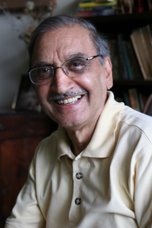
Jai Hind, Safrani!

Legends and Anecdotes of Hyderabad – 60

Jai Hind, Safrani!
By Narendra Luther

When we talk of ‘freedom fighters’, we generally think of people who were engaged in the struggle for freedom for India within the country. We tend to ignore many other groups who fought for freedom of the country from outside. They represented the radicals in the Congress party who broke away from the main line of the Party because they believed freedom could not be won through peaceful methods and negotiations. Quite a number of them went away from the country and lived a life of exile. A number of such people went to Canada. They married local women, mostly of Hispanic origin – and gave them Indian names. Their progeny is now completely integrated with the local inhabitants.

Expatriate fighters

Another part of the Indian community which played a crucial role comprised the Indian expatriates settled in South East Asia. They were the one who helped the greatest of hero of the armed struggle from abroad -- Subhash Chandra Bose, commonly revered as ‘Netaji’ in setting up the India National Army. They not only gave moral and material support, but also joined the army in good number. They were from different parts of the country and were drawn from different communities and religions.

‘Safrani’
One young, colourful and courageous person from Hyderabad became a member of that community by chance. He was Zain-ul Abideen Hasan, commonly known as Abid Hasan and still better known as Abid Hasan Safrani. Incidentally, there is no such surname as ‘Safrani’. Then how did he come to acquire that appellation? Thereby hangs a tale.

Sir Salar Jung I who was the Dewan of Hyderabad from 1853 to 1883 tried to reform and modernize the medieval administration of the state of Hyderabad. For that purpose, he brought a number of educated, English –knowing officials from British India. One such person was Nawab Mohsin-ul-Mulk. His younger brother was Amir Hasan who became a collector. Abid Hasan was born to his Irani wife in 1911.

While most of the well-to-do families of Hyderabad sent their children to England for higher studies, Amir Hasan’s wife did not favour that. She did not like the British. The children of that family were sent to Germany. Abid Hasan went thee to study engineering.

During the Second World War, Bose had escaped to Germany to canvass support for an armed struggle to liberate India. Germany was at war with England and so it was to its advantage to encourage disaffection in India against the British

Meeting with Netji
Bose addressed meetings of Indian prisoners of war, and others exhorting them to join him in his struggle. Abid met him and was inspired by his patriotism and the spirit of sacrifice. He said he would join him after finishing his studies. Netaji taunted him that if he was worried about small things like that, he could not take up big causes. Stung by that rebuke, Abid Hasan decided to give up his studies. He immediately joined Netaji and became his secretary and interpreter.

From then on he was to be with him. He went with Netaji to Singapore in German and Japanese submarines. There, after consultations with the Japanese, Netaji set up the Provisional Government of Free India on 21 October, 1943. He also reorganized the Indian National Army originally established up by one Mohan Singh, an officer of the British Indian Army.

Azad Hind Fauj

Abid Hasan became a major in the INA and participated in the march from Burma across the Indian frontier. The army reached Imphal. It was severely handicapped in supplies and armaments and so had to retreat.

Netaji wanted an Indian form of greeting for his army, and for independent India. Various suggestions came. Abid suggested ‘Hello’. He was snubbed. Then he suggested ‘Jai Hind’. Netaji liked it and it became the official form of greetings amongst the revolutionary Indians. Now it is the official slogan of the country. Netaji also established common kitchens for all the soldiers. The Provisional Government of India though fired by idealism, was also riven with squabbles. Amongst the questions which came up for discussion was that of the flag for independent India. The Hindus wanted the saffron colour, while the Muslims argued for green. The controversy was beginning to become acute. At that stage, the Hindu elements gave up their insistence on the saffron. Abid Hasan was so touched by this gesture that he decided to add ‘Saffron’ to his name. That is how he came to be known as ‘Safrani’.

After the collapse of the INA, Safrani along with others was taken prisoner by the British and jailed in Singapore. Meanwhile, his family back in Hyderabad had no news about him ands most-- except his mother-- gave him up as dead. Then somebody came from Singapore and told her that he had met one Irani in Singapore. Abid’s mother then knew that her son was alive.

After the famous INA trial, all the prisoners were released. In 1946 Abid came back to Hyderabad and joined the Congress Party. But here too there were rivalries and groupings and he felt disgusted with the group politics in the organization. He then the joined the Bengal Lamp Company and was posted at Karachi. When India attained independence, and Karachi became part of Pakistan, Safrani came back to Hyderabad.

Life after Independence

He was taken in the Foreign Service of India in 1948 and served in different diplomatic capacities in China, Switzerland, Iraq, Syria and Denmark. After his retirement in 1969, he came back to Hyderabad and setup a farm near Dargah Husain Shah Wali.

He remained a bachelor all his life. He adopted three children. One of them is Shahbaz Safrani who is a well known museologist in America. Second is Ismet Mehdi, a scholar in Arabic and professor at the Central Institute of English & Foreign Languages. The third is Maleeha

He passed away in 1984. How few of his fellow citizens know about this extraordinary man who embodied all that is rich and valuable in humanity!

***
Archived by www.mygoldencopy.com

A Noble Prize For Hyderabad

Legends and Anecdotes of Hyderabad : - 19

A Noble Prize For Hyderabad
by Narendra Luther


Not many people know that the discovery of malaria parasite was made in Hyderabad and that the city can boast of a Nobel Prize.

This discovery was made by Ronald Ross. Son of a general in the Indian army, he was born in Uttar Pradesh in 1857. His heart lay in art, music and literature but to please his father he enrolled for medicine. Even while studying it, he wrote a novel, stories, a number of poems and composed music. He also learnt Italian, German and French and studied the great poets of those languages in the original.

On his first visit to India as a member of the Indian Medical Service, in 1881, Ross was struck by the stark poverty and poor health of the people at Madras and wrote a poem which concludes by asking :

`Cannot the mind that made the engines make,
A nobler life than this ?'

In India he served at a number of places like Madras, Bangalore, Vizianagaram, Quetta, Calcutta Andamans and also Burma.

After 6 years in India he went to England on furlough and obtained a diploma in the then new subject of sanitation and studied bacteriology. On return to India in 1890, he was sent to Bangalore to tackle the cholera epidemic. He recommended a scheme of sanitation there in 1896 which, incidentally was the first sanitation programme in India. He said that the work of scavenger must precede that of the philosopher, artists and politicians !

He became aware of the problem of malaria in Bangalore. The medical theory at that time was that malaria was caused by breathing the damp air of the marshes. Ross began his serious study of the subject while on a holiday in Coonor and identified the two varieties of mosquitoes one of which - later identified as Anopheles - carried the germs.

Ross integrated the isolated findings of Louis Pasteur, Robert Koch, Laveran and Beauparthy to determine the process of transmission of malaria. He concentrated his efforts on the study of the parasite in the mosquito rather than in the patient.

His Methods :

Ross used to tempt his patients to be bitten by mosquitoes infected by malaria by paying them one rupee each. He would then let loose a swarm of mosquitoes (of which he always kept a bottle-full ready) into the mosquito-net under which the patient was made to sleep. To tempt the mosquitoes, he would wet the bed and the net with water. Then he dissected the infected mosquitoes and examined them under a microscope.

The Discovery :

His last experiment was on a patient called Hussein Khan. And it was the very last mosquito, a dappled Anopheles which showed itself as the carrier of the malaria parasite. Ross thus established that the parasite was sucked in by the female Anopheles, incubated in its stomach for 7 days or more and brought up into its salivary glands in the mouth from where it was injected through its bite to other human beings.

This great discovery of the process of the transmission of malaria was made on 20th August, 1897 at Hyderabad. This led to the methods of control of the dreaded disease.

In 1899 Ross took retirement from the I.M.S. and left India. He got the school of Tropical Medicine established in Liverpool and became a lecturer there.

For his monumental discovery Ross was awarded the Nobel Prize for Medicine in 1902. In 1911 he was knighted.

A Boon to the World :

In 1906, in Ismailia in Egypt he controlled the breeding of mosquitoes by spilling oil over ponds by the side of the newly-dug Suez Canal. The construction of the Panama canal, started in 1890 and abandoned because of the large-scale prevalence of malaria and yellow fever in 1904, was made possible by applying his methods.

Mauritius, Greece, Cyprus and Spain also implemented malaria control measures under his advise.

Work Against Odds :

All his researches were carried on by him entirely at his own expense and despite obstructions from his superiors. Once his leave was not extended and he was posted back to his regiment where there were no facilities for research. That, however, did not deter him from his mission.

Versatile Person :

Ross was a person of striking versatility. He was a prolific writer of poetry, novels, essays and dramas.

His `Memoirs' written in 1923 are full of wit and sarcasm and it is not beyond him to have a dig at himself. His acceptance speech at the ceremony for the award of the Nobel Prize is remarkable not only for its brevity but also for his humility in acknowledging all those scientists, discoverers and inventors whose work he had built upon. He concluded it by referring to, "the dingy little military hospital, the old cracked microscope and the medicines bottles which constituted all the laboratory and apparatus which I possessed for the purposes of taking one of the most redoubtable of scientific problems". Sir Ronald Ross died full of glory in 1932.

Many countries of the world acknowledge the debt of gratitude to him. Malaria is a public health problem in more than 90 countries representing 90% of the world population. In India it was a major scourge till 1953 when a National Malaria Control Programme was launched followed by the National Malaria Eradication Programme in 1958 to banish Malaria within a decade. By 1965 the incidence came down from 75 million to 0.1 million cases. Then there was a slip - up and the level of incidence since 1977 has been 2 million cases annually. In the land where the great discovery was made, malaria continues to rage!

It is also sad to reflect on what we have done for Ross. There is a ramshackle building near the airport to which he referred in his Nobel speech. The road leading from Ranigunj to the airport was named after him but was soon changed to `Minister's Road'. In an ironic tribute to his memory of his work, swarms of mosquitoes inhabit his unpretentious laboratory tucked away near the airport!

***
Archived by www.mygoldencopy.com


Mehdi Ali’s Irony of Fate

Legends and anecdotes of Hyderabad—48

Mehdi Ali’s Irony of Fate
By Narendra Luther

One of the rare men of conscience in the civil service under the Nizam was Mehdi Ali. Born in 1917, he was educated at Aligarh and joined the Hyderabad Civil Service in 1941. Things were hotting up in Hyderabad politically at that time.

Encounter with razakars

In 1948 he was posted as Deputy Collector at Madhira in the Khammam district. The razakars were every where and the administration also was afraid of them. They would enter trains, loot passengers and otherwise misbehave with them. Once they detained a group of Marwaris and accused them of smuggling gold in their jars which, on search, were found to contain only pickles. The police were on the side of the razakars and in spite of the intervention of Mehdi Ali, they were harassed for twelve hours before they were allowed to go.

Mehdi Ali’s boss was the Commissioner of Warangal. He was an Arab named Habeeb Mohammad. He had a good reputation, but after the ascendancy of the razakars, he became a fanatic Muslim. He used to declare that he would mix the blood of Hindus with the water of the Bay of Bengal. Mehdi Ali did not like his rabid views, but could do little as a subordinate official.

The Hindu population was so terror-stricken that a large percent of it moved across into the neighbouring Indian territory.

Arabs Loot

Under the Nizam the Arabs guarded the treasury in the district and talukas. They were very good at their job and were fiercely loyal. With deteriorating conditions, they became a law unto themselves. One night they attacked Dindkur village, which was about five kilometers from Madhira. The indulged in loot arson and rape. They even removed the mangala sutras of women, which are held very sacred by every married Hindu woman. The next morning a silent procession of panic-stricken women came to Mehdi Ali to protest about that and demanding action against the guilty persons. The police station was just opposite the residence of Mehdi Ali. At that time the officer in charge of the Police Station, Habeebullah was with him.

The Boss Annoyed

Mehdi Ali ordered the apprehension of the Arabs. The Police did nothing. The Arabs freely moved around and waited for the train at the railway station. When the train came they quietly boarded it with all the loot. Mehdi Ali felt humiliation and pain at the incident. He wrote to the commissioner protesting against the incident and general lawlessness. The Commissioner felt enraged that the Deputy Collector should complain about his brethren in faith. He wrote to the Government asking for his immediate transfer.

Kasim Razvi also had written to Mehdi Ali accusing him of harassing razakars unnecessarily, and threatened him with dire consequences unless he changed his ways. Razvi also added that if he did not mend his ways, he might soon see ‘Warangal’. Mehdi Ali did not understand the meaning of that expression. He learnt later that it meant that he would be sodomized.

Mehdi Ali was promptly transferred. However, luckily for him the Police Action took place soon and Hyderabad became a part of India. He thus escaped the ‘dire consequences’ threatened by the Razakar leader.

Promotion Denied

Soon thereafter, he resumed he resumed duty under the new dispensation. When in 1949, his turn came for promotion as collector, he found that his name was missing from the list of eight officers who were promoted. All the promoted officers were Hindus. Thereupon Mehdi Ali contacted Mulla Basith Ali who was one of the seven ‘Mirzas’ who had opposed the policies of the Nizam and had advocated the establishment of responsible government, and accession to India. Both met the Prime Minister of India, Jawahar Lal Nehru and complained about the injustice and discrimination under the new dispensation. Nehru did not believe it. Basith showed hi a copy of the order. On seeing that Nehru was shocked. He immediately rang up Bakhle, the Chief Civil Administrator of Hyderabad. Bakhle was naturally surprised on receiving a call from the Prim Minister of India. Nehru asked him if some officers had recently been promoted as collectors.

‘Yes, sir,’ replied Bakhle nervously.
‘How many’?
‘Eight, Sir.’
‘ Any Muslim amongst them?’
‘No, Sir.’
‘Why?’
We have done some screening, Sir, and we are trying to redress the imbalance against the Hindus.’
‘This is too much and too sudden. Go slow. Let them not feel that we are discriminating.’
‘Yes, Sir'. I shall review the decision’, replied Bakhle.

The list was revised. Three Muslims wee included in the new list. Mehdi Ali got his due promotion.

Unjust Aspersion

But he did not advance further. Some years when his name came up for the next promotion, he was overlooked. He could not imagine the reason. Vohra, an ICS officer who was trained along with him and who was in a high position in the Government of India told him confidentially that some superior officer of Mehdi Ali had recorded in his confidential roll that ‘his loyalties are divided.’

It was a most brutal cut. Such a remark against an officer who had the courage to oppose the razakars at the height of their power and who risked his entire career for the sake of justice to the oppressed! Thousands of Muslims had gone away to Pakistan after the Police Action. He too could have done that. But he stayed on. He was too shocked to appeal or agitate. How could a Muslim fight such an allegation? They were so vulnerable on that point. He just kept quiet and wondered at the irony of his fate.

When I met him some years ago, he was over eighty. He did not exhibit any trace of bitterness even if he felt any. He had a forgiving smile. Destiny plays strange games with human beings. Prejudice will never be eradicated from the human mind!


***
Archived by www.mygoldencopy.com

The Romance of Public Garden - I

The Romance of Public Garden - I
By Narendra Luther


The City of Hyderabad, originally called Bhagnagar, was founded in 1591. Its founder, Mohammad Quli Qutb Shah had decreed that “it should be unique in the world and a replica of heaven on earth”. The word for heaven in Arabic ‘Jannat’ – also means a garden. Indeed for people in Arabia living amidst vast desert, heaven would mean lush greenery. In the mythical Islamic heaven, as described in the Holy Quran, there are many gardens.

Accordingly, the new city was a virtual garden. It had a habitation of less than 3 square kilometers surrounded by gardens and greenery covering an area of over 23 square kilometers.

Over the years however, with the increase in population, the gardens and greenery fell a prey to increased construction spilling on to the other side of the Musi river.

In 1864, the fifth Nizam, Afzal-ud-Doula on the advice of his prime minister, Salar Jung I, bought a piece of 54 acres of land from Raja Balakrishen. This was opposite the vast open land of Fateh Maidan (Victory Ground) where once the armies of Aurangazeb, had set up their camp during the siege of Golconda in 1687. Hence the name. This side was developed into a garden and was given the name of Bagh-e-Aam – ‘Public Garden’ in Urdu. In a corner of this garden a small zoo was also created.

Queen Victoria of England who was also the Empress of India celebrated the Golden Jubilee of her accession in 1887. To commemorate that, she gifted an iron bunglow to the Nizam which was placed in the Public Garden. It can be seen as soon on the immediate left of the entrance gate. Now it is difficult to recognize its original features. Steel mesh has been added to its frame and wooden partition made to create more rooms. The Public Gardens Department has converted its central portion into a meeting hall. The skeleton, however, is still original. There is no plate or plaque to give the historical background of the building as given above.

The Town Hall

In 1905, to celebrate the fortieth birthday of the Nizam VI, Mir Mehboob Ali Khan, the nobles of Hyderabad collected funds for the construction of a suitable building to be gifted to the Nizam. Incorporating the Rajasthani style of architecture, this building was completed in 1912. It was a pity that the Sixth Nizam died a year before that. It was called the Town Hall. Later it was converted into the State Assembly and the first popularly elected members of the Assembly had their session there after the first General Elections in 1952. From 1985, substantial alternations and additions were made to this building to provide adequate facilities to the legislators.

The most well-known superintendent of the Public Garden was a very witty man called Jamaluddin. He added a Chinese section to the Public Garden. His sense of humour and his jokes – and jokes on him became very popular. We wrote about him in the issue of July 1998.

The Doll’s House

A new building was constructed in the Public Gardens sometime later. Originally, the legend goes, that it housed the dolls of the daughter of the Nizam VI and was called the ‘Dolls House’. However, the princess did not like it because she believed that ghosts inhabited it. At the suggestion of the first Director of Archeology of the State, Dr. Ghulam Yazdani, the State Museum was set up in the building in 1930.

It is rather strange that such a good museum should be so little known to the public and to the tourists. That is perhaps because it is over-shadowed by the more popular Salar Jung Museum in the old city.

This museum has the largest collection of coins in the world after the British Museum. These include, besides Indian coins from the earliest ages, some Roman coins also.

This is the only museum in the country, which has facsimiles of Ajanta paintings prepared by Syed Ahmed and Mohammad Jamaluddin -- two artists of Hyderabad under the guidance of Italian artists.

The museum also has a number of sculptures belonging to the Hindu and Buddhist and Jain periods. It has also an impressive collection of bronzes from as early as the 2nd century B.C.

Apart from these, it has a number of manuscripts. Of those, there are three copies of the Holy Quran. One has the autographs of Emperor Shah Jahan, another handwritten by Aurangazeb and the third by his elder brother, Dara Shikoh.
3000-year old ‘mummy’

Out of the five Egyptian mummies in India one is in this museum. It belongs to a princess of Egypt who died during childbirth at the age of 18. Recent x-ray revealed that this 3000-year old mummy is in perfect shape and only one of its teeth has fallen!

The Museum has also a very impressive collection of arms including a jewel-studded sword of the Nizam and a shield belonging to Shah Jahan.
The Shahi Mosque

In 1936 a mosque was constructed in the Public Gardens. It had accommodation for 102 worshippers. The last Nizam used to come here with members of the family on every Friday and on every Eid to offer prayers. It was therefore called Shahi Masjid (The Royal Mosque). Now putting an acrylic shed on the open area has increased the accommodation.

On either side of this mosque there are two Niyaz Khanas –kitchens for feeding the poor.
The Azad Institute

In 1959 they were handed over to the Maulana Abul Kalam Azad Oriental Research Institute. One of the buildings contains library and reading room and the other is used as an auditorium for public meetings. This institution has over 12,000 books and is used by a good number of persons including over 50 research scholars in different fields.

The Public Garden had its next landmark when the Silver Jubilee of the last Nizam was celebrated. About that and other developments, wait for the next installment.

* * *Archived by www.mygoldencopy.com

Friday, September 1, 2000

Nizam and the Radio

Nizam and the Radio
By Narendra Luther

Nizam VII was reputed to be the richest man of his time. However, his appearance and his style of living suggested the contrary. He was indifferent about his dress and appearance. It will surprise many to know that he did not have even a radio set.

After India became independent in August 1947, he did not join the new Union. Instead, he decided to become independent. That led to prolonged negotiations between him and the government of India. During the period, the Prime Minister of India, Nehru once made a broadcast about Hyderabad. It was proposed that the Nizam should listen to the broadcast. The director of the Hyderabad State Radio was asked to send a radio station to the Nizam’s palace, the ‘King Kothi’. When the Nizam heard Nehru’s voice, he asked where the speaker was sitting. He even looked at the back of the radio set to see whether Nehru was sitting inside the box. The director then explained to him how the speech was being transmitted from Delhi.

Police Action

Finally, the Police Action against Hyderabad was started on Monday, 13th September 1948. There was hardly any resistance from the Hyderabad forces. The Indian forces reached the outskirts of the city four days later.

On the noon of 17th September, a messenger brought a personal note from the Nizam to K.M.Munshi asking him whether he could see the Nizam at 4-00 p.m. He had not granted Munshi an interview since his appointment as India’s Agent General ten months ago.

Earlier, the Nizam had spent the morning in hectic consultations. His premier had seen him twice already. The Nizam had summoned him the previous day and asked for his resignation by the morning of the next day. The cabinet decided to resign forthwith.

Resignation of Laik Ali

As soon as Munshi entered the sitting room, the desolate ruler said: “The vultures have resigned. I don't know what to do”. He handed him the letter of resignation of Laik Ali, the Prime Minister. His hands were shaking. He had had this problem for some time, which became pronounced, when he was tense or angry.

Munshi had come to know about the resignation earlier from Laik Ali himself. He said that he was worried about the safety of the citizens. He suggested that General El Edroos should be asked to take steps to preserve law and order in the city.


Th Nizam sent for his commander-in-chief and told him accordingly


Nizam’s broadcast

Munshi also suggested that the Nizam might make a broadcast welcoming the Police Action and withdrawing his complaint to the Security Council.


“Broadcast! How is that done?” asked the Nizam innocently.

Munshi explained and offered to help draft the speech.

It was the Nizam's first visit to the Radio Station. No red carpet was spread for him; no formalities were observed. No music, no anthem was played before or after the broadcast. The speech was in English. Nobody bothered to translate it into Urdu.


After the broadcast the Nizam drove back to King Kothi to brood. Munshi on his way to Bolarum found the streets full of excited crowds shouting national slogans. Munshi was mobbed and had to address groups of people en route. They wanted to be told by India's official representative that they were now part of the great motherland.

That night the city changed a great deal. Many khaki uniforms were discarded, many beards shaved. The shouting, rampaging crowds of razakars disappeared magically. The citizens emerged from their cocoons. People of all ages came out in throngs waving the tricolour of India. Suddenly where there was fear and restraint, now there was life and laughter. There was a general release of tension and a new, quivering anticipation.

The surrender ceremony

The surrender ceremony was fixed at 4 p.m.

General Choudhuri spoke gravely: “I have been ordered by Lt. General Maharaj Rajendresinhji, General Officer Commanding-in-Chief, Southern Command to take the surrender of your army”.

“You have it”.
“You understand that this surrender is unconditional”.
“Yes, I understand”.

Choudhuri smiled and shook hands with Edroos. Then he opened his cigarette case and offered him a cigarette. Edroos proffered a lighter. Choudhuri's team joined them.

The party drove to the residence of India's Agent General. A jubilant crowd cheered the victorious general there. He waved in return and then sat down to discuss the details with Munshi, Edroos and others.

Enthusiastic crowds

Crowds had begun to gather at the corner of the Parade Ground in Secunderabad since morning to greet the Indian army.

It was a sea of humanity, heads, heads, heads, bare and covered. Men and women, ten deep, twenty deep, children on shoulders, on heads of adults, young people perched on the railings, on tree-tops, even on telephone poles. It was a riot of colours, dresses of all types in all the colours of rainbow, only deeper, like a field of flowers of different hues. And then tricolours, thousands of them, each hand holding one, even two, green, white and ochre, fluttering joyously. Flags made of cloth, and of paper quivered in the gentle breeze. They reflected the joy of the hands holding them. There was clapping and wild cheering, shouting and shrieking. People threw flowers at soldiers sitting on top of armoured cars and waving to crowds. Throngs of people shouting slogans, which could not be uttered, till the previous day.

‘Quami nara’ - a shrill, lone voice shouted. And the mob shouted back in unison, in loud abandon -- Jai Hind. This was taken up and repeated from different groups.

“Mahatma Gandhi” cried one voice -- “Ki Jai” responded the chorus.

‘Pandit Nehru’ ... ‘Zindabad’
‘Sardar Patel’ ... ‘Zindabad’
‘General Choudhuri’ ... ‘Zindabad’
‘Hindustani Fauj’ ... ‘Zindabad’
‘Bharat Mata’ ... ‘Ki Jai’

There was no order; no sequence but one slogan followed another without any interruption. Each time as a thousand throats shouted in unison flags went up. The din multiplied. Far in the distance some people were dancing. There was celebration everywhere. People had this brief spell to squander recklessly all their pent-up emotions of these past weeks when the flame of life had burnt low.


Then light began to fade. Vans were going up and down announcing the imposition of the curfew from 7 p.m. to 6 a.m. The crowds began to melt. They hurried to reach their houses in time. There would be celebrations there too.

Soon there was quiet everywhere. Silence and knowledge of security such that the city had not felt for the last many months overcame it. A feeling of peace wrapped it, like a snug coverlet. It too slid into asleep -- exhausted and relieved.


* * *

Archived by www.mygoldencopy.com

Kishen Pershad --a multifaceted noble

Legends and Anecdotes of Hyderabad -- 61


Kishen Pershad --a multifaceted noble
By Narendra Luther

One of the most colourful and powerful nobles of Hyderabad whose life spanned two centuries was Maharaja Sir Kishen Pershad.

He traced his lineage to Raja Todar Mall, the revenue minister of the Mughal emperor, Akbar. His father was Hari Kishen who was a son-in-law of Raja Narender Bahadur, who in turn, was a grandson of Maharaja Chandulal. The latter was the hereditary Peshkar of Hyderabad and Prime Minister during 1832-1842. The Peshkar ranked next only to the Diwan - the Prime Minister.

Originally, named Purshottam Dass, the chronogram drawn up for Kishen Pershad was Farzand-e-Farkhunda (the fortunate son) which yielded the date of his birth -- 1280 Hijri (1864).

Early life

Due to his father's early death Kishen Pershad was brought up by Raja Narender Bahadur. He was taught various languages, and the martial arts. He knew Persian, Arabic, Urdu, Hindu, Gurumukhi, and English. His early life was spent in the company of the young Nizam VI and the sons of Salar Jung I. They were all educated together. The British Resident insisted that the pubescent Nizam VI should shift from Chow Mohalla complex because he did not want him to be in female company all the time. So he was lodged in the Purani Haveli. A high wall separated the bachelor's residence from the ladies' quarters in the Purani Haveli. Mehboob was allowed to spend a night in the ladies quarters once a week.

One evening Mehboob wanted to spend an extra night in the zenana. Special permission was required for that and the quarters were closely guarded. Mehboob asked Kishen Pershad to get hold of a ladder. That was placed against the wall adjoining the female quarters. Then Laik Ali, Salar Jung's son was asked to scale the wall and pull out one of the maids from the other side with a `rope’ made of a number of dupattas - head scarves.

The incident came to the notice of Salar Jung I. He sent a note to Raja Narender finding fault with Kishen Pershad for procuring the ladder. Kishen Pershad explained that he was duty-bound to carry out the orders of his ruler. Raja Narender agreed with the explanation given by his grandson and told Salar Jung that he would have done likewise in similar circumstances.

Prime Minister

In 1895, he was appointed Minister for Military Affairs and in 1900 he succeeded Vicar-ul-Umra as Prime Minister.

In 1911 Mir Osman Ali Khan became Nizam VII. He was led to believe that Kishen Pershad was one of those nobles who had petitioned to the Viceroy against his accession. On that suspicion the Nizam dismissed him. The signatures later proved to be a forgery.

His wit

He then travelled in India extensively. He learnt painting adding one more to his varied hobbies including playing on harmonium and sitar, and cooking. On a visit to Lahore, he developed a deep and abiding friendship with the famous poet Dr.Mohd. Iqbal. He himself wrote poetry in Persian and Urdu and sported the pen name of `Shad' (The Happy One). His palace became renowned for its mushaiaras (Urdu poetic gatherings) and the best poets of India recited their compositions there. His were the only poetic assemblies in which the poems composed by the Nizam could be recited. Kishen Pershad used to receive the poems by touching them with his forehead eyes and then give it to the messenger for recitation. Every line in it was so vociferously lauded as if the poet himself was present. People still remember the elaborate ritual and grand scale of those events. One of the poets in his mushairas used to be Abid Ali `Begum'. He dressed wrote and recited as if he was woman. He thus provided a humorous touch to the proceedings. In one mushaira he read a couplet in which he expressed gratitude to his patron Maharaja Kishen Pershad who had granted him a monthly stipend. Using a double entendre, he said, "Thanks to the Maharaja, I still get my monthly.” The Maharaja retorted: "Strange, I have grown old but you still get your monthlies."


Patronage of letters

Kishen Pershad also wrote prose, travelogues and authored over 60 books and pamphlets. Nawab Mehdi Nawaz Jung, who served, as his secretary believed that charity was his most outstanding virtue. According to Mohd bin Ali Bawahb, his daily charities, and alms giving amounted to 300 rupees. Whenever he travelled, he used to keep two bagfuls of coins in his car from which he threw handfuls with both hands to crowds of poor people who would chase his car. It is said that he never looked at the eyes of the person whom he was giving charity so as not to embarrass him.
Second term

In 1927 he was again called upon to become Prime Minister and he stayed in that job for 9 years.
Kishen Pershad was courteous and generous to a fault. He used to refer to himself as a fakir i.e. a person of no means. Given his lifestyle, his unbounded generosity, and the neglect of his estate, he ended up in debt.

Secularism

Kishen Pershad was very secular in his outlook and this was manifested in very interested manner. He married three Hindu and four Muslim women and sired 30 children from them. Quite a few of them died during his lifetime. The children born of Muslim wives were given Muslim names, brought up as Muslims and married to Muslim spouses while those born of Hindu wives similarly continued to be Hindus. This is perhaps the only example of a personage’s children following the faith not of the father but of the mother. In his will, however, he advised, the practice of monogamy.

The Maharaja was given the title of Yamin-ul-sultanat (the 'right hand of the ruler') by the Nizam and those of KCIE and GCIE by the British.

Shad Nagar town in the Mehboob Nagar district is named after his pen name.

He enjoyed equal popularity amongst all the communities. Many people often said that he was a Muslim while others maintained that he was a Hindu. His responded with a couplet:

Mai hoon Hindu, main hoon Musalmaan, har mazhab hai mera imaan
`Shad' ka mazhab `Shad' hee jaane Azaadi azad he jaane.

(I am a Hindu, I am a Muslim, and all religions are mine
Only Shad knows his religion, just as only the Free know freedom)

He died in 1940 at the age of 76. His palace, `Shad Mansion’ saw great glory. Some time ago, two lions at the gate were all that was left of it. Recently some of us tried in vain to locate even those traces.


* * *
Archived by www.mygoldencopy.com

Tuesday, August 1, 2000

A THUG IN HYDERABAD

A Thug in Hyderabad
By Narendra Luther

Since its founding in 1591, many persons from different walks of life - both Indians and foreign - have given glowing testimonials to the city of Hyderabad. Amongst them are Ferishta, the Persian historian; Tavernier, a dealer in diamonds; Thevenot, a linguist; Bernier a physician and Abbe Carre a priest – all French. Others were Manucci, an Italian physician, Schoerer, a Dutch factor in the Dutch East Indian Company and Methwold, an Englishman in its British rival company. Except Ferishta who wrote sitting at Bijapur, they all visited Golconda in the 17th century. Another Frenchman, Modave, an army officer, visited Hyderabad in the 18th century.

Thuggee

In the 19th century, a ‘thug’ joined this gallery of notables. ‘Thuggee’ was extensively practiced all over India in the 18th and early 19th century. Its practitioners both Hindus and Muslims worshipped the goddess Bhawani and observed many Hindus rituals. Their modus operandi was to break the neck of the victim by throwing a handkerchief, one end of which had a coin tied to it, around the neck of the victim. It was an instant and painless death. Travelers, merchants, and soldiers were befriended by the thugs and murdered in cold blood. Lord William Bentinck, Governor-General of India (1828-35) banned thugee and charged Captain Sleeman with the task of rooting it out from the country. According to Moorehouse Geoffrey, in five yeas more than 3000 thugs were convicted.

Amongst them was one Ameer Ali. He was one of the notorious leaders of a gang of thugs who operated in Central and Western India. His life was spared when he turned an approver. On his own admission made by him when he was about forty, he was responsible for the death of 719 persons. And his boast was that if he had not been in jail for the last 12 years (at the time of making his confessions) the number would have been a thousand! Meadows Taylor who was an Assistant Resident in Hyderabad recorded his ‘confessions’. They were first published in England in 1839.

Ameer Ali belonged to a prosperous family. Thugs had murdered his parents. The leader of that gang, Ismail, who was childless, spared Ameer Ali and adopted him. Ameer Ali then about five, grew into a strong and fearless lad and while still in his teens was initiated into thugee.

Ameer Ali in Hyderabad

He came to Hyderabad on his very first expedition when he was barely out of his teens. Nizam III (1803-29) was the ruler of Hyderabad. On his way to Hyderabad he had rescued a dancing girl Zora by name from the captivity of the Nawab of Adilabad. He brought her to Hyderabad and restored her to her old mother - and to their profession. His compensation was a mere night of pleasure with her.

Ameer Ali came to Hyderabad via Alwal and he describes the temple and the village tank. In the background of the Hussain Sagar Lake, he saw the glittering encampment of the British army.

He had heard much about the lake from many persons on his journey, “and as we passed it a strong breeze had arisen, and the surface was curled into a thousand waves, whose white crests as they broke sparkled like diamonds, and threw their spray into our faces as they dashed against the stone work of the embankment. We stood a long time gazing upon the beautiful prospect, so new to us all, and wondering whether the sea, of which we had heard so much, could be anything like what was before us.”

Then he saw Naubat Pahad in front of him and spurred his horse to climb it so that he could get a glimpse of the city. “Beneath lay Hyderabad, the object of many a conjecture, of many an ardent desire to reach it - the first city of the Dukhun justly celebrated throughout the countries I had passed.”

Of all the visitors to the city, he is the only one to have noticed and described the Banjara Hills - “rude rocky hills” on his right which “on the left appeared gradually to descend into a plain, which stretched away almost uninterruptedly to the horizon. Before me, on the gentle rise of the valley, and beyond where I supposed the river to be, lay the city, its white terraced houses gleaming brightly in the sunlight from amidst what seemed to me at the distance almost a forest of trees. The Char Minar and Mecca Musjid rose proudly from the masses of buildings by which they were surrounded.” He also observed white smaller mosques “ in hundreds.”

“The city seemed to be of immense extent; but I thought from the number of trees that it was composed principally of gardens and inclosures, and was much surprised afterwards, when I entered it, to find its streets so filed with houses, and the whole so thickly peopled.”

When Ameer Ali entered the city with his companions, the Char Minar, ‘burst at once upon our view’. Its minarets seemed to pierce the clouds. ‘To see this alone is worth a journey from Delhi.’

Ameer Ali is also the only one to have described the Qutb Shahi tombs near the Golconda Fort. This place is unique in the sense that the entire dynasty (except for the last ruler) lies together in one necropolis. The occasion to visit this out-of-the-way place was provided by Ameer Ali’s handsomeness and chivalry. A young beautiful woman, Azima, who, married to an old debauch had seen Ameer Ali ride by when she was lounging in her balcony. Struck at first sight, she sent her maid after him and besought him to rescue her.

To cut a long story short, they decided to elope and agreed to meet the next morning at the dargah of Shah Wali near the tombs. Ameer Ali reached the rendezvous on time but Azima was delayed. To while away the time the thug decided to see the tombs, which suddenly appeared, on his right. “Astonished at their size and magnificence even from that distance”, inside, he found “the silence and desolation were oppressive ... some of them dark and gloomy and filled with bats and wild pigeons, whose cooing re-echoed within the lofty domes

Though constituting the third wave of visitors and in the third century after the founding of Hyderabad, Ameer Ali confirms the observations of the earlier travellers and chroniclers about the garden-city character for the city, its richness, and the splendour of its monuments.

His account is fascinating partly because of his romantic escapades set in the city.

Incidentally, Azima did keep the rendezvous. They got married and she proved a very good wife and bore him a son. And, if a thug’s word can be believed in these matters, he was faithful to her and they lived happily ever after - that is for about ten years till he was caught and put in jail. She never knew about the nature of his job and when she learnt about it on his arrest, she committed suicide.

‘Confessions’ is actually a novel and Taylor seems to have used this format to describe Hyderabad as he saw it. Though seemingly fiction, it is an important source material on the history of Hyderabad - and of India.

* * *
Archived by www.mygoldencopy.com

Saturday, July 1, 2000

How Hyderabad’s Last Premier Fled

Legends and Anecdotes of Hyderabad -59

How Hyderabad’s Last Premier Fled
By Narendra Luther

Most of us have heard the story of the ingenious escape of Sivaji from Aurangzeb’s captivity in 1666. We also tend to believe that such a thing could only happen in the distant past.

But the story of the dramatic escape of the last Prime Minister of Hyderabad from house arrest in 1950 is equally, if not more, interesting. It was a plot brilliantly conceived and superbly executed. It embarrassed the government acutely and amused the rest of the world.

Laik Ali

Mir Laik Ali was the last Prime Minister of Hyderabad. He was appointed on 1st December 1947. He was an engineer who had become an industrialist. At the time of his appointment, he was the Representative of Pakistan in the United Nations.

After the Police Action, in September 1948, he was put under house arrest at Begumpet where Amruta Mall now stands.

Time passed. India promulgated its new Constitution on 26th January 1950. He expected to be released then, but nothing happened. His wife and sister along with some friends then prepared a plan. An advocate, Abdul Quvi made frequent visits to Pakistan and prepared the necessary documents for his escape to Pakistan.

‘Illness’ of Laik Ali

Though police guard was kept at his house, Laik Ali’s family including his wife was free to come and go. The ladies used to come in car, which had purdah on the windows according to the custom of those days. Every time the car went out of the house, a female guard used to look into it to check who was inside. In course of time the security became lax because it was mostly Mrs. Laik Ali who was coming in or going out.

One day Mrs. Laik Ali announced that her husband had been taken ill. From then on Laik Ali started behaving like a sick man while his wife started making frantic trips to consult his physician and to bring medicines. Her assumed nervousness and the flurry of traffic made the illness known to everybody including the guards within the house and at the gate. This went on for about a fortnight and even the guards started making inquiries about their important detainee.

Meanwhile it was announced that a marriage was about to be celebrated in the house of one of the relatives of Laik Ali. A lorry came and carried utensils and other things from the house. The lambadas started coming daily and performing dance. They were given tips on behalf of Laik Ali and often some sweets were also distributed. That provided welcome diversion to the guards.

The Purdah Car

On the morning of 3rd March 1950 the maid called for the car saying that the Begum was ready to go the doctor. When the car pulled in under the portico, Laik Ali quietly slipped in. The unsuspecting guards were on the other side. Some pillows had been so arranged in his bed as to give the impression that the patient was lying under the sheet. Mrs. Laik Ali hid herself in the upper portion of the house. Laik Ali drove straight to his sister’s house. From there, he drove away to the house of Abdul Quvi I another car. The original car then returned to the house and the maid casually announced that her mistress had come back with medicines. Mrs. Laik Ali then emerged from her hiding place and went to her husband’s bedroom. She addressed the covered pillows and told them that the physician had changed the medicines. She then pretended to administer the medicine to the patient. The female sleuth posted at the window did not take any notice of that.

A taxi with curtains was waiting at the residence of Abdul Quvi. Laik Ali and his sister’s son joined him and the threesome drove towards Gulbarga. After they got out of the city, the curtains were drawn and Laik Ali had a look at the countryside for the last time.

A four-berth first class compartment had been booked in the train at Secunderabad with instructions that the passengers would board at Gulbarga. Though there were only three passengers, it was thought prudent to reserve the entire compartment so that nobody else entered the compartment.

The party offered prayers at the shrine of the saint of Gulbarga and then proceeded to the railway station. The train took them to Bombay early in the morning. After bath and breakfast, they left for the airport. Laik Ali flew under the name of Gulam Ahmed.

Police chief pushes the car

Back in Hyderabad, for two days the charade was kept up. Mrs. Laik Ali kept on administering medicines to the pillows. Groups of Holi revellers came and were given tips on behalf of the ‘ailing’ ex-premier. On the next day, Mrs. Laik Ali made a number of neat bundles of currency notes. She gave them to her old trust Arab servant with instructions that they should be disbursed to the named servants on Sunday. She then drove to her brother’s house. From there she went to the airport in a purdah car to catch the flight o Bombay. Just short of the airport, the car broke down. The driver got down to pushes it. From behind came the car of the Inspector General of Police, Jetley. Noticing a purdah car stalled, the chivalrous police chief got down to give it a push!

As Laik Ali boarded the flight to Karachi, his family took the boat ‘S.S.Sabarmati’ to Karachi

The first news about the escape came from Radio Pakistan. It announced that Laik Ali attended a reception at the India House. Sri Prakasa who was the High Commissioner of India in Pakistan rang up the then Home Minister of India, Sardar Patel to ask whether Laik Ali had been released. Patel said no and then checked with Hyderabad. It was only then that the administration came to know what a hoax had been played on them.

Case against Shoukatunissa

The Government initiated action against the negligent officials. A case for abetting the escape was also filed against Laik Ali’s sister, Shoukatunissa Begum. However the court held that since the Hyderabad Public Safety and public Interest Regulation and the Hyderabad Penal Code under which Laik Ali had been detained had lapsed after the promulgation of the Constitution of India, the detention itself was illegal. There could therefore be no abetment to a non-existent offence. She along with other accused was acquitted.

Laik Ali expired in New York during his Morning Prayer on 24th October 1970. His body was brought to Madina and laid to rest there.

***
Archived by www.mygoldencopy.com