Sunday, September 1, 1996

Some Eccentric Orders

Legends and Anecdotes of Hyderabad – 17

Some Eccentric Orders
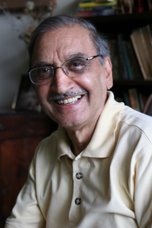
by Narendra Luther


Governments all over the world are sometimes found in awkward situations for issuing eccentric or amusing orders. Sometimes what appears to be absolutely normal in one age , may look amusing or eccentric to succeeding generations. In the feudal order there were many practices which in the democratic and constitutional setup of today may seem rather amusing.

We have seen how Dagh was appointed as the poetic preceptor of the sixth Nizam. Given below are some of other orders in the last and early part of this century which may appear to the reader of today as odd eccentric and amusing.


Punishment of an Apprentice :

In the 19th century there was a custom that many persons used to enroll themselves as `candidates' for jobs in government. These `candidates' were not paid any salary till a regular vacancy arose to which they could be appointed. But they did all the work assigned to them. Once such a candidate wrote a note on a file which turned out to be misleading. Salar Jung I ordered on the file that the author of the note should be fined 10 rupees. It was submitted to him that since the `candidate' did get any salary, he could not be fined.

Thereupon Salar Jung ordered that he should be appointed to some post with salary and the fine of ten rupees be deducted from his first salary.


Enhanced Pension by Mistake:

The Sixth Nizam, Mehboob Ali Khan was a very generous ruler. Once his personal attendant requested for superannuation on account of old age and ill-health. While granting the request, the Nizam ordered that he be paid a pension of eight rupees per month for life. In the draft order, due to a mistake, instead of 8, the figure of 80 came to be written. When the Nizam was about to put his signature to the order, the clerk detected the mistake, apologised, and came forward to correct the figure. The Nizam stopped him and observed : "If it was ordained that he would get this fortuitous benefit, how can you or I prevent it ?" He then signed the order and the lucky attendant enjoyed the bounty till the end of his life.


Special Allowance for Beard :

Rehman Khan was a Risaldar Major in the Third Lancers of the Hyderabad Army and worked in the private secretariat of Nawab Afsar Jung, Commander-in-Chief under the Sixth Nizam. He used to accompany Afsar Jung to the Purani Haveli which was the residence of the Sixth Nizam. Once he was riding a horse at great speed within the premises of the palace. He sported a thick long beard which swayed in the air because of the speed at which the horse was galloping. The Nizam watched this spectacle and was very impressed by the flowing beard.

He ordered a special allowance of ten rupees a month for its maintenance. Rehman Khan received this allowance along with his pension till his death.


When The Police Commissioner Was Fined :

Nawab Shahab Jung was the minister for police under the Sixth Nizam. Once due to some reason, he was cross with the commissioner of city police, Akbar Jung. He imposed a fine of one rupee on him. Akbar Jung was naturally very upset at this humiliation. He appealed to the Nizam against the punishment. When Shahab Jung went to pay his respects to the Nizam the nest day, the latter told him that the commissioner was his trusty and a well-wisher. "You have imposed a fine of one rupee on such a person !" Shahab Jung apologised and said that he would reconsider the matter. On return to the office he recalled the file and minuted on it : "Half the fine remitted. Let him pay only half-a-rupee".

And the highest police officer of the city getting a salary of two thousand rupees a month had to pay that fine.


Princesses Barred from the Mosque :

The Seventh Nizam always took two or three of his daughters along with him wherever he went. They accompanied him even to his favourite mosque the Moti Masjid in the Public Gardens for his Friday prayers. The princesses used to sit quietly in the front row till the end of the namaz. Once the Nizam went to the Mecca Masjid. As usual, the princesses also were with him. The famous preacher of Pakistani Punjab, Jamat Ali Shah was present in the mosque. As soon as he saw the Nizam with the princesses he exclaimed agitatedly in Persian : "Kufr az Kaaba bar khezad, kuja manad Musalmani" meaning that if paganism sprang from Ka'aba, what would happen to Islam ? The implication was that the entry of women in mosques without veil being impermissible in Islam, of all the people, Nizam should not commit that infraction. The Nizam on hearing this, turned to his daughters and whispered to them, "Go back. Go and sit in the car and wait".


Transfer of "Sawab" :
Like most nobles Maharaja Kishen Pershad was a great spend thrift. He spent quite a good deal of his income on charity. Consequently he ran into debts and his creditors started pestering him. Thereupon he petitioned to the Nizam for a loan of 200,000 rupees. The Nizam knew the reason for Kishen Pershad's indebtedness. He told him that he would give him the loan on one condition. He would have to give him a promissory note transferring the sawab, for his charity (that is, the reward in the next world for good deeds done in this world) to the Nizam. Maharaja Kishen Pershad signed the deed and thus was able to release himself from the clutches of his creditors.

There were many such instances which appear strange to us today. One day some of the perfectly reasonable orders of today will amuse our grand children.

***
Archived by www.mygoldencopy.com

Thursday, August 1, 1996

Poetic Tutor of Nizam VI

Legends and Anecdotes of Hyderabad - 16 :

Poetic Tutor of Nizam VI
by Narendra Luther

The ideal ruler in Islam is a combination of a warrior and a poet. Since every ruler can't be a poet, it was quite common for rulers to appoint a poetic preceptor an ustad - to teach them how to compose poetry, and if necessary, to ghost - write it for them.

In Hyderabad the first Nizam and his son Nasir Jung were poets in Persian. The sixth and the seventh Nizams composed poetry both in Persian as well as in Urdu.

After the fall of the Mughal empire, the annexation of Avadh (Lucknow) and the eclipse of Rampur, Hyderabad became the main magnet to attract Urdu poets in search of fortune from all over the country. Apart from the sixth Nizam, his prime minister, Maharaja Kishen Pershad was also a poet and a patron of letters and arts. It was therefore only natural that poets from all over the country flocked to Hyderabad with great hopes.

The story of the appointment of the first tutor of poetry of the sixth Nizam, Mir Mehboob Ali Khan, is very interesting. He was Nawab Mirza `Dagh', the celebrated Urdu poet (1831-1905). He was born in Delhi and received his education in the Red Fort. After the Mutiny he moved with his family to Rampur where he was treated with special consideration. After the death of Nawab Kalb Ali Khan, he moved to Hyderabad. Though he was greatly admired, he could not get any job. His one great wish was somehow to have an opportunity of an audience with the Nizam.

Ten years passed and he cold not meet the Nizam. Meanwhile, his renown spread all over the State. In the city one special mushaira used to be held every month and in that Dagh used to cast a spell on the audience with the recitation of his compositions.

When the whole city was resounding with the praise of `Dagh', Maharaja Kishen Pershad, the prime minister, one day mentioned about him to the Nizam. The latter sent for him and heard him. He was swept off his feet and was effusive in his praise. From then on Dagh was often invited to join the Nizam at dinner. He would stand for hours in front of the Nizam but did not get any job - nor even a gift. However, he believed strongly that one day Lady Luck would smile on and he would get his due.

One day, the Nizam went for a hunt. There, in the middle of a jungle, all of a sudden, he thought of Dagh. He asked the prime minister, Kishen Pershad to have Dagh fetched immediately. Within two hours, Dagh stood with folded hands before the ruler of the Deccan.

On the evening of the second day, the Nizam was sitting resplendent on a chair in a sprawling field. All the courtiers and members of the staff were standing respectfully on either side. Some riders were giving a demonstration of their horsemanship. The Nizam was watching each of them with great interest. One refractory horse was giving a lot of trouble to his rider but the latter was also an expert. He sat on the back of the horse like a nail riveted to a piece of wood.

All of a sudden the Nizam turned to Dagh and asked him : "Dagh, have you ever done any riding?" Dagh replied with folded hands that in his youth he had done so but years had gone by since then. The Nizam said: "Alright, show me your riding skills today." Dagh shivered at the thought, but had no alternative. On a signal from the Nizam, as if by a conspiracy, the same frisky horse was brought before Dagh. Poor Dagh got on to the horse nervously. As soon as he did that, the horse-trainer cracked his whip on the beast. In an instant Dagh was somersaulting on the ground and the horse bolted away towards the jungle. The entire gathering was rolling with laughter. Dagh was picked up. Fortunately he was not hurt. He dusted himself and came and stood before the Nizam who was still convulsing with laughter. When he recovered, he addressed the crest-fallen Dagh: "You are a good rider. I appoint you as my head syce." Dagh's heart sank. But according to the etiquette, he bowed gratefully and salaamed the Nizam seven times. The Nizam then asked him, "How long have you been in our State ?"

"Ten years, Sire"

The Nizam turned to his prime minister and said: "We appoint Dagh as the court-poet on a salary of one thousand rupees per month." "As His Highness pleases", Kishen Pershad said bowing.

"With retrospective effect. You understand ?"
"Yes, Sire".
"And", added the ruler, "his salary with arrears for the last ten years should be paid right away."

The Maharaja uttered : "Yes, My Lord", in disbelief and retraced his steps. A dispatch rider was rushed with orders to the treasurer in the city for compliance. The Nizam then retired to his tent and all the nobles in attendance swarmed around Dagh to congratulate him. At that time there was no paper money. So the next day the whole city saw carts loaded with silver coins carrying the arrears of ten years' salary of Dagh with police escort arrive at Dagh's house on Abid Road. Dagh then embarked on a life of ease and luxury.

In one of his later ghazals he wrote:

Urate hain maze duniya ke hum ai Dagh ghar baithe Deccan mein ab to Afzal Ganj apni aish manzil hai'

(I enjoy myself sitting at home, My abode is now in Afzal Ganj)

He died in 1905 and was laid to rest in Hyderabad.

***
Archived by www.mygoldencopy.com
Monday, July 1, 1996

The Greatest Diwan

Legends and Anecdotes of Hyderabad - 15

The Greatest Diwan
by Narendra Luther

Sir Salar Jung always was correct in his dealings with the child Nizam. He never sat in his presence unless asked to do so and tried his best to inculcate royal virtues in him.

When Mahboob was just about four Nawab Fakhr-ul-mulk gave him a gift of a watch. Mahboob was excited about it. However, Salar Jung not only made the boy return the gift, he also fined Fakhr-ul-mulk ten thousand rupees for his insolence in giving a gift to the ruler. Salar Jung said the ruler only gives, he should not be taught to take. To drive home the point, Salar Jung imported 250 watches with the amount of the fine and made Mahboob gave them away as gifts.

Another incident occurred when the young ruler was about 17 and was yet to be installed formally. Mahboob along with the diwan and his two sons, Kishen Pershad and the English tutor, Captain Clerk, was proceeding by horse-carriages to Aurangabad. Having crossed a stream, the party rested for a while. Salar Jung told the party to finish their lunch quickly sot that they could reach Aurangabad by the evening as planned. Mahboob suddenly decided that he would halt there for the day and would proceed to Aurangabad the next day. Salar Jung and Captain Clerk agreed that Mehboob should be advised that the programmes had been notified to the public. Many people would be waiting at Aurangabad to receive him and so the programme should not be changed. "Punctuality is a royal virtue," Salar Jung told Clerk to advise the callow youth.

Mahboob brushed aside the advice. Clerk then spoke a little firmly and told him they were his (Nizam's) own orders and that he himself should not violate them.

At this rebuke the young ward flared up. With tears in his eyes he said : "You and the diwan are always pushing me. I shall not go. Let me see what you can do." Saying this he stomped into his tent.

When Salar Jung heard this, he was silent for a while and then sighed : "May God take me away before his rule starts." Everyone was stunned by these remarks.

Sharp at 12.00 noon, Mahboob came out of his tent and sent a message to the diwan and his party that they should come and have lunch with him.

On arrival, Salar Jung made a bow and apologized for his insolence in making the suggestions contrary to his master's wishes.

Mahboob smiled, placed his hands on the bowed head of his diwan and said : "No. On the contrary, I am sorry. I acted impulsively." Then he took out his jewelled watch and presented it to Salar Jung.


His Reforms :

When Salar Jung became diwan in 1853, the State was practically bankrupt and without any law and order. The Arabs, the Rohillas, and the Sikh Mercenary armed bands terrorized people.

Salar Jung started by reducing his own salary from Rs. 25000 to Rs. 15000 a month. After that he ordered similar cut across the board for all employees. In exchange he offered regular monthly payment of salaries. This bargain was accepted by employees because hitherto salaries were not paid for years together. This made the employees indebted to unscrupulous money-lenders. The state also owed money to sahukaars. He had their claims closely scrutinized and offered to pay off them the reduced amounts.

Hitherto, the office of the revenue collectors, were auctioned and given to the highest bidder. Even after somebody had been appointed, another person with a higher bid could still be appointed. The joke used to be that the collectors appointed to take charge of their district used to ride their horse with their face towards the tail of the horse - to see who was following them ! Salar Jung made the appointments regular and permanent.

He divided the state into districts and grouped them into five divisions. He also created five ministries with a secretariat and 44 departments down to the level of districts. He brought educated and trained persons from British India on the advice of Sir Sayyad Ahmed Khan to fill new jobs.

The post and telegraph, and the railways were introduced in the state during his time.
Salar Jung also established courts and made the judiciary virtually independent.

He established the Madarsa-e-Aliya for the education of the children of nobles and set up a number of schools all over the state.

During the Mutiny of 1857 Salar Jung sided with the British and helped them crush the uprising against them. It was that which saved the British power in India and they acknowledged it by knighting him.

The city at that time was walled and had 14 gates. Salar Jung himself could not go out of the city without the permission of the Nizam. The street leading to the palace of the Nizam was filthy and the stench of urine was so strong that it was called the Mutri Gali (the Urine Street). Salar Jung wanted to have the sanitation improved and to metal the city streets. But his detractors filled the ears of the Nizam and told him that Salar Jung wanted to do these things in order to make it easy for the British to enter the city !

His Death :

The thought of his death seemed always to be present in Salar Jung's mind. Whenever he went on a longish trip, he always carried with him the paraphernalia required for his funeral.


However, he died at home. Sir Salar was interested in astrology and rummal. He had some retainers who were competent in these. One of them Pandit Mohan Lal, he had an appointment to meet the diwan on the evening of 8th February, 1883. After finishing his work for the day the diwan summoned him and asked him to draw his horoscope at that time. The astrologer forecast prosperity and success. The prime minister examined the horoscope, smiled and then asked the expert teasingly : "But Panditji, the house meant for life is empty." The astrologer tried to explain away the matter and after a while was allowed to depart.

He then came running to Server-ul-Mulk, the young Nizam's tutor and his godfather, woke him up and told him the whole story and said that he hoped his horoscope was wrongly cast.
That very night Sir Salar Jung passed away !

Inspite of all the obstacles and hindrances faced by him and the intrigues against him, Salar Jung administered the state for 30 long years and during that period introduced service far-reaching reforms. He converted a medieval oligarchy into a modern administration. Doubtless, he was the greatest Diwan that Hyderabad ever had.

***
Archived by www.mygoldencopy.com

Saturday, June 1, 1996

The First Salar Jung

Legends and Anecdotes of Hyderabad - 14

The First Salar Jung
by Narendra Luther

Mir Turab Ali Khan became `diwan' (prime minister) of Hyderabad at the age of 23 in 1853 and continued in that office till 1883 through the reigns of three Nizams (4th to 6th).

He was given the title of Salar Jung and he was the first of the three with that title - all prime ministers in their own time. The British knighted him.

In 1869 he led Prince Mehboob Ali Khan who was only 2 1/2 years old to the masnad of Hyderabad to become the sixth Nizam.

Salar Jung stayed in a palace called the `Diwan Deodhi'. It was located on a sprawling site on the left as one crossed the Naya Pul. For quite some time it housed the Salar Jung Museum (established by his grandson) before it was moved to a new building. The `Diwan Deodhi' was demolished about 30 years ago. The City Civil Courts are located in the area now.

Sir Salar Jung was a man of regular habits. He rose early and after his ablutions and morning prayers, he would make his appearance on the balcony of his palace. By that time the servants, guards and officials of his palace would line up below. The chobdar a mace bearer - would announce the appearance of the diwan and all the men below would bow their heads and in salutation. After this the diwan would go to his garden where Tippu Khan, the master of the stables, would be ready with some horses, each held by its syce. Some of the his favourite companions would be present there in formal dress. His two sons also joined him off and on. This was the time when some supplicants were allowed to see him. Now and then Salar Jung would go for a ride towards Sarurnagar but would always be back by sunrise.

On return, he would come and hold his darbar. A stream of officials, nobles, petitioners and others would have an audience with him mostly by prior appointment.

His chief usher was a black old man, called Fakir Muhammad. He wore a turban and held a staff in his hand which he did not hesitate to use in order to correct a waiting visitor's posture or any other breach of manner of which he was the sole judge. Once he rebuked a high officer of the Irregular Troops, because while waiting in the hall, he had the temerity to remove his turban for a while. The officer was rudely reminded that he was in the palace of the prime minister and not in his grandmother's house !

A visitor when ushered in had to present five rupees on a handkerchief as a nazar to the diwan. He would then be motioned to sit and make his submission. After a reasonable gap which varied from person to person depending upon their status, one of the attendants would shuffle the bolsters on the masnad. This was a signal that the audience was over. The visitor would then get up, make his bow and leave.

Many visitors resented the overbearing attitude of the chief mace-bearer. But he enjoyed the absolute confidence of the prime minister.

When Salar Jung went out of his `Deodhi' to the royal court, to meet the Resident, or call on one of the nobles, he went in a regular procession.

The convoy was lead by eight to ten camel-riders in red uniform. They were followed by the cavalry unit in red livery with a pennant and trailed by about a dozen drummers and hundreds of Arabs with muskets on their shoulders. Then came the diwan's close companions like Mir Tehwwar Ali, Junaid Khan Jamadar and some other dignitaries mounted on steads flanked and followed by men with silver lances and matchlocks. If the diwan sat on an elephant, spear-bearing livery covered both his flanks.

Occasionally, this procession would be met by a similar procession of a noble coming from the opposite direction. The question of precedence in the narrow lane would cause a problem. Salar Jung, very gracefullly would often ask his people to make room for the other party. Needless to say, unless it was a Paigah, the others generally gave the diwan's train the right of way. Incidentally, the Paigah family, which constituted the highest order of nobility, outranked the diwan. That was the only family with which the Nizam's familiy inter-married.

The diwan was a lavish entertainer. At his dinner parties, there used to be separate arrangements for the English guests and Indian invitees. The baradari was tastefully illuminated with lamps of different colours. Salar Jung was a connoisseur of food. His chef served English, Mughlai, Hindustani and Dakhni dishes. When the time came for the guests to depart, Sir Salar would stand near the exit door and offer long bottles of Indian scent (attar) to them as parting gifts. The number of bottles varied from one to a dozen depending upon the importance of the guest.

Sir Salar Jung was the greatest prime minister of Hyderabad. More about his contribution in the next issue.

***

Archived by www.mygoldencopy.com


Wednesday, May 1, 1996

Irram Manzil To 'Erra' Manzil

Legends and Anecdotes of Hyderabad : 25

Irram Manzil To 'Erra' Manzil
by Narendra Luther


Under the Nizam there was an hierarchy of nobles. The highest were the Paigah. They were the only ones who inter-married with the Nizam`s family. The next came the Umrah-e-Uzaam i.e. the great nobles. The majority of these were Shias and included two Hindu families also.

One of the Umrah-e-Uzaam was Nawab Fakhr-ul-mulk. We are here talking of his son Fakhr-ul-mulk II (1859-1934). His real name was Mir Sarfaraaz Hussain and his titles included Safdar Jung, Musheer-ud-dowla, Fakhr-ul-mulk II.

He was the first noble who came out of the old city to live in the newer part of the city. In the division of property between him and his elder brother Khan Khana II, a building called Asad Manzil given to him. Opposite the Asad Manzil was the vast open area called Fateh-Maidan where Aurangazeb's troop camped in 1687. Hence the name which means `Victory Ground'.In a corner of this ground was a military club. Army officers used to gather every evening and noisy activities would go on till late in the night. The military band also added to the noise. This caused disturbance to the Nawab's peace and he complained to Nizam VI about it with a plea to have that nuisance stopped.

The Nizam told him that he was a noble and it did not behoove such big men to make complaints about such small things and added that the Nawab could possibly shift to a quieter place. Thereupon Nawab Fakhr-ul-Mulk undertook the construction of a palace at an elevated place in Punjagutta with a commanding view of the Hussain Sagar Lake. He named it Irram Manzil which means a heavenly palace.

According to one story Fakhr-ul-Mulk had a bet with Sir Vicar-ul-Umrah, a Paigah as to who would built a higher palace. The Vicar Manzil and Irram Manzil were built as a result of his competition. As each was more or less at equal height, the match ended in a draw. The Asad Manzil, vacated by Fakhr-ul-Mulk now is the Nizam College. The Fateh Maidan is now a stadium.
Irram Manzil occupied a vast place which had formal gardens, bridle parks, picnic grounds, a pound for boating, tennis court and two full sized polo grounds. An army of servants was employed to cater to the needs of the Nawab and his family.

Nawab Fakhr-ul-Mulk had five sons. All of them were sent to England for studies and they even met Queen Victoria who spoke to them a few words in Urdu. She also helped them to get admission in Eton, an exclusive public school in England.

Like his father, Nawab Fakhr-ul-Mulk was known for his loyalty to the Nizam, but unlike his father he was also very friendly with the British. In 1902 Lord Curzon, the then Viceroy and Governor General of India visited Hyderabad. A banquet was held in his honour at the deodi of Maharaja Kishen Pershad who was then the prime minister. The Viceroy checked the guest list and found that the name of Nawab Fakhr-l-Mulk II was not there. He insisted that he should also be invited. It was done.

At that time Nizam VI had mounted a campaign for restoration of the Berars to him. Lord Curzon had down the request in a stiff letter. So in 1902 when he insisted on the invitation to Fakhr-ul-Mulk, the Nizam suspected that probably the Nawab was siding with the British on the subject of Berar. Next day he called the Nawab and taunted him in a couplet :
"Pighal ke moom ho ya sang ho ja
Do rangi chodh de ek rang ho ja"
(Melt down like a wax, or become hard like a stone Stop this dual policy and join one side)
The Nawab took it as an aspersion on his loyalty to the Nizam. Cut to the quick by his remark, he retorted respectfully: "Your Highness, all that I am is what you have made me. All the titles that I have are those bestowed on me by Your Highness. I do not have any knighthood given by the British." This remark was obviously was an insinuation aimed at Maharaja Kishen Pershad who had the title of KCIE and GCIE conferred upon him by the British. The ring of sincerity was so strong in that reply that the Nizam apologised to the Noble and said that the matter stood clarified.

Irram Manzil was sold to the government during the period of Sir Mirza Ismail's prime minstership (1946-47) to discharge the debts of the family. Sir Mirza made a number of changes in the palace and according to Mir Maozzam Hussian, a grandson of the noble who was amember of in the Hyderabad Civil Service and later was director in UNICEF, Sir Mirza `uglified' the palace. He also planted some terrace gardens of the Mysore variety in the compound.

After the integration of the state in 1956 when Andhra Pradesh was formed, this building was used to house the Public Works Department. That department made other additions to suit its needs.Since it was used as an office the earlier beauty of the place was not maintained. A shed was erected at the entrance to park bicycles and gradually the place was surrounded by a lot of habitation. Now Punjagutta is a bustling area and Irram Manzil has been corrupted into `Erra' (which mean Red in Telugu) Manzil.

The fairy -tale life of one more noble came to an end with the ushering in of the democracy in Hyderabad.
***

Friday, March 1, 1996

Musa Ram or Musa Rahim

Legends and Anecdotes of Hyderabad - 11 :

Musa Ram or Musa Rahim
by Narendra Luther


Late in the 18th century, French mercenary soldiers were very spectacular rise of the French general, Bussy, in the Deccan. With a handful of men he routed armies ten times larger than his. That was because his troops were well-trained, disciplined and motivated, which in turn, was due to regular payment of salaries to them. On the other hand, the Indian soldiery was always in arrears of pay and consequently their morale was low.

A romantic French soldier of fortune came to India in 1775. His name was Michel Joachim Marie Raymond. He was barely twenty when his father, who was a merchant in France, sent him to Pondicherry with a consignment of goods to sell. Having made some profit in the deal, Raymond decided to start on a career of adventure. He therefore joined the corps of General de Lasse serving under Hyder Ali of Mysore. From there he moved on to join Bussy when he returned to India in 1783. On Bussy's death two years later, Raymond joined the French force under Basalat Jung, the Nizam's brother who had a jagir at Guntur. When the English compelled Basalat Jung to dismiss this corps, it was taken over by the Nizam and Raymond was placed at its head despite the protest by the English. By 1795, the corps had grown into an army of 15,000 men formed into 20 battalions and officered by 124 Europeans. Raymond was given a jagir in Medak to enable him to pay the salaries of the force regularly - the main reason for its high state of efficiency. Raymond made it self-sufficient in every respect. He established a gun foundry at Hyderabad to manufacture his own guns. Its ruins can still be seen in the locality with the name of `Gun Foundry' near the Fateh Maidan. The Nizam depended heavily on this force and because of this he was confident of tackling the Marathas, who were a constant source of harassment to him.

The battle of Khadla with the Marathas took place in 1795 midway between the forts of Parenda and Khadla near the river Manjira. The English remained neutral because of the provisions of the Treaty of 1768. Captain Kirkpatrick, the English Resident at Hyderabad, who accompanied the forces to the front, observed neutrality so meticulously that when his opinion was asked for on the strategy and tactics adopted by the Nizam's forces, he refused point-blank to give any comments. The Nizam lost the battle.

The Nizam was very sore with the English for not helping him in this battle and he therefore asked the English force to be withdrawn. This done, the Nizam's reliance on Raymond grew, increasing the latter's influence. He was assigned new jagirs to maintain a larger force.

In 1795, the Nizam's eldest son, Ali Jah fled from Hyderabad and raised the banner of rebellion at Bidar. He achieved some measure of initial success. The Nizam dispatched Raymond to subdue the delinquent prince. Raymond captured the rebel prince easily and the diwan, Mir Alam was sent to bring him home. He was brought on an elephant, but the diwan had the howdah of the elephant covered, a practice adopted only in the case of women. The prince could not stand this implied indignity and committed suicide on the way.

When Raymond was at the height of his powers and had ambitious plans, he suddenly died in 1798. He was then only 43. The British, seizing the opportunity, ordered the disbanding of Raymond's corps.

That needed great care and tact because Raymond had been a very popular leader, and the corps provided well-paid jobs to 15,000 families directly and many more indirectly. When the rank and file came to know of the proposal, they gheraoed Pirron and other officers. A mutiny was likely to break out, with consequent bloodshed. However due to exercise of tact and some luck they surrendered peacefully.

By the next evening, Raymond's legendary `paltan' - platoon - had been demobbed. It was now replaced by the English contingent.

Raymond had became a legend in his own life-time, and as time passed, this legend only grew. He was beloved alike of the ruler and his subjects; he was revered by his soldiers of all faiths because he drilled them, marched them, made men out of pariahs, paid them regularly and led them to victories. Even the mercenaries of the English were drawn towards him because his soldiers were paid one rupee a month more than their counterparts in the English army.

And as often happens in such cases, the name Monsieur Raymond was corrupted by its sheer popularity, into Musa Rahim by the Muslims and Musa Ram by the Hindus. He belonged to all and till this day an annual gathering - an urs - is held at his grave in Asmangarh. Lamps are lighted, flowers offered and tributes are paid by the descendants of his soldiers. Two centuries after his death, the name continues tosurvive. It is assured of immortality because there is now a locality called Moosa Ram Bagh which reminds its inhabitants every day of this plucky French soldier of fortune, who, to fulfill history's design was taken away at the prime of his powers.

However, their reverence for this man has not prevented people of the surrounding areas from encroaching upon the land reserved for the obelisk and the pavilion to commemorate him. Every day Raymond's mausoleum gets hemmed in more and more. Already it is difficult to reach it. The day does not seem to be far when the celebrated soldier will have to make do with just the minimum allowed to a dead-man - six feet by three - so that the living around him can also have a shelter over their heads. There is, after all, a limit to what will be spared for the dead. The living, must live till they die. And then it doesn't matter.


***

Archived by www.mygoldencopy.com


Kirkpatrick and the Residency

Legends and Anecdotes of Hyderabad - 12 :


Kirkpatrick and the Residency
by Narendra Luther

The first English Resident was appointed at Hyderabad in 1779. His name was Holland and he came as the envoy of the Government of the Madras Presidency. Due to some misunderstanding he was suspended by it. However, the Imperial Government at Calcutta nominated him as its representative at Hyderabad. Since then the Resident came to represent not the Governor of the Presidencies but the Governor-General at Calcutta.

James Kirkpatrick who succeeded his elder brother, William, was the sixth Resident and served for seven years at Hyderabad from 1798 to 1805.

Till then all the Residents had stayed in a garden-house of one of the Nizam's noblemen. Kirkpatrick himself also occupied the same house for some time, but, seeing the expanding and crucial role of the English agent at the court of the Nizam, he proposed to build an official residence for himself. He sounded out the diwan, Mir Alam, about the allotment of a suitable piece of land for the purpose. Mir Alam saw no objection in the proposal and asked the Resident to locate a piece and get a sketch-map of the site prepared so that the Nizam's approval could be obtained. Separately he secured Nizam's permission to the proposal in principle. However, when the sketch-plan wpresented to the Nizam, he took one look at it and threw it away in horror. Kirkpatrick was crestfallen. He asked Mir Alam the reason for this summary rejection. Mir Alam simply laughed. "Resident Bahadur", he chided the Englishman, "You made the plan on a paper so big that it seemed to equal the size of His Highness's dominions. How could he agree to part with that ?" Kirkpatrick, on hearing the reason, joined the diwan in laughter. Obviously, the Nizam was not aware of the principle of scale in drawing.

The Resident then reduced the scale and got the sketch-plan for an extent of 64 acres prepared on a piece of paper about the size of a visiting card. This time the Nizam readily agreed and Kirkpatrick then took up the project of building the Residency on the north side of the river Musi. The building constructed was so grand that on a visit to Hyderabad in 1817, Sir John Malcolm remarked that it was better than the Government House of Madras, and in splendour next only to the Governor-General's House in Calcutta.

The furniture for the Residency came from Carlton House in London. That was the residence of the Prince Regent and he wanted to dispose of his furniture. The directors of the East India Company required some political concession and so they purchased the old furniture at the price wanted by the Prince. Incidentally, the payment for the furniture was made by the Nizam who also maintained the Residency at his cost.

Kirkpatrick enjoyed his new abode. The Nizam granted him an Indian title - Hashmat Jung Bahadur - and it was only appropriate that he should adopt some of the ways enjoined by his new oriental knighthood. Accordingly, the young saheb acquired a mistress who stayed not far from the Residency.

Soon thereafter, Kirkpatrick married a Muslims girl called Khairnussina Begum who was distantly related to Mir Alam. The marriage was celebrated according to Islamic customs and Kirkpatrick wore the dress of a Muslim groom. However, Mir Alam needled by the diwan,Arastu Jah, complained to the Governor- General about the wedding and the embarrassment which it might cause to the Nizam's Government and the British and their mutual relationship. The Governor - General ordered an inquiry into the case but, thanks to the manipulation by Kirkpatrick, a favourable report was sent to the Governor - General. Kirkpatrick also had a letter sent by Khairnussa's mother to the Governor General testifying that the marriage was performed with her consent and blessing. The Nizam also issued a statement in favour of the Resident. The complaint was withdrawn and the complainant even apologized.

Khairunnisa gave birth to two lovely children - a boy, and a girl in the same order. In 1803 both were sent to England for education.The boy died there, but the girl Catherine grew up and married into a good English family. She became known for her beauty and wit and was the first sweet-heart of the great writer Carlyle, who immortalized her in Sartor Resartus as Blumhilde.

In 1805 Kirkpatrick was suddenly taken ill. He was advised a change of air and rest. He left for Calcutta for consultations with the Governor-General. When his boat reached Calcutta, his illness took a turn for the worse and he died when he was barely 41. His marriage had lasted only six years.

Thus passed into history another of those flamboyant characters, one of the early nabobs who strengthened the foundations of the British empire in India. In an age when the expectancy of life was short, men like him and Raymond who packed so much action into their brief life, died young.

Like Raymond, Kirkpatrick too is remembered by the people . His Residency now houses the University College for Women. Its ballroom is used for meetings of the general body of the students. On one of the walls of the building hang the pictures of his two children, William George and Catherine. Khairunissa's apartments - the Rang Mahal - have been altered and converted into laboratories for the physical sciences. The original area of 64 acres has now shrunk to 34 the remaining area having been made over to the Osmania Medical College for a hostel. Some area was given to the Municipal Corporation of Hyderabad in 1977 for widening the adjoining road. In the vast and expanding concrete jungle that most of the city is turning into, the Residency still stands as an oasis - a patch of green sprinkled with bevies of young ladies. Close by is the bazaar know after Kirkpatrick's Persian title - Hashmat Ganj. Few people know today that it was named after an Englishman.


* * *

Archived by www.mygoldencopy.com