Thursday, September 1, 2005

The Budget and Me

The Budget and Me
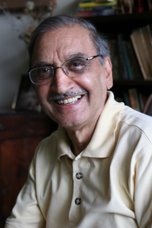
By Narendra Luther
There are so many types of budgets - the householders' budget, the municipal budget, the budget of the State government, and the budget of the Union government. There are only two budgets that are important – the householders' and that of the union Government. Since the former is no one's concern except that of the individual concerned, we will talk only about the Union budget.

This budget comes regularly once a year – sometimes twice, like this time. It is a lot of work for the Finance Minister who has to read it standing without break for as long as the script demands. So far all Finance Ministers have managed to manage that level of that stamina. There must be something nourishing about the preparation of the budget that it enables even old men to live up to the rigour of its presentation. May be it is the knowledge that the whole nation is watching you.

The Great Show

I don't get excited about the budget. But a lot of sensexible people do. They sit round in big halls and see its delivery on a big screen. Not only the delivery, but also the blows and hugs it contains. They let go their exclamations at intervals appropriately, especially if the camera happens to focus on them. Then they proceed to dissect it to see, and show to the viewers and the Finance Minister, what they think it Learned articles are written by experts to show how they will affect the lives of people in the country. For the fist half of my life, I did not understand the budget and so I did not care. For the second, I began to understand it and so I did not care. The portion that interests me is the exemption limit of income tax. The rest I leave to experts – and I have many friends amongst them.

But honestly, there are a few points that I still don’t understand. There is no harm in admitting them. Let me tell you about some of them. One thing is how government can run with fiscal deficits year after year. Dear reader, tell me as an individual, how long can you live that sort of life without falling foul of law. But nothing happens to government.

Sensexitvity

Second, while the limit of exempted income is raised, a surcharge is slapped in the name of education cess. That means the government is serious about education. But education will first have to be imparted to State governments. Otherwise there are likely to be more Kombakonams even in the non-Tamil parts of the country.

Thirdly, why is it that what is good for the country is not good for the Sensex? It first showed its unhappiness by loosening the bears. When it did not frighten the Finance Minister, they started an agitation. They were against the transaction tax. But has there been any levy - transaction or non-transaction that has not been passed on to the consumer in some form or the other?

I am not going to tell you about the fourth, fifth, sixth and seventh points that I don’t understand because it will contradict my earlier claim that I began to understand the budget in the second part of my life. I should not have made that sort of boast and then proceeded to make admissions of my enormous ignorance. But believe me, the candid admissions that I had begun to make were done in the genuine belief that you would not believe me. But some of you may. That will affect my credibility and nothing is worse than that. So, I shall let them pass and depend upon others to raise the remaining points, which might enlighten me also.

The 'Sarality' of the Form

My basic difficulty is to fill up my Income Tax form. Successive Finance Ministers have claimed to make the form saral and saraler. But the only thing saral about them is writing my name, my father’s name and my postal address. The assessment year is a year ahead of the financial year and I feel I am dealing with the future while I am only disclosing my past financial status. Though they say it is only one page, they don’t talk about the enclosures that you have to attach to it. So, I always go to a pundit friend of mine, and like the illiterate village woman who wants to get a letter written to her errant son or an absconding husband, pour my facts and papers before him and plead with him to give them a shape acceptable to my assessing officer. My predicament has become all the more galling after I returned recently form a trip to Saudi Arabia where there is no tax. Imagine, being told immediately that the last date for filing the returns is fast approaching. The Saudi Government can afford not to levy tax because its enormous reserves of oil are matched only by its sparse population. I suggest we emulate them. Let the Finance Minister invest more in exploration of oil reserves and give incentives for not producing children. He can, for example, give a rebate for the educational expenses of every unborn child. Anyway, these suggestions can be considered only in the future.

‘Roll –Backy’ FM

I have seen all Finance Ministers right since independence. I don’t think any one of them was roly-poly. They were all normal sized persons without much extra weight. But lately, our Finance Ministers have become, if I can coin a term, ‘roll-backy’. They introduced some brave measures in their budget. But when they saw the storm some of them raised in some powerful sections of the polity, they either withdrew them or modified them. The new term for that manoeuvre is ‘roll back’. I don’t think the term applies to the Finance Minister. That would appropriately be ‘somersault’. It applies to the measure which is withdrawn. ‘Withdrawal’ is not an elegant term. It has the connotatation of retreat, a defeat, bank deposits, and also of Vatsyayana. ‘Roll back’, on the other hand is undoing something that should not have been done in the first instance. Chidambram, the charming FM also did likewise on the transaction tax. The sensex jumped up with joy. Now people who matter are happy. Which means the country is happy. But wait a minute. It is not all over yet. There is an ally, which is supporting the government from the outside. It wants a number of roll backs, but will probably be satisfied with one. That is the reduction in the limit of direct foreign investment. That, they say, is dangerous. They remember from history that that flag follows trade. Though thee are many attractive flags in the world, they would like only the tricolour to fly in this rich land inhabited by the poor.
***

Monday, August 1, 2005

Police to meet you

Police to meet you
By Narendra Luther


My choice of the subject for this column is generally by current events. Any thing that stands out during the month preceding the week when I sit down to strike the keyboard of my computer becomes the topic for the next issue. This time there I had a dilemma. Two topics were competing for my attention. One is the deep, larger national malaise represented by the deluge of Mumbai. The other is the conduct of the police which was dramatized by the IG of Ranchi who as of now is absconding. Since last month I wrote about the falling standards of IAS, I selected the police so that the picture of our two premier all -India services is complete. If they are not good enough, nothing else in the administrative machinery of the nation can work.

Security – the primary need

State comes into being to make life possible, so said the great philosopher, Aristotle. Life is made possible on the basis of security – what is generally referred to as law and order. The basic function – indeed the raison dệtre of the State (read Government) is provision of law and order. Every thing else is secondary. No welfare state is possible in the absence of law and order. State has to ensure for its citizens conditions of civilized existence. That is the responsibility of the police – to ensure compliance with basic laws, to keep anti-social elements under control and to control civil unrest. In that, if resort to force becomes necessary, it should observe the doctrine of the use of minimum force.

Only a few glaring instances underline the behaviour of the police generally. The 1984 riots against the Sikhs have been highlighted recently on the release of the Nanavati Commission Report, its discussion in parliament and the attendant demonstrations in the streets. The police failed miserably to protect innocent Sikh families by playing a brazenly partisan role. Indeed the charge is that it connived with the rioters. That is the lowest ebb to which men in uniform charged with the responsibility of providing security to citizens could fall. Its conduct during the Gujarat riots of 2002 was no different and drew nation wide condemnation.

The recent brutal attack on unarmed civilians in Gurgaon was, thanks to the electronic media, seen by the entire nation – indeed the whole world. No doubt the initial provocation was provided by the physical assault by the workers on policemen. But the doctrine of minimum force enjoins controlling the mob, not attacking it mercilessly. It was fortunate that the police were not armed with anything more lethal than lathis. If they had firearms, it would have been another Jallianwala Bagh. They were not at war with the striking workers. Their job was to ensure that the workers exercised their right within legal bounds. But they went after them in full fury to teach them a lesson. The use of excessive force at individual level is quite common and generally goes unreported. Gurgaon highlighted a deeper malady.

The Rs. 35000 - wallah

Analyst blames the lower cadres of the police with lack of education and proper training. There is a system of training in all states but the fault lies with the raw human material that gets recruited. It is common knowledge that the recruits pay heavy amounts for their selection. In a case of misbehaviour with me, an inquiry was conducted against an Assistant Sub Inspector of police posted at a Raj Bhavan. The inquiry officer asked him brusquely, ‘Are you a 25000- wallah or 35000- wallah?’ The delinquent officer replied meekly, ‘35000-wallah, Sir’. The Raj Bhavan officer who was present there asked the inquiry officer to be enlightened about the argot. The latter said, ‘This man has paid Rs. 35000 as bribe for recruitment. That is why he is not so good. That is why he has behaved the way he has. The better types pay only Rs. 25000. A recruit from that category would probably have behaved better.’ That was the end of inquiry. Of course the ASI was pulled up formally. The incident points out the root cause of the malaise. Bribes are paid not only for recruitment but also for posting in what is called ‘fetching areas’ - where one can make money. Ministers allegedly collect money for good posting for their petty officials. What will training do to such persons?

Cases of moral turpitude abound and are reported every other day. A woman going by bus late in the evening is in grave danger of being raped by the guardians of law- or their accomplices. Uniform seems to gives them a special privilege to do wrong.

Some will say naively that the recruitment should not be done by officials but by the Public Service Commissions. Thy should be reminded of the cases of a former chairman of the Punjab Public Service Commission, and of the Maharashtra Public Service Commission who even made it to the Union PSC before being apprehended.

One expects better from the higher cadres, particularly the members of IPS. They do things with greater finesse. Remember the case of the Haryana DIG who went into hiding and came out only when he failed to get an anticipatory bail. He is behind the bars. So is a former officer of UP allegedly involved in the murder of Madhumita, the poetess. The arrest of no less a person than the former Commissioner of Police of Mumbai for his alleged involvement in the Telgi Stamp scam is another instance of disgraceful conduct at the highest level. The most recent case is that of the IG of Ranchi who was looking into the case of misconduct of his deputy. He was accused of raping a woman, which he vehemently denied. When confronted with a strip of a film showing him in a compromising position with that woman, he explained brazenly the difference between rape and consensual sex between adults, which is not culpable!

The sanctity of uniform

Senior officers are the role models of junior officials and the lower cadres. When a person dons a uniform he should be proud that he has taken on some of the divine attributes. He becomes the human version of the tiune Hindu gods – Brahma, the creator, Vishnu the protector, and Siva, the destroyer. He creates goodness, protects the week, and destroys the evildoers. He has to be selected carefully; moral values need to be ingrained in him during training. The uniform should transform him into a superman if not a god. A police station should become a sanctuary for any one in danger or fear. People should feel safe and protected there. It is the threshold that leads people to that temple of justice – the court.

That was the dream when our ancestors fought for swaraj. When we meet a man in uniform, we should not be afraid of him, but be able to say genuinely – if you permit me a pun – ‘Police to meet you’!
***

Friday, July 1, 2005

The Missing Base

The Missing Base
By Narendra Luther

A group of citizens rampaged the office of the Electricity Board in Maharashtra protesting against prolonged power cuts in rural areas.

Irate residents of a government colony came out in the capital of India for non-supply of water for five days.

A man was killed in Hyderabad over a dispute over filling his pot with water.

Women in Rajasthan trudge for miles for getting a bucket of water.

You pay for a tanker of water and it takes five days of chase to get it.

A TV image shows you a part of a stretch of 30 miles of the national highway in Bihar. It takes four hours to cover the distance because the road is in an utter state of disrepair.

In Bangalore the industries go on a one- day token strike to underline the state of disrepair of a road leading to an industrial estate

A young engineer in Bihar is killed because he complains to the Prime Minister about corruption in the implementation of the scheme for the national highway project.

Early in June 2005, the special train of the Railway Minister, Lalu Prasad was stopped by hundreds of people of Brauni and adjoining areas agitating against acute shortage of power and water.

Three persons died in Tonk in Rajasthan in mid-June when the Police fired on farmers agitating for water.

The traffic police boss in a metro explains that our roads are not able to take the increased number of vehicles. Hence the traffic jams.

Infrastructure

I could fill up pages with such authentic news items but that is not necessary to bring home the point that there is an acute lack of infrastructure in our country. Infrastructure or ‘social overhead outlay’ covers roads, railways, transport and communication system electricity, water supply and other public services. It is also generally widened to include the health, skills, education and other qualities of the population – resources necessary for any development to take place. Let us forget about the second category of the list above and talk about the hard part of infrastructure.

As ordinary individual consumers of utilities you and I know this - and to retain our sanity, have reconciled ourselves to the situation. We utter the serenity prayer: ‘God grant us the serenity to accept the things we cannot change; courage to change the things we can, and wisdom to know the difference’. Only the philosophy of acceptance and retreat flourishes in such an atmosphere.

The importance of building infrastructure was fully appreciated by our early leaders. Considerable accretions to it were made under the leadership of Nehru in that respect. It entailed sacrifices on the consumption front and we have lived through a regime of restrictive imports for building a better future. But after him, in the hands of smaller netas, investment on infrastructure became a casualty of populistic politics. Short-term sops to people took precedence over long-term investments. Communal and casteist politics too had an adverse impact on the building of infrastructure. Subsidies were given, in some cases with justification. But it became difficult to withdraw them later. They became part of the system and every attempt to remove or even reduce them has been vigorously opposed by the Left parties.

Dog in the manger

They impact adversely on the building of infrastructure. That, in turn, affects the entry of foreign capital and enterprise. Today we are not in a position to undertake investments of the magnitude required for improving our infrastructure. Yet there are people and parties that oppose the entry of foreign capital to enable us to do that. They invoke the ghost of the East India Company and they warn us that history will repeat itself. They ignore the fact that we are living not in the 17th but in the 21st century. In an era of globalization they want us to remain wrapped up in the slip of isolationism. We have seen the advantages of globalization accruing to us through BPO and increased immigration. Yet many amongst us oppose it.

Our present situation is such that we should welcome direct foreign investment in many fields like road building, power generation, surface transportation, airports and civil aviation. They will trigger growth of ancillary industries and small business. Exposure to competition will also improve the quality of our products and services as has been witnessed in certain fields like telephony and the automobiles. Phone calls are becoming cheaper every day. The prices of electronic gadgets and white goods are also falling instead of increasing. But poor infrastructure is the main hurdle to growth. We don’t have road lengths to drive on; we don’t have enough planes to fly people. We don’t have adequate capacity at airport lounges and tarmacs to bring in tourists. Our services at all levels are poor by international standards. And it is the service sector that has played a crucial role in the growth of all advanced economies.

At your Service!

Our service sector is marked by inefficiency and corruption. Corruption is of course the all-pervasive factor in our life. The late India expert, Prof. Hanson once invited me to speak to his class on Indian administration. In his introductory remarks, he said that in India it was either influence or money which made things happen. I felt hurt at that observation but on return to India, I have seen time and again how perceptive his observation was. In corruption the tone is set by the politicians and is eagerly adopted by the bureaucracy at all levels. That however is a subject by itself. We saw how corruption affected the Dhabol Power Project in Maharashtra. When the Congress Government sanctioned it, the Shiv Sena cried ‘corruption’. However, when the Shiv Sena came to power, it sanctioned the self-same project. It was then the turn of the Congress Party in the opposition to cry ‘corruption’. As was shown by what happened to the Enron Company later back home, we found that both were right in their accusation.

Attention: Election Commission

We are deficit in power. Yet party after party in politics has won election on the basis of a promise to give free power to farmers. After winning the elections, some of them had to scrap or modify the scheme. The latest is the Congress Party in Andhra Pradesh. It is now trying to refine the scheme of free power to the farmers by applying some sort of means test. The point is why is such a promise is allowed to be made by any political party. The Prime Minister, a distinguished practising economist himself, has spoken against it. The Union Power Minister has expressed himself against it. Yet their Party made this promise in its election campaign and formed government in two states. The Election Commission should prohibit the inclusion of such inducements in the election manifestoes of political party by making it a corrupt practice. Let the election manifestoes be realistic and not promise moon to the voter. The fraud has to be stopped.

***

Archived by www.mygoldencopy.com
Wednesday, June 1, 2005

The Flavour of Salt

The Flavour of Salt
By Narendra Luther

Public servants in India have often come in for criticism, amongst other things, for their lack of integrity. There was a time when members of IAS were considered exempt from this censure. They were also jealous about their reputation. Thirty years ago if some one even so much as hinted that anyone in IAS was corrupt, I would fly at his throat. He was uttering a heresy, committing a sacrilege.

My defence became milder two decades ago. A decade later, I stopped putting up any defence. Now I am grateful if they spare me personally from the reproach. Every day you get a shock. CBI or ACB of some state or the other raids houses of some officer and finds unaccounted for assets. Some are arrested; some abscond till they are able to secure an anticipatory bail or fail in their attempt and have no option left but to surrender to a court. When they are taken to court they cover their faces to avoid being photographed by the media so as to avoid recognition by the viewers. The dramatic public part over, they go into protracted trials and some time come out on technical grounds , procedural lapses or defective investigation. But the damage is done all around -- to the individual, the system and the public confidence. The gods’ feet of clay are revealed to the public and those who were considered incorruptible are seen as just ordinary mortals subject to the temptation of greed.


Falling standards

I remember the time when I headed the Municipal Corporation of Hyderabad four decades ago. Many parties used to approach me for a personal inspection to see the injustice done to them. Some time I had too many of them and said that I would depute one of my senior deputies to do that. The instant reaction of the party generally was that that would not do since they were the selfsame people who were involved in the foul play. By and large, there was implicit faith and trust in the integrity of an IAS officer. Touched by that faith, I asked the government to give me one IAS officer of whatever seniority as a deputy so that I could have my burden shared. I did not get any and so had to carry on all by myself. The same was the case in many of the other departments that I handled. That belief that the party could expect justice and fair play was enough compensation and the pride it gave made one try harder to rise to the expectations of the people -- and even beyond.

IAS was the successor service of the ICS which enjoyed a very high degree of reputation for honesty, personal integrity and fair play during the British rule. Not that there were no dishonest or corrupt ICS officers But if anyone was found to be so, he was confidentially advised to put in his papers and go home. No scandal thus came to light and the reputation of the ‘heaven-born service ‘ was kept in tact. The same was expected of the IAS and for a time it did hold good. But with the passage of time it got diluted. There are many reasons for that. One is the diversity of sources which supplied the recruits. There was no commonality of traditions amongst them. The other is the comparatively low salaries in a world of higher cost of living. Yet another is the character of the latter generation of politicians. They are not the people who made sacrifices for freedom. They came to politics not for any ideal of social service, but in pursuit of power and what power brings to its holder. In our system supreme power belongs to the elected masters. The civil service is required to offer its considered advice on issues of public policy. The pros and cons of a proposed course of action and its likely fallout in the public are highlighted by the civil servants. The new breed of politicians did not like frank and independent advice. They wanted compliance. Those officers who toed the line prospered; those who stuck their neck out got into trouble. Officers were often put in the loop line for daring to advice while remaining within their bounds. The message went round and soon in places, a nexus came to be established between the politician and the elite IAS corps. Officers saw the advantages, albeit short-term of aligning themselves with the politicians in power. The permanent and neutral civil service pattern of the British model yielded place to the ‘spoils system’ of the United States. The old form remained, but the essence changed.


The Spoils System

Young officers still having a spark of idealism did not relish that and we have seen that for years in Uttar Pradesh the IAS Association has been preparing a list of most corrupt officers. Many of them land plum postings and make the lives of honest officers difficult. How long will the young people hold out?

I have given the example of UP, but this is happening all over. In the neighbouring Bihar the Fodder Scam is old history. Recently a young officer having earned international praise for his dynamism, had to go into hiding to escape arrest. In Andhra Pradesh recently two scandals have emerged in quick succession . The house of an IAS officer was raided and reportedly assets beyond the known sources of income were found.

I have dwelt upon IAS because that is supposed to be the elite service and so is expected to exhibit the highest standards of probity. There are numerous cases of top officers of other services having been trapped and their houses raided revealing unaccounted for assets. The rot is therefore wide spread.

What can we do to remedy the situation? When the salt itself loses its flavour, with what shall it be salted is an old conundrum.

It is difficult to stay clean in a sea of muck. A saint does so by withdrawing from the world of action. A public servant has to be a crusader. That role is enervating. Ours is a society which glorifies favouritism. Concentric and enlarging circles around the holders of office are expected to benefit from him. How does one break that chakravyuh? Most importantly, how does one reconcile the demands of political master for partisan action against objective criteria? When ministers alternate their time between courts and jails on the one side and cabinet seats on the other, what is the bureaucrat to do? He can ensure probity on his part, try to enforce it on his subordinates, but he is not his master’s keeper. So, the rot has to be stemmed there. That leads us to the issue of electoral reforms. Also the delinquent official must be dealt with speedily and handed condign punishment. I know, it is easier said than done. So is the case with every problem that matters.
***

Tuesday, February 1, 2005

Of Human Need and Greed

Of Human Need and Greed
By Narendra Luther

The recent Tsunami disaster highlighted two contrasting aspects of human nature – sympathy and charity on the one hand, and greed and perversity on the other.

As soon as the impact of the disaster came to be known, human beings of all persuasions and in all parts of the country and the world rose to provide succour and relief in whatever way they could. There was a spontaneous gush of good will and many persons and groups rushed to relieve the misery of the people affected by the tragedy. Sympathy and pity are ever present in the human heart. We have had ample evidence of it during the Chinese attack on India in 1962 when women in the far south gave their ornaments for supplementing the funds for the defence of the country. During the cyclone of 1979 in the coastal Andhra, voluntary relief agencies descended in the area from all parts of the country with money and material. Again when an earthquake devastated Latur, the response of the agencies and individuals was overwhelming. In the case of Tsunami, thanks to the scale of the havoc and the revolution in communication, the response of the common man all over exceeded all expectations. From every segment of society persons of all ages came forward to contribute their mite to mitigate the human tragedy. Children gave from their pocket money and pensioners contributed from their pensions, not to speak of the rich and the corporates who made liberal contributions to different funds started by various organizations. These examples reveal the benevolent side of human nature.

The other side

Sadly, simultaneously, we also saw the perverse side of human nature too. Since some of the images to corroborate that appeared on some channels of TV, they can’t be denied or brushed under the carpet by the authorities. We saw some unaffected parties repeatedly collecting the chits which entitled the victims to relief materials. Vultures in the shape of human beings descended on the sites and drove away with truck-fulls of materials to the markets. The officials when questioned had nothing to say in defence. They went off the cameras. Some of the relief materials did not reach the affected parties. If it was due to the difficulties of reaching the inaccessible places, one could understand. In many cases, they were siphoned off to other destinations. Stories of connivance by officials with some unscrupulous elements to filch the relief money and material are current. Unfortunately, all public servants are not imbued with the sense of dedication that is required in such situations. And there is no way in which it can be injected suddenly amongst officials. It has to be instilled in them earlier in their homes and later during their training. Thy can no doubt draw inspiration from the conduct of their seniors if they set a good example to emulate. But at that level too we often see the same vicious circle. No code can be a substitute for the spirit that determines the type of response that is required in emergencies. In many cases, the code has to be defied because it does not meat the situation. For example, I had once to draw money from the treasury in excess of my powers to meet the demand of the situation. My justification lay in what I called the ‘doctrine of implied powers’. It was my duty to make sure that no one died an unnatural death in my jurisdiction. In order to ensure that, I had the implicit authority to do every thing lawful. My action was not only upheld but also lauded.

Callousness and Perversion

I may be forgiven for citing my own experience of the two contrasting aspects of human nature. Long back at the very start of my first posting in Gudur (Nellore district of AP) there was incessant rain lasting four days. I received a wireless message from the government past mid-night that two trains were stranded in my jurisdiction near Nayudupeta and Sulurpeta respectively and that I should arrange to provide necessary relief to the passengers.

As soon as we moved out of town we encountered waist deep water on the road. My officials said we could not go further. That was the first time I realized that a leader has to sometime overrule seemingly wise counsel. As I pushed into the chest- deep water, others were compelled to follow suit. We felt happy when with great difficulty we were finally able to reach the first train with adequate succour. But our elation was dampened by some passengers spurning the meager fare, and asking for a la carte menu – including pudding!

We set up refugee camps for the hordes of people pouring in from the affected villages to the small town of Sulurpeta. I asked the tahsildar to buy rice and other essential commodities needed by the refugees. Some of the refugees particularly women also needed some clothes.

When the Tahsildar went to buy rice in the market the merchants increased the price. I was furious and instructed the tahsildar to seize all the stocks with the shopkeepers without payment and give them only acknowledgment. We also bought sarees and dhotis from the market and had them distributed to the needy. Imagine my frustration and rage when I was told that the beneficiaries had sold those sarees and dhotis back to the shopkeepers at half the price!

The government sanctioned some grant and loans to the cultivators. Complaints reached me that the Special Tahsildar appointed for their disbursement was taking a percentage of cut. After gathering adequate evidence against him, I suspended him. I did not know that was beyond my authority. The Collector annulled my action, but he himself suspended him immediately.

Let me quote another incident of the ingratitude of the beneficiaries. This occurred two decades later. We had put all the leprosy – patients in the city in a special colony equipped with all civic facilities on par with a lower middle class colony. They wee to get free board, lodging, water and electricity. They were given training and produced good like wire gauze and candles which were sold in the market to supplement the funds required for their maintenance. When they were asked to offload a truck of rice bags, they asked for wages. We had planned to run the colony on the principle of ‘to each according to need and from each according to capacity’. If they wanted wages for their work, they would have to pay for their keep. Thereupon they went on an agitation. I was pained to find that they were being instigated by a politician. Later, they were brought round and the colony is now running successfully, the politician in question having died meanwhile!

Looking at Tsunami images now and my own experiences, I find that human nature has not changed at all. How naïve of me to imagine that it would!

***
Archived by www.mygoldencopy.com

Saturday, January 1, 2005

Weddings and all that

Weddings and all that
By Narendra Luther

I was pleasantly surprised to read in the papers that a Pakistani court rejected a plea that some snacks may be allowed to be served at wedding reception apart from the beverages. So presumably there is a ban on the service of eats at such receptions. Frankly, I did not expect that such a progressive and strict measure would be applied in a country like Pakistan. It gave me cheer and hope. If they can do it, surely we too can.

I have attended weddings of all sorts from the poorest to the richest. I have attended weddings where no more than 20 persons came from the side of the groom. Incidentally that was the wedding of the son of the late Krishen Kant in Hyderabad. He was then the governor of AP, and later became the Vice President of India. When the party was about to leave, a relation came unexpectedly and had to be accommodated as a member of the wedding party. That would have made it 21. So Mrs. Kant stayed back! I know it since I was from the bride’s side and asked the groom’s father for the reason of the groom’s mother’s absence.

The fare was very simple and after lunch the party drove back to the Raj Bhavan.


Lavish Weddings

I have attended weddings where the guest list was 10,000. Yes, ten thousand if not more. Separate enclosures were made for important invitees. Fortunately, I happened to be one of those who were taken to the special enclosure. The explanation given was that the host, a politician, could not afford to ignore his political supporters. I do not who bore the expenses.

I have attended weddings of business men in which some of the items of the menu, especially fruit are imported especially from Singapore or Hong Kong. We counted twenty items of pudding and fruit at more than one parties. Business must be very profitable to be able to have such parties. I felt sorry that I had only one stomach and one day to savour only some of the items on offer at such parties.

I have attended wedding parties of the sons and daughters of officials where a thousand or more guests were invited. The spread was indeed lavish though not on the same scale as that of the politicians and businessmen. Still, the expenditure must be enormous. One can’t help asking oneself how they could manage to spend so much.

I have only read about the weddings in the family of the richest Indian in England - and one of the richest in India. One was celebrated in Paris and the other in Kolkota. Every name that mattered in any field was there. I cannot bring myself even to guess the expenditure at those weddings.

The Demonstration Effect

I have attended weddings of children of attenders and class four employees who at some time worked in my office. That is part of the noblesse oblige, we were taught. Miss a wedding of big man, but not of your subordinates. It is a matter of prestige for them. And there too I am surprised how they manage to spend so much.

When our maid’s son was to be married, we gave her 5000 rupees by way of help. She invited us to a reception where 500 guests were invited. My wife asked her why and how she could afford that. He replied coolly that the parents of the bride were meeting the expenditure. My wife reminded her that she had two daughters and how would she cope with the expenses on their marriages. I regretted why we had given her the financial help if it was to form only a fraction of her extravagance. Many people fall into the debt trap because of the marriage of their children. The poor wish to do as the rich people do. That is what is called the ‘demonstration effect’. It is for that reason that it is important for the big people to behave modestly because then the smaller people will emulate their example.

I always return form such weddings with a bad conscience. The expenditure on some weddings would be enough to feed the inhabitants of an average slum for one year. I admit I make for an ungrateful guest at most weddings. Even in writing this I feel I am betraying those who invite me.

It is not only the expenditure but the guest list too which surprises and scandalizes me. Important persons are invited whether they are friends or not. One Chief Minister held a special reception to which he invited only IAS officers to introduce his new son-in-law to them.

‘Conspicuous Consumption

Some friends tell me why I get worried about that. So long as they pay their taxes, they are entitled to enjoy themselves. That is not all. It was perhaps with such cases in mind that the Economist, Nicholas Kaldor, suggested the imposition of ’Expenditure Tax’. In India, my friend, the late Professor Gautam Mathur was a strong supporter of this concept. According to the proposal, for example, if some one spent ten lakhs on a wedding, he would have to pay a tax of three lakhs on that. Nehru entertained Kaldor and had his proposal examined. Due, however to the complexities involved, it was not implemented and the conventional Income Tax stayed on. Would that have curbed what Thorstein Veblen in his classic treatise, ’Theory of the Leisure Class’ called ‘conspicuous consumption’?

I can see the point of persons who have earned the money by sheer hard work to spend the way they like. To ascribe insensitivity to such person to the teeming poor also is not entirely fair. The poor have always been there. They will always be there. Some of them are poor because of their own fault. In any case they are not poor always because of the rich. So why should they cast their shadow on every celebration? Some of the poor who take to begging, accost me when I come out of a restaurant after a modest meal, or out of a shop after buying some fruit. They are shrewd in their own way trying to catch their quarry in its most vulnerable moments.

Many persons have big celebration also because of social pressure. During the Second World War, and in the period of our food deficit, there used to be a Guest Control Order. It was good in some ways. It reduced the social pressure to have big parties

But all said and done, I can’t stomach these lavish weddings. Sorry, I do stomach some of them if invited, but feel some revulsion after that. By all means enjoy on festive occasions, but moderate them.

Now that we are having some contacts with Pakistan, let us pay them a compliment by adopting one of their good pieces of practice. There is no border check for ideas.

***

Archived by www.mygoldencopy.com

Wednesday, December 1, 2004

Where we stand

Where we stand
By Narendra Luther

Robert Orme was a civil servant of the East India Company in India in the 18th century. He wrote a history of India called ‘Historical Fragments’ which was first published in 1782. In that he observed that two English sawyers did the work of 32 Indians. For his calculation he made allowances ‘for the difference of dexterity and the advantage of European instruments’. He went on to say that had the Indians been given the instruments used by the Europeans they would have scarcely been able to wield them.’ In modern terminology he was saying that the productivity of an Indian was less than seven percent of a European.

This may sound preposterous today when we notice the great demand for Indians abroad particularly in the field of IT. Only the other day a friend of mine, who is a well - known consultant told me that he attended campus recruitment in the Cornell University in the United States. He found that the American companies gave first preference to Indian students, second to the Chinese, and the last to Americans. But we have to compare the productivity of Indian in India with that of the European or American in his own country. According to my observation, the Indian productivity is very low. It is due largely to the lack of availability of tools which impart greater efficiency to the hand than that wields them. Most of our workers are still in the ‘craft’ stage. In other words, they depend upon their individual skills and the use of hand without supplementing them adequately with tools. Our labour is cheap because it is poorer in quality.

The Craft System

Some time ago when we were having our house painted, the workers covered their hands and faces with rags. In Europe and America their counterparts would use overalls for the body and gloves for their hands. The latter are imported from India and under prevalent regulations, they have to be discarded within a fortnight. Again, to paint the outside walls the contractor made a sort of platform and hung it with ropes from the top. The workers stood, sat or lay on that depending on the demands of the task and painted the walls. Four or five workers standing on the roof manipulated the platform. I looked at that spectacle and prayed for the safety of the workers. I also wondered how that sort of work would have been done in Europe or America. There, they would have had power- operated ladders or crane and workers would have been fully clad with paint-proof clothing and gloves for their hands. The painting would have been done mechanically and the whole job would have taken half a day for two men, compared to half a dozen men working for five days here.

Currently, I am getting more insights from watching the construction of a neighbour’s house. The steel rods for making pillars are cut by a chisel and hammer. Then two workers jump with their bums on the rods to bend them. Some of them are children not yet in their teens. It can be dangerous and can hurt them – and passers –by.

For the construction, the existing parapet wall about three feet height has to be demolished. Two young boys do that with hammers hardly bigger than what I have for driving nails in the walls. From the last ten days they are breaking the mortar. I have seen that sort of thing being done mechanically with giant hammers in two or three hours. We discussed this and it was argued that it was cheaper for the contractor to do the way he was doing it than to use some machinery of equipment to demolish it quickly. My calculation showed that it could be cheaper for him to do it mechanically.

Productivity & Capital-intensity

He can improve his productivity by improving the quality of the tools given to his workers. With improved productivity he can utilize his employees better. He can thus earn more and do the jobs faster. Productivity entails capital-intensity to begin with. But in the long run it pays its way. A recent study by McKenzie showed that the productivity of a Chinese worker is three to five times that of an Indian. It is worthwhile studying how they were able to achieve that standard since today we are in competition with China.

In the first half of the last century, the American genius Buckminster Fuller said about the American house building industry that it was like ‘manufacturing’ your own car in your garage by assembling different parts bought from different shops. He suggested the concept of pre- fabricated housing. According to that, main parts of the house including walls and windows and floors etc., are prefabricated according to a standard design. They are then brought to the site and the house gets ready in no time. He also suggested the concept of what he called a ‘dymaxion’ car and a ‘dymaxion’ house. His concept of the geodesic dome is well known. It can cut off the sun and rain and provide a hall without pillars. The concept has been used on a limited scale to house exhibitions. He said that he could cover the whole Sahara under a geodesic dome and make it more habitable and productive.

BPO ‘Islands’

We have however to see how productivity can be increased in small items of work and in small pieces. Productivity is not only better time-management, but also use of better implements. If that is done the inglorious equation of Robert Orme quoted above can be annulled if not reversed. If our Indians have shown better productivity abroad it is largely due to their ability to use the same tools which their counterparts do. Even in India we have islands of BPO where young men and women are performing better because they are cheaper in real terms than their counterparts abroad. Such island need to be multiplied and replicated in other fields and integrated with the ‘mainland’ so that our overall productivity increases. In our BPOs the same people are working who earlier did not appreciate the virtues of punctuality, value of time and the importance of self-confidence. In the new islands they are trained to appreciate the elementary virtues. The new names given to them are symbolic in more than one way. They virtually change their identity and set in motion a new ‘’virtuous cycle’.

Such attitudes need to percolate down to our contractors, labourers and lowest level workers who live in their own time capsule and cling to their orthodoxies. For example, they observe long period of mourning and celebrations because that is their inherited and prevalent culture. They can improve only if they know that the cost of such luxuries is loss of job. Those who are better placed and can set an example can provide a ‘demonstration’ effect.

***
Archived by www.mygoldencopy.com